
Title
EighteenthCentury Russian Music,Used
Sold by Ergodebooks, an authorized reseller.
Returns accepted within 30 days | support@ergodebooks.com
Shipping Information
- Free Standard Shipping — United States only
- Processing Time: 3–5 business days
- Estimated Delivery: 6–10 business days after dispatch
- Double-boxed, fully insured & discreetly packaged
- Tracking number sent via email once dispatched
Returns & Refund
Returns accepted within 30 days of delivery.
Damaged or Defective Item
Free return shipping + replacement or full refund
Wrong Item Received
Free return shipping + replacement or full refund
Change of Mind
Return shipping at customer's expense · 25% restocking fee applies
Payment Option

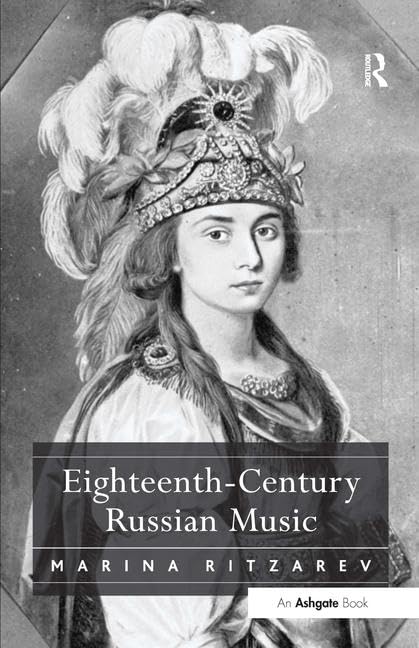
Little is known outside of Russia about the nation's musical heritage prior to the nineteenth century. Western scholarship has tended to view the history of Russian music as not beginning until the end of the eighteenth century. Marina Ritzarev's work shows this interpretation to be misguided. Starting from an examination of the rich legacy of Russian music up to 1700, she explores the development of music over the course of the eighteenth century, a period of especially intense Westernization and secularization. The book focuses on what is characteristic and crucial to Russian music during this period, rather than seeking to provide a comprehensive survey. The musical culture of the time is discussed against the rich background of social, political and cultural life, tying together many of the phenomena that used to be viewed separately. The book highlights the importance of previously marginalized sectors serf culture, choral sacred culture, the contribution of foreign musicians, the significant influence of Freemasonry, the role of Ukrainian and WestEuropean cultures and so on as well as casting new light on the wellresearched topic of Russian opera. Much new archival material is introduced, and revised biographies of the two leading eighteenthcentury Russian composers, Maxim Berezovsky and Dmitry Bortniansky, are provided, as well as those of the serf composer Stepan Degtyarev and the Italian Giuseppe Sarti. The book places eighteenthcentury Russian music on the European map, and will be of particular importance for the study of European musical cultures remote from such centres as Italy, GermanyAustria and France. Eighteenthcentury Russian music is organically linked with its past and future and its contributory role in forming the Russian national identity and developing the Russian idiom is clarified.
⚠️ WARNING (California Proposition 65):
This product may contain chemicals known to the State of California to cause cancer, birth defects, or other reproductive harm.
For more information, please visit www.P65Warnings.ca.gov.