If you have any questions, you are always welcome to contact us. We'll get back to you as soon as possible, withing 24 hours on weekdays.
Customer service
All questions about your order, return and delivery must be sent to our customer service team by e-mail at yourstore@yourdomain.com
Sale & Press
If you are interested in selling our products, need more information about our brand or wish to make a collaboration, please contact us at press@yourdomain.com
Help
If you have any questions, you are always welcome to contact us. We'll get back to you as soon as possible, withing 24 hours on weekdays.
Customer service
All questions about your order, return and delivery must be sent to our customer service team by e-mail at yourstore@yourdomain.com
Sale & Press
If you are interested in selling our products, need more information about our brand or wish to make a collaboration, please contact us at press@yourdomain.com
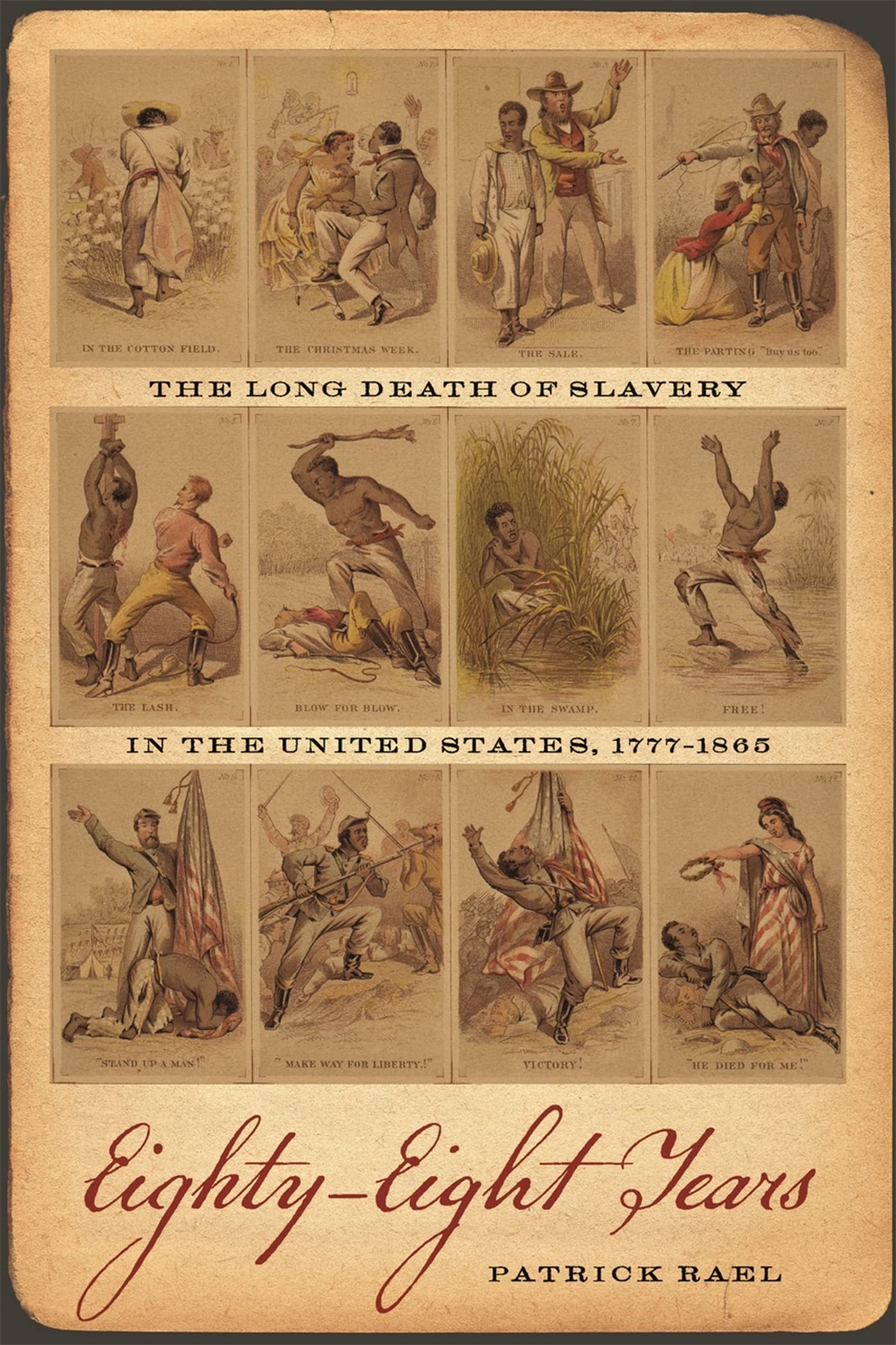
Why did it take so long to end slavery in the United States, and what did it mean that the nation existed eightyeight years as a house divided against itself, as Abraham Lincoln put it? The decline of slavery throughout the Atlantic world was a protracted affair, says Patrick Rael, but no other nation endured anything like the United States. Here the process took from 1777, when Vermont wrote slavery out of its state constitution, to 1865, when the Thirteenth Amendment abolished slavery nationwide.Rael immerses readers in the mix of social, geographic, economic, and political factors that shaped this unique American experience. He not only takes a far longer view of slaverys demise than do those who date it to the rise of abolitionism in 1831, he also places it in a broader Atlantic context. We see how slavery ended variously by consent or force across time and place and how views on slavery evolved differently between the centers of European power and their colonial peripheriessome of which would become power centers themselves.Rael shows how African Americans played the central role in ending slavery in the United States. Fueled by new Revolutionary ideals of selfrule and universal equalityand on their own or alongside abolitionistsboth slaves and free blacks slowly turned American opinion against the slave interests in the South. Secession followed, and then began the national bloodbath that would demand slaverys complete destruction.
⚠️ WARNING (California Proposition 65):
This product may contain chemicals known to the State of California to cause cancer,
birth defects, or other reproductive harm.
For MAP (Minimum Advertised Price) violations and Intellectual Property (IP) or Trademark concerns, please contact:
support@ergodebooks.com
⚠️ California Proposition 65 Warning: Some products sold on this website may expose you to chemicals known to the State of California to cause cancer, birth defects, or other reproductive harm. For more information, visit www.P65Warnings.ca.gov.