
Title
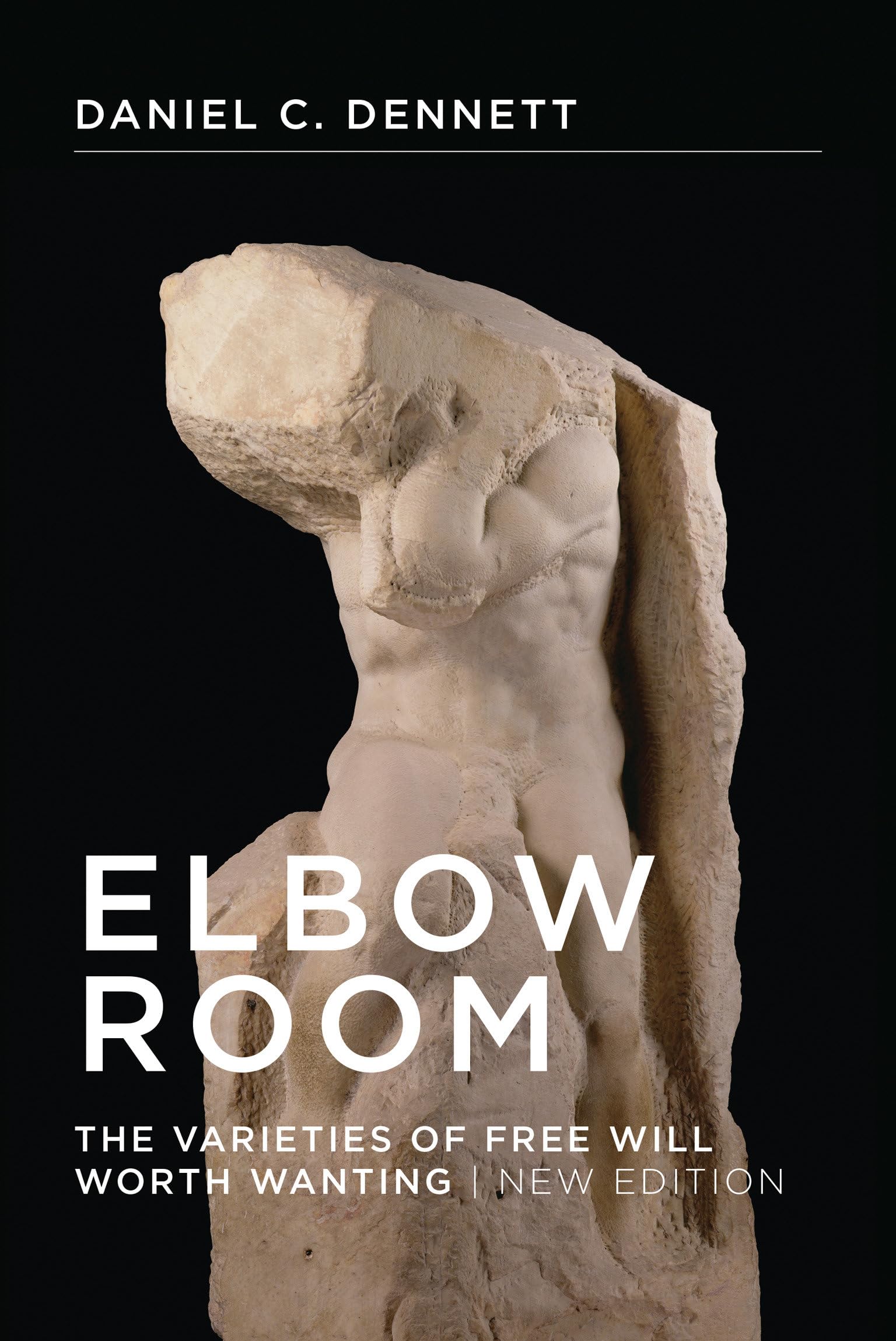
Elbow Room, new edition: The Varieties of Free Will Worth Wanting (Bradford Book),Used
Sold by Ergodebooks, an authorized reseller.
Returns accepted within 30 days | support@ergodebooks.com
Shipping Information
- Free Standard Shipping — United States only
- Processing Time: 3–5 business days
- Estimated Delivery: 6–10 business days after dispatch
- Double-boxed, fully insured & discreetly packaged
- Tracking number sent via email once dispatched
Returns & Refund
Returns accepted within 30 days of delivery.
Damaged or Defective Item
Free return shipping + replacement or full refund
Wrong Item Received
Free return shipping + replacement or full refund
Change of Mind
Return shipping at customer's expense · 25% restocking fee applies
Payment Option

A landmark book in the debate over free will that makes the case for compatibilism.In this landmark 1984 work on free will, Daniel Dennett makes a case for compatibilism. His aim, as he writes in the preface to this new edition, was a cleanup job, saving everything that mattered about the everyday concept of free will, while jettisoning the impediments. In Elbow Room, Dennett argues that the varieties of free will worth wantingthose that underwrite moral and artistic responsibilityare not threatened by advances in science but distinguished, explained, and justified in detail.Dennett tackles the question of free will in a highly original and witty manner, drawing on the theories and concepts of fields that range from physics and evolutionary biology to engineering, automata theory, and artificial intelligence. He shows how the classical formulations of the problem in philosophy depend on misuses of imagination, and he disentangles the philosophical problems of real interest from the family of anxieties in which they are often enmeshedimaginary agents and bogeymen, including the Peremptory Puppeteer, the Nefarious Neurosurgeon, and the Cosmic Child Whose Dolls We Are. Putting sociobiology in its rightful place, he concludes that we can have free will and science too. He explores reason, control and selfcontrol, the meaning of can and could have done otherwise, responsibility and punishment, and why we would want free will in the first place. A fresh reading of Dennett's book shows how much it can still contribute to current discussions of free will.This edition includes as its afterword Dennett's 2012 Erasmus Prize essay.
⚠️ WARNING (California Proposition 65):
This product may contain chemicals known to the State of California to cause cancer, birth defects, or other reproductive harm.
For more information, please visit www.P65Warnings.ca.gov.