
Title
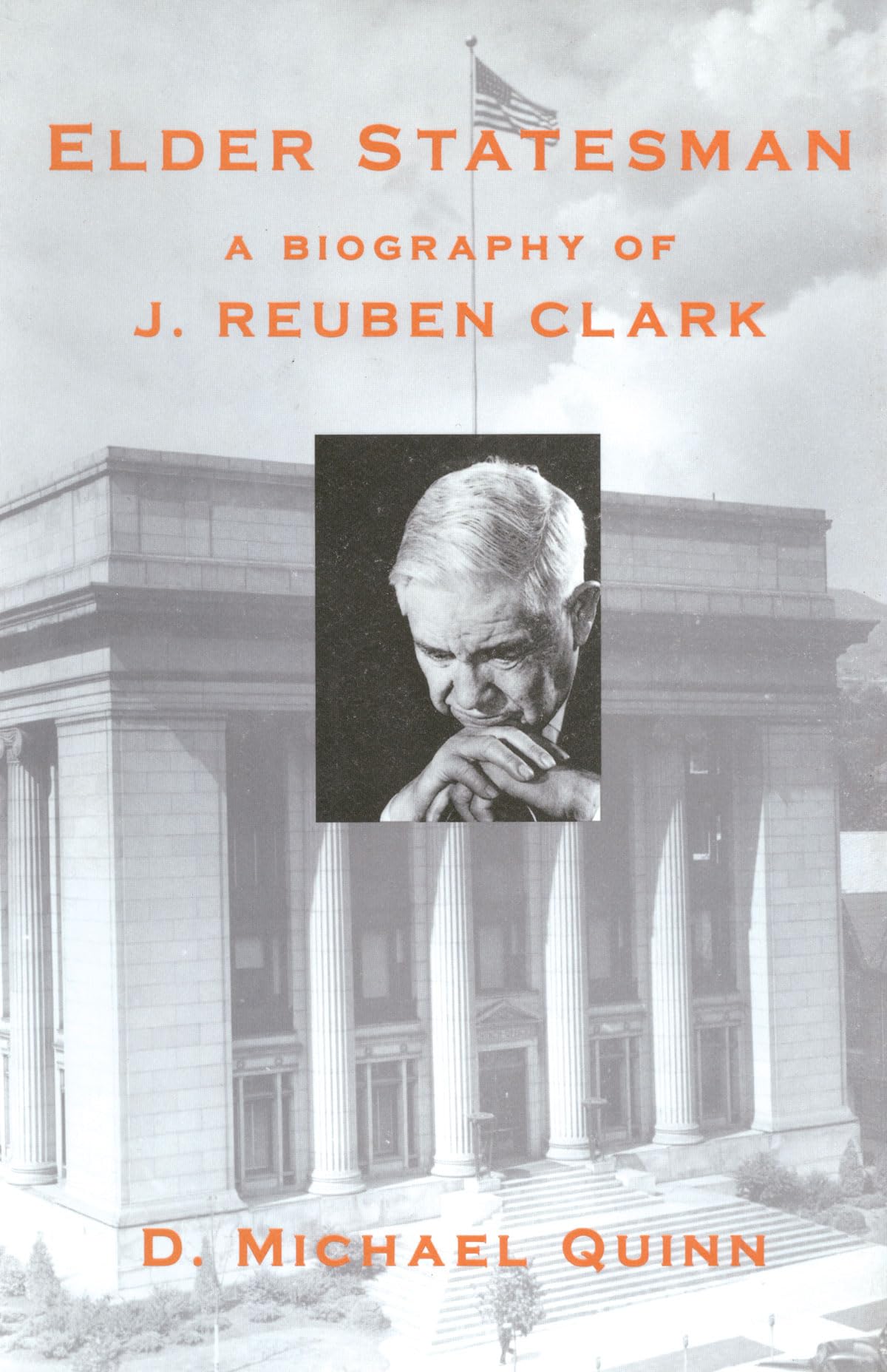
Elder Statesman: A Biography of J. Reuben Clark,Used
Sold by Ergodebooks, an authorized reseller.
Returns accepted within 30 days | support@ergodebooks.com
Shipping Information
- Free Standard Shipping — United States only
- Processing Time: 3–5 business days
- Estimated Delivery: 6–10 business days after dispatch
- Double-boxed, fully insured & discreetly packaged
- Tracking number sent via email once dispatched
Returns & Refund
Returns accepted within 30 days of delivery.
Damaged or Defective Item
Free return shipping + replacement or full refund
Wrong Item Received
Free return shipping + replacement or full refund
Change of Mind
Return shipping at customer's expense · 25% restocking fee applies
Payment Option

J. Reuben Clark was all of these prior to his call to the LDS First Presidency. As a counselor to three church presidentsHeber J. Grant, George Albert Smith, and David O. McKayhe served longer than any other member of this high church council.Already controversial before he assumed his church duties, his blunt, independent style created even more ripples at LDS headquarters. Still, his impact, intellectually and administratively, was immense. His most important legacy may well be the professionalization of church government; where apostles previously met and decided issues based mostly on their collective years of experience, Clark drew from his secular training to introduce outside research, position papers, and extended discussion, all of which, for better or for worse, added to the administrative bureaucracy.In this impressive study of the elder statesman, as reporters labeled Clark, D. Michael Quinn considers what it meant for a Latterday Saint to attain such national and international stature, although Quinn never loses sight of Reubens very human qualities either. This fresh, intimate approach presents Clark on his own terms and draws readers into Clarks world in the context of the larger society of his time and place.From the dust jacket:Life is never quite what is portrayed in inspirational books about famous peoples experiences. One aspect that is rarely told about President Clarks life is his nearembrace of atheism in the 1920s. This period of his intellectual development is interesting and informative and ultimately as inspirational as Clarks conclusion that belief may be irrational but is essential. If nothing else, one admires the future church leaders rigor and honesty in exploring the fringes of faith. One also admires his biographer for the evenhanded, frank treatment of the subject. Clarks commitment to a successful career similarly came at a sacrifice in other areas of his life. He chose work over family whenever the option presented itself.Two issues that stand at the forefront of Clarks headstrong manner are his views on pacifism and race. Both were significant to his overall world view and have much to say about the complexity of the issues and about the fallibility of human judgment.For most of his life, Clark was a military enthusiast. He served as the assistant Judge Advocate General during World War I and earned the Distinguished Service Medal. But he changed his mind and thereafter became known as fiercely antiwar. When the United States bombed Hiroshima and Nagasaki, Clark accused his nation of barbarism and said that it had forfeited its right ever again to speak with moral authority in the world. That he also distrusted American propaganda and was sympathetic to National Socialism may come as a surprise to some readers.Similarly, readers may shudder to learn of Clarks views on race. He was partly responsible for the LDS Hospitals segregation of the blood of whites and Negroes, his logic being that since anyone with as little as one drop of African blood was ineligible for LDS priesthood ordination, a transfusion from a black donor to a white recipient would render the latter incapable of exercising priesthood authority. Such a racist viewin part a reflection of the timeis tempered by the disclosure that Clark was one of the first among the church leadership to advocate steps toward giving blacks the priesthood.Other ideological quandaries and soulsearching on Clarks part could be enumerated, but suffice it to say that anyone who picks up this volume will live Reubens life with him. One may not ultimately understand why Clark said or did what he did in every instance, but there is a palpable sense of a life livedwith all the quirks and ironies that real lives are made of. Elder Statesman speaks to larger issues, but the spotlight remains on the man himself; readers are left to draw their own conclusions about whether Clark was a hero or villain in any given circ
⚠️ WARNING (California Proposition 65):
This product may contain chemicals known to the State of California to cause cancer, birth defects, or other reproductive harm.
For more information, please visit www.P65Warnings.ca.gov.