
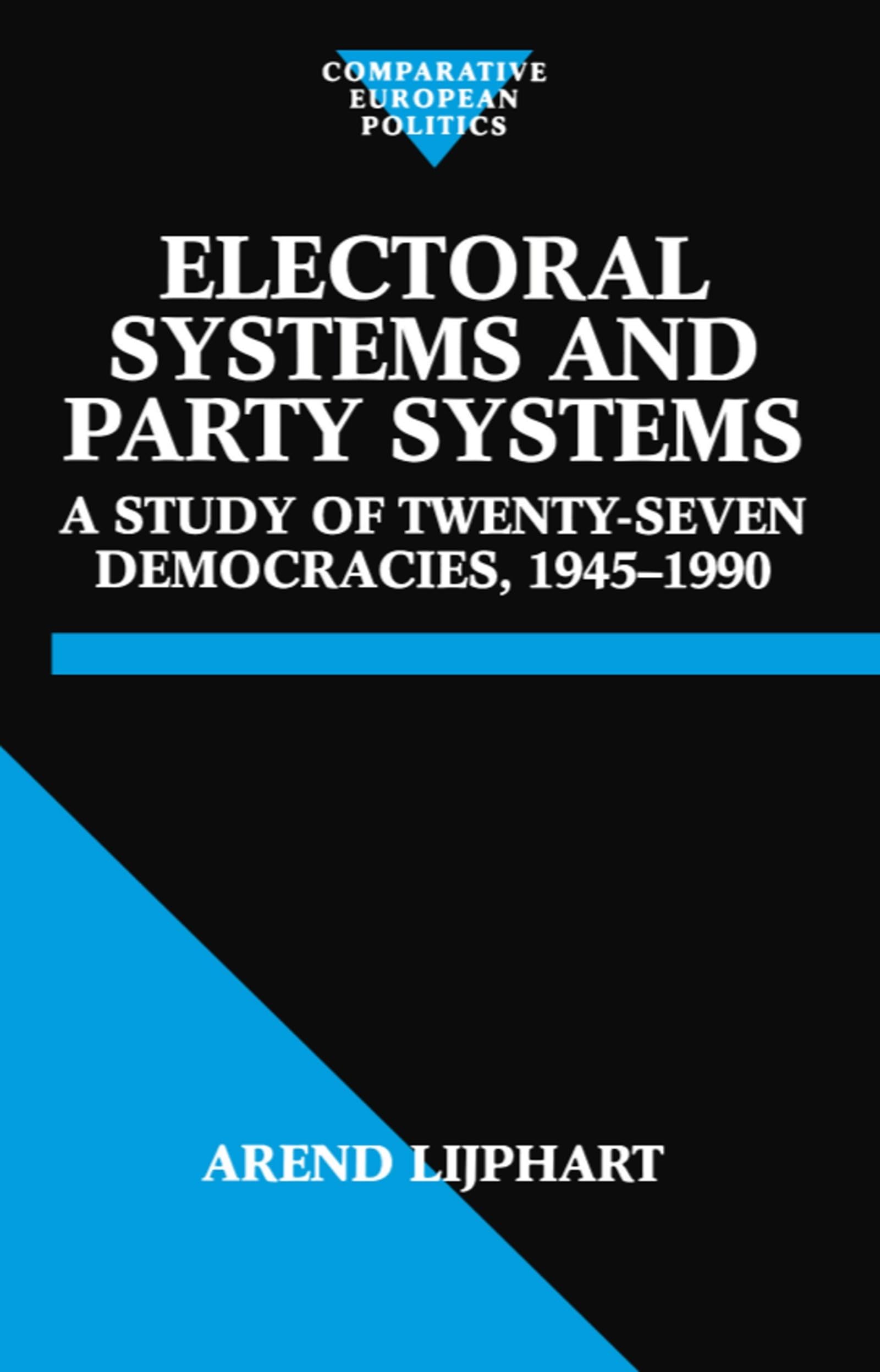
Title
Electoral Systems And Party Systems: A Study Of Twentyseven Democracies, 19451990 (Comparative Politics)
Sold by Ergodebooks, an authorized reseller.
Returns accepted within 30 days | support@ergodebooks.com
Shipping Information
- Free Standard Shipping — United States only
- Processing Time: 3–5 business days
- Estimated Delivery: 6–10 business days after dispatch
- Double-boxed, fully insured & discreetly packaged
- Tracking number sent via email once dispatched
Returns & Refund
Returns accepted within 30 days of delivery.
Damaged or Defective Item
Free return shipping + replacement or full refund
Wrong Item Received
Free return shipping + replacement or full refund
Change of Mind
Return shipping at customer's expense · 25% restocking fee applies
Payment Option

The Most Fundamental Element Of Representative Democracy Is The Electoral Systemtranslating Citizens' Votes Into Representatives' Seats. Electoral Systems Are Also The Most Practical And Accessible Instrument Available To Democratic Reformers. This Systematic And Comprehensive Study Describes And Classifies 70 Electoral Systems Used By 27 Democracies Including Those Of Western Europe, The United States, Australia, Canada, Costa Rica, India, Israel, Japan, And New Zealand. Using Comparative And Statistical Analysis Of These Systems, Arend Lijphart Demonstrates The Effect Of The Electoral Formula Used, The Number Of Representatives Elected Per District, Electoral Thresholds, And Five Other Key Features Of Electoral Systems On The Proportionality Of The Election Outcome, The Degree Of Multipartisanism, And The Creation Of Majority Parties. In The Process, He Reveals That Electoral Systems Are Neither As Diverse Nor As Complex As Is Usually Assumed. The Most Definitive Treatment Of The Subject Since Rae'S Classic Study In 1967, This Book Is Based On More Accurate And Comprehensive Data Covering More Countries And A Longer Timespan And Uses Stronger Hypotheses And Better Analytical Methods. The Unique Information And Analysis It Offers Will Make It Essential Reading For Scholars And Students Of Comparative Politics.
⚠️ WARNING (California Proposition 65):
This product may contain chemicals known to the State of California to cause cancer, birth defects, or other reproductive harm.
For more information, please visit www.P65Warnings.ca.gov.
- Q: What is the length, width, and height of this book? A: The book measures eight and a half inches in length, five and fifty-nine hundredths inches in width, and zero point fifty-five inches in height.
- Q: How many pages does the book have? A: The book contains two hundred twenty-eight pages, providing a comprehensive study of electoral systems.
- Q: What type of binding does this book have? A: This book is available in paperback binding, making it lightweight and portable.
- Q: Who is the author of this book? A: The author of the book is Arend Lijphart, a renowned scholar in comparative politics.
- Q: What genre does this book belong to? A: This book falls under the genre of comparative politics, focusing on electoral systems and party systems.
- Q: Is this book suitable for beginners in political science? A: Yes, this book is suitable for beginners, as it offers a systematic study of electoral systems.
- Q: What is the main focus of this book? A: The main focus of the book is to analyze and classify seventy electoral systems used by twenty-seven democracies.
- Q: Can this book be used as a textbook for courses in political science? A: Yes, this book can be utilized as a textbook for political science courses, particularly those examining electoral systems.
- Q: How should I store this book to keep it in good condition? A: Store the book in a cool, dry place away from direct sunlight to preserve its condition.
- Q: Is there a recommended way to handle the book to avoid damage? A: Yes, handle the book gently and avoid bending the spine to prevent damage.
- Q: What should I do if the book arrives damaged? A: If the book arrives damaged, contact the seller for return options or a replacement.
- Q: What is the return policy for this book? A: The return policy typically allows returns within a specified period if the book is in original condition.
- Q: Can I find information on specific electoral systems in this book? A: Yes, the book provides detailed information on various electoral systems used in democracies.
- Q: What are the key features analyzed in this book? A: The book analyzes key features like electoral formulas, thresholds, and the number of representatives elected.
- Q: Is there a digital version of this book available? A: Yes, a digital version may be available through various online platforms.
- Q: Does this book include statistical analysis of electoral systems? A: Yes, the book employs comparative and statistical analysis to study the electoral systems in detail.