
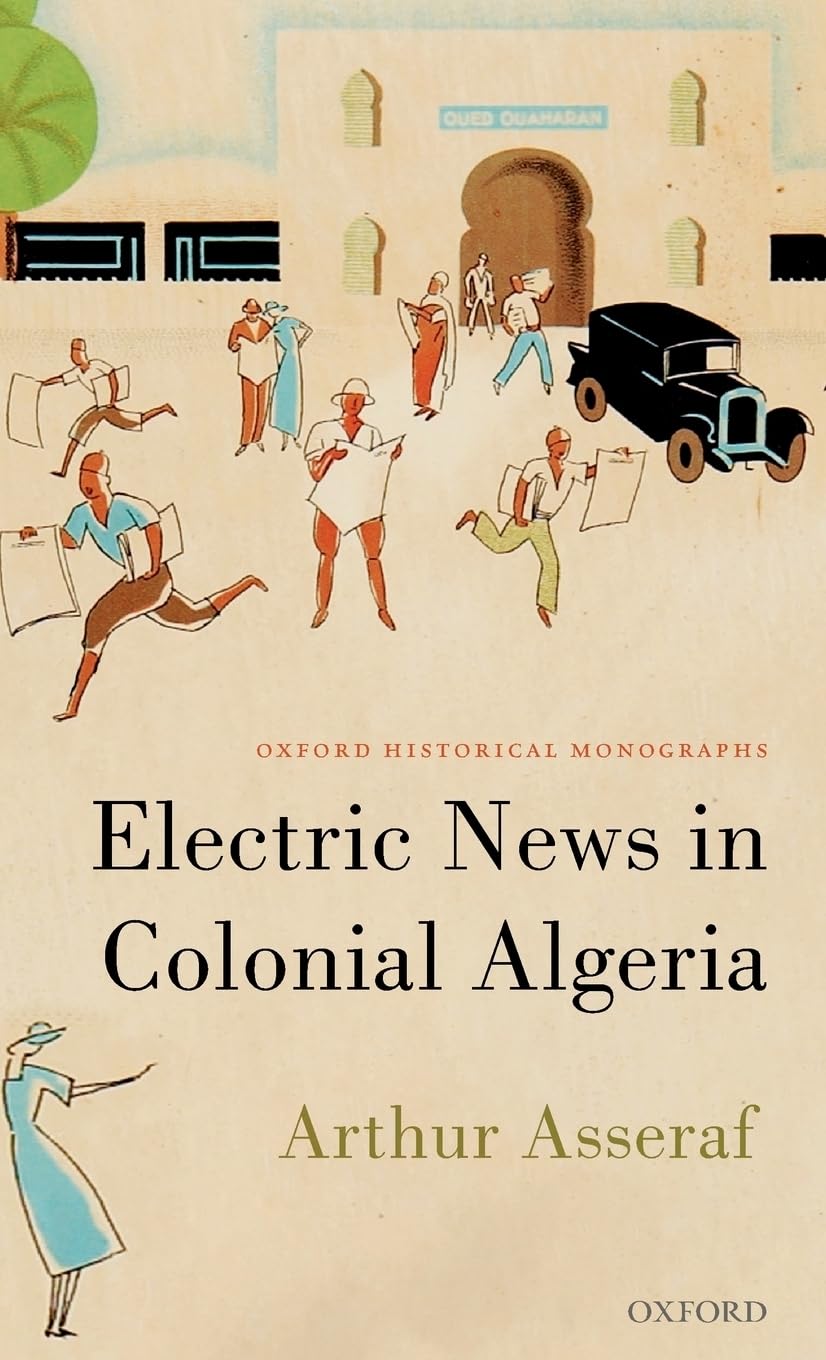
Title
Electric News in Colonial Algeria (Oxford Historical Monographs),Used
Sold by Ergodebooks, an authorized reseller.
Returns accepted within 30 days | support@ergodebooks.com
Shipping Information
- Free Standard Shipping — United States only
- Processing Time: 3–5 business days
- Estimated Delivery: 6–10 business days after dispatch
- Double-boxed, fully insured & discreetly packaged
- Tracking number sent via email once dispatched
Returns & Refund
Returns accepted within 30 days of delivery.
Damaged or Defective Item
Free return shipping + replacement or full refund
Wrong Item Received
Free return shipping + replacement or full refund
Change of Mind
Return shipping at customer's expense · 25% restocking fee applies
Payment Option

How do the things which connect us also serve to divide us? Electric News in Colonial Algeria traces how news circulated in a particularly divided society: Algeria under French rule in the late nineteenth and early twentieth centuries. It tells a different history of globalization, one which puts the experience of everyday people at the centre. The years between 1881 and 1940 were those of maximum colonial power in North Africa; a period of intense technological revolution, global high imperialism, and the expansion of settler colonialism. Algerians became connected to international networks of news, and local people followed distant events with great interest. But once news reached Algeria, accounts of recent events often provoked conflict as they moved between different social groups. In a society split between its native majority and a substantial settler minority, distant wars led to riots. Circulation and polarisation were two sides of the same coin.Examining a range of sources in multiple languages across colonial society, Electric News in Colonial Algeria offers a new understanding of the spread of news. News was a whole ecosystem in which new technologies such as the printing press, telegraph, cinema, and radio interacted with older media like songs, rumours, letters, and manuscripts. The French government watched anxiously over these developments, monitoring Algerians' reactions to news through an extensive network of surveillance that often ended up spreading news rather than controlling its flow. By tracking what different people thought of as news, this history helps us reconsider the relationship between time, media, and historical change.
⚠️ WARNING (California Proposition 65):
This product may contain chemicals known to the State of California to cause cancer, birth defects, or other reproductive harm.
For more information, please visit www.P65Warnings.ca.gov.