If you have any questions, you are always welcome to contact us. We'll get back to you as soon as possible, withing 24 hours on weekdays.
Customer service
All questions about your order, return and delivery must be sent to our customer service team by e-mail at yourstore@yourdomain.com
Sale & Press
If you are interested in selling our products, need more information about our brand or wish to make a collaboration, please contact us at press@yourdomain.com
Help
If you have any questions, you are always welcome to contact us. We'll get back to you as soon as possible, withing 24 hours on weekdays.
Customer service
All questions about your order, return and delivery must be sent to our customer service team by e-mail at yourstore@yourdomain.com
Sale & Press
If you are interested in selling our products, need more information about our brand or wish to make a collaboration, please contact us at press@yourdomain.com
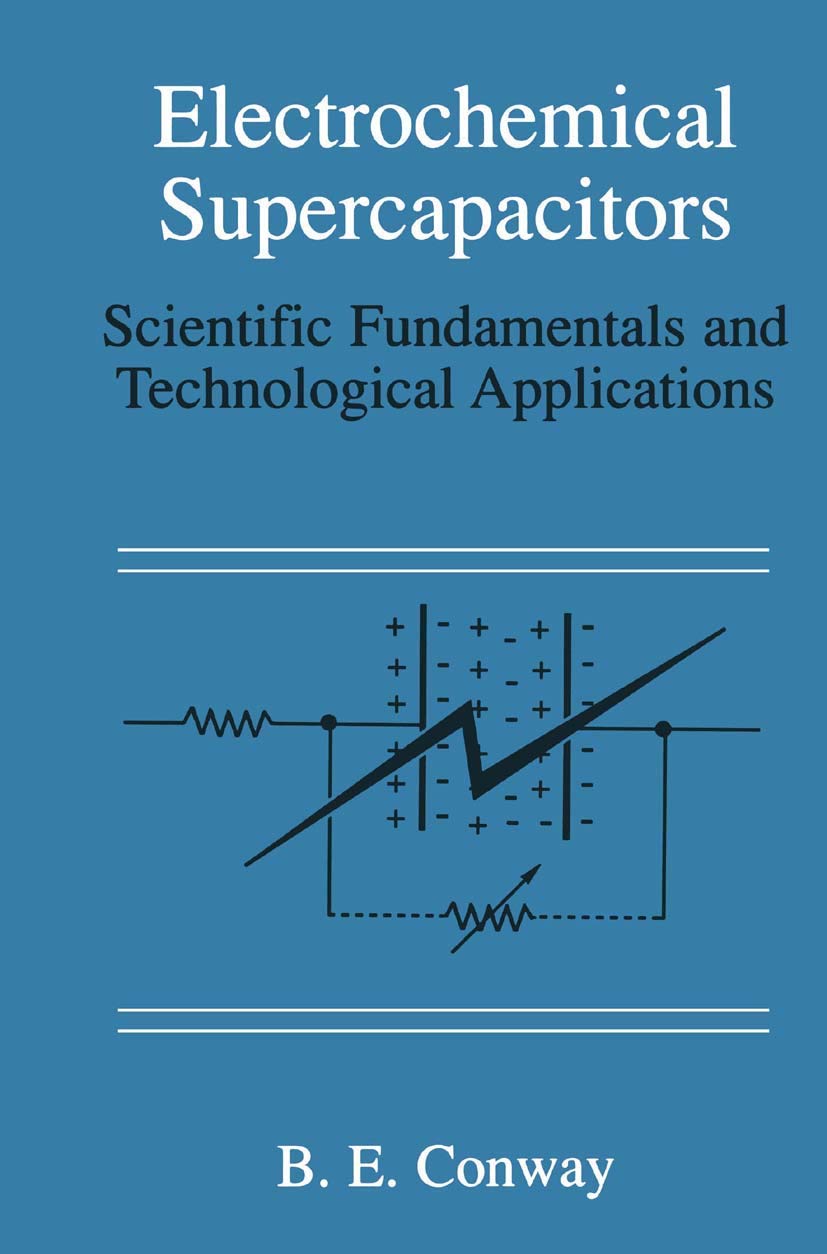
The first model for the distribution of ions near the surface of a metal electrode was devised by Helmholtz in 1874. He envisaged two parallel sheets of charges of opposite sign located one on the metal surface and the other on the solution side, a few nanometers away, exactly as in the case of a parallel plate capacitor. The rigidity of such a model was allowed for by Gouy and Chapman inde pendently, by considering that ions in solution are subject to thermal motion so that their distribution from the metal surface turns out diffuse. Stern recognized that ions in solution do not behave as point charges as in the GouyChapman treatment, and let the center of the ion charges reside at some distance from the metal surface while the distribution was still governed by the GouyChapman view. Finally, in 1947, D. C. Grahame transferred the knowledge of the struc ture of electrolyte solutions into the model of a metal/solution interface, by en visaging different planes of closest approach to the electrode surface depending on whether an ion is solvated or interacts directly with the solid wall. Thus, the GouyChapmanSternGrahame model of the socalled electrical double layer was born, a model that is still qualitatively accepted, although theoreti cians have introduced a number of new parameters of which people were not aware 50 years ago.
⚠️ WARNING (California Proposition 65):
This product may contain chemicals known to the State of California to cause cancer,
birth defects, or other reproductive harm.
For MAP (Minimum Advertised Price) violations and Intellectual Property (IP) or Trademark concerns, please contact:
support@ergodebooks.com
⚠️ California Proposition 65 Warning: Some products sold on this website may expose you to chemicals known to the State of California to cause cancer, birth defects, or other reproductive harm. For more information, visit www.P65Warnings.ca.gov.