
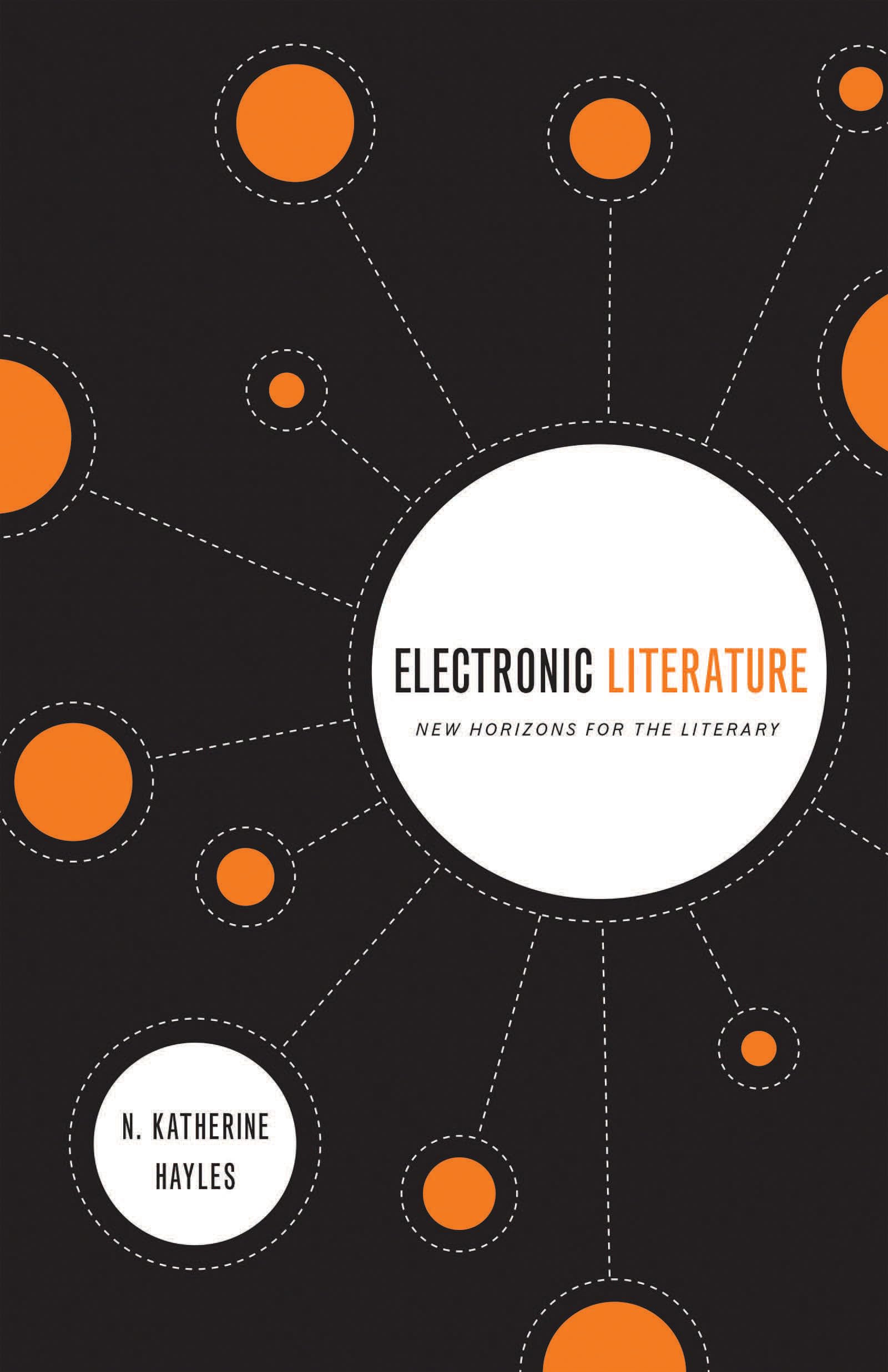
Title
Electronic Literature: New Horizons for the Literary (Yusko WardPhillips Lectures in English Language and Literature),Used
Sold by Ergodebooks, an authorized reseller.
Returns accepted within 30 days | support@ergodebooks.com
Shipping Information
- Free Standard Shipping — United States only
- Processing Time: 3–5 business days
- Estimated Delivery: 6–10 business days after dispatch
- Double-boxed, fully insured & discreetly packaged
- Tracking number sent via email once dispatched
Returns & Refund
Returns accepted within 30 days of delivery.
Damaged or Defective Item
Free return shipping + replacement or full refund
Wrong Item Received
Free return shipping + replacement or full refund
Change of Mind
Return shipping at customer's expense · 25% restocking fee applies
Payment Option

A visible presence for some two decades, electronic literature has already produced many works that deserve the rigorous scrutiny critics have long practiced with print literature. Only now, however, with Electronic Literature by N. Katherine Hayles, do we have the first systematic survey of the field and an analysis of its importance, breadth, and wideranging implications for literary study. Hayles's book is designed to help electronic literature move into the classroom. Her systematic survey of the field addresses its major genres, the challenges it poses to traditional literary theory, and the complex and compelling issues at stake. She develops a theoretical framework for understanding how electronic literature both draws on the print tradition and requires new reading and interpretive strategies. Grounding her approach in the evolutionary dynamic between humans and technology, Hayles argues that neither the body nor the machine should be given absolute theoretical priority. Rather, she focuses on the interconnections between embodied writers and users and the intelligent machines that perform electronic texts. Through close readings of important works, Hayles demonstrates that a new mode of narration is emerging that differs significantly from previous models. Key to her argument is the observation that almost all contemporary literature has its genesis as electronic files, so that print becomes a specific mode for electronic text rather than an entirely different medium. Hayles illustrates the implications of this condition with three contemporary novels that bear the mark of the digital.Included with the book is a companion website (https://newhorizons.eliterature.org/index.php) and an online resource, The Electronic Literature Collection, Volume 1 (https://collection.eliterature.org/1/). The companion website offers resources for teachers and students, including sample syllabi, original essays, author biographies, and useful links. The ELC contains sixty new and recent works of electronic literature with keyword index, authors' notes, and editorial headnotes. Representing multiple modalities of electronic writinghypertext fiction, kinetic poetry, generative and combinatory forms, network writing, codework, 3D, narrative animations, installation pieces, and Flash poetrythe collection encompasses comparatively lowtech work alongside heavily coded pieces. Together, the book, companion website, and collection provide an exceptional pedagogical opportunity.
⚠️ WARNING (California Proposition 65):
This product may contain chemicals known to the State of California to cause cancer, birth defects, or other reproductive harm.
For more information, please visit www.P65Warnings.ca.gov.