
Title
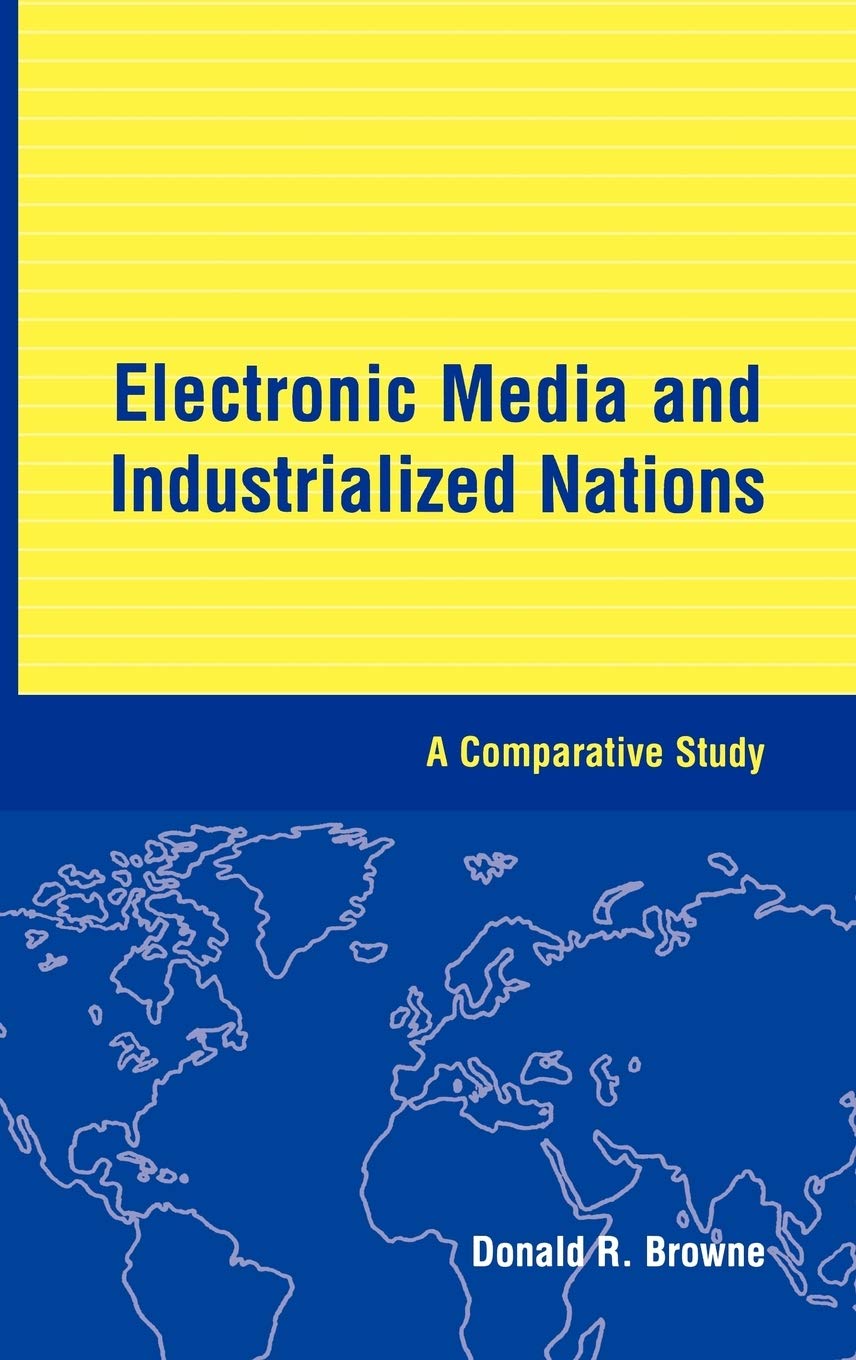
Electronic Media And Industrialized Nations: A Comparative Study,Used
Sold by Ergodebooks, an authorized reseller.
Returns accepted within 30 days | support@ergodebooks.com
Shipping Information
- Free Standard Shipping — United States only
- Processing Time: 3–5 business days
- Estimated Delivery: 6–10 business days after dispatch
- Double-boxed, fully insured & discreetly packaged
- Tracking number sent via email once dispatched
Returns & Refund
Returns accepted within 30 days of delivery.
Damaged or Defective Item
Free return shipping + replacement or full refund
Wrong Item Received
Free return shipping + replacement or full refund
Change of Mind
Return shipping at customer's expense · 25% restocking fee applies
Payment Option

Electronic Media and Industrialized Nations considers the approaches that industrialized nations have taken to introduce, develop, control, and use electronic media. Browne compares and contrasts through detailed case studies, the experiences of several nationsFrance, Germany (both East and West), the Soviet Union and Russia, and the Netherlandsby presenting them in light of the political, economic, cultural, geographical, and demographic factors that both shape and reflect society. He then compares the pros and cons of those experiences, adds specific examples from still other industrialized nations, and proposes an 'ideal' system as a way of focusing attention on what the media could and should do to play supportive roles in society.Browne readily acknowledges his own biases. He makes it abundantly clear that he believes those who regulate, administer, produce, and receive have an obligation to understand how the electronic media function and how the media should and can follow standards that will better ensure their responsibility for the development of healthy societies.While the present work is based on Browne's awardwinning Comparing Broadcast Systems, it goes much further in terms of its coverage of such subjects as governmentmedia relationships, minorities and the media, uses of the Internet, and the possible influence of 'media barons,' the European Union, and transnational corporations. Where the two Germanys and the Soviet Union/Russia are concerned, he provides an account of the role of the media before, during, and after both German unification and the collapse of the Soviet Union. He also places greater emphasis on how media portrayal of religion, class, language, ethnicity, and political affiliation provide us with images of the relative health of civil society.
⚠️ WARNING (California Proposition 65):
This product may contain chemicals known to the State of California to cause cancer, birth defects, or other reproductive harm.
For more information, please visit www.P65Warnings.ca.gov.