
Title
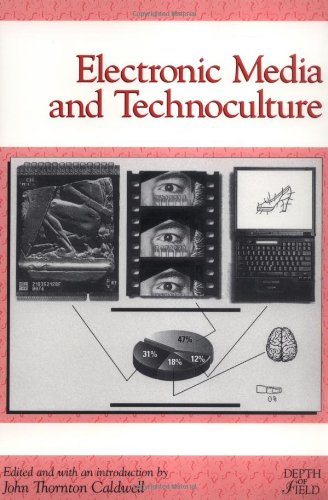
Electronic Media And Technoculture (Depth Of Field Series),Used
Sold by Ergodebooks, an authorized reseller.
Returns accepted within 30 days | support@ergodebooks.com
Shipping Information
- Free Standard Shipping — United States only
- Processing Time: 3–5 business days
- Estimated Delivery: 6–10 business days after dispatch
- Double-boxed, fully insured & discreetly packaged
- Tracking number sent via email once dispatched
Returns & Refund
Returns accepted within 30 days of delivery.
Damaged or Defective Item
Free return shipping + replacement or full refund
Wrong Item Received
Free return shipping + replacement or full refund
Change of Mind
Return shipping at customer's expense · 25% restocking fee applies
Payment Option

Never before has the future been so systematically envisioned, aggressively analyzed, and grandly theorized as in the present rush to cyberspace and digitalization. In the midtwentieth century, questions about media technologies and society first emerged as scholarly handwringing about the deleterious sweep of electronic media and information technologies in mass culture. Now, questions about new technologies and their social and cultural impact are no longer limited to intellectual soothsayers in the academy but are pervasive parts of daytoday discourses in newspapers, magazines, television, and film.Electronic Media and Technoculture anchors contemporary discussion of the digital future within a critical tradition about the media arts, society, and culture. The collection examines a range of phenomena, from boutique cyberpractices to the growing ubiquity of ecommerce and the internet. The essays chart a critical field in media studies, providing a historical perspective on theories of new media. The contributors place discussions of producing technologies in dialogue with consuming technologies, new media in relation to old media, and argue that digital media should not be restricted to the constraining public discourses of either the computer, broadcast, motionpicture, or internet industries. The collection charts a range of theoretical positions to assist readers interested in new media and to enable them to weather the cycles of hardware obsolescence and theoretical volatility that characterize the present rush toward digital technologies.Contributors include Ien Ang, John Caldwell, Cynthia Cockburn, Helen Cunningham, Hans Magnus Enzensberger, Guillermo G=mezPea, Arthur Kroker, Bill Nichols, Andrew Ross, Ellen Seiter, Vivian Sobchack, AllucquFre Rosanne Stone, Ravi Sundaram, Michael A. Weinstein, Raymond Williams, and Brian Winston.John Thornton Caldwell is chair of the film and television department at the University of California at Los Angeles. He is a filmmaker and media artist and author of Televisuality: Style, Crisis, and Authority in American Television (also from Rutgers University Press).
⚠️ WARNING (California Proposition 65):
This product may contain chemicals known to the State of California to cause cancer, birth defects, or other reproductive harm.
For more information, please visit www.P65Warnings.ca.gov.
- Q: What is the page count of this book? A: This book has three hundred thirty-one pages. It provides a comprehensive exploration of electronic media and technoculture.
- Q: What is the binding type of this book? A: This book is a paperback edition. Paperback bindings are flexible and lightweight, making them easy to carry.
- Q: What are the dimensions of this book? A: The dimensions are six point twenty-six inches in length, one inch in width, and nine point zero two inches in height. This size is standard for many academic texts.
- Q: Who is the author of this book? A: The author is John Thornton Caldwell. He is known for his work in film and media studies.
- Q: What topics does this book cover? A: This book covers the intersection of media technologies and society. It discusses themes related to digitalization and the impact of electronic media.
- Q: How do I read this book? A: To read this book, simply open it and start from the beginning. It is suitable for anyone interested in media studies or technoculture.
- Q: Is this book appropriate for beginners? A: Yes, this book is appropriate for beginners in media studies. It offers foundational insights into electronic media and its societal implications.
- Q: What is the intended audience for this book? A: The intended audience includes students, researchers, and anyone interested in media arts and communication. It is designed for both academic and general readership.
- Q: How should I store this book? A: Store this book in a cool, dry place, away from direct sunlight. This will help preserve its condition over time.
- Q: Can I clean this book? A: Yes, you can clean this book by gently wiping the cover with a soft, dry cloth. Avoid using liquids that might damage the pages.
- Q: What if the book arrives damaged? A: If the book arrives damaged, you should contact the seller for a return or exchange. Ensure you keep the original packaging for the return process.
- Q: Is there a warranty for this book? A: No, there is typically no warranty for books. However, you can inquire about the seller's return policy for any issues.
- Q: What if I have trouble understanding the content? A: If you have trouble understanding the content, consider joining a study group or looking for supplementary materials online. Discussions with peers can enhance comprehension.
- Q: How is this book different from others in its genre? A: This book offers a critical perspective on digital media's impact, which sets it apart from other texts that may focus solely on technical aspects. It emphasizes cultural implications.
- Q: Is this book suitable for a graduate-level course? A: Yes, this book is suitable for graduate-level courses in media studies. It provides in-depth analysis and covers complex theoretical discussions.
- Q: Who are some contributors to this book? A: Contributors include notable scholars such as Ien Ang, Cynthia Cockburn, and Raymond Williams. Their diverse perspectives enrich the discussions within the book.