
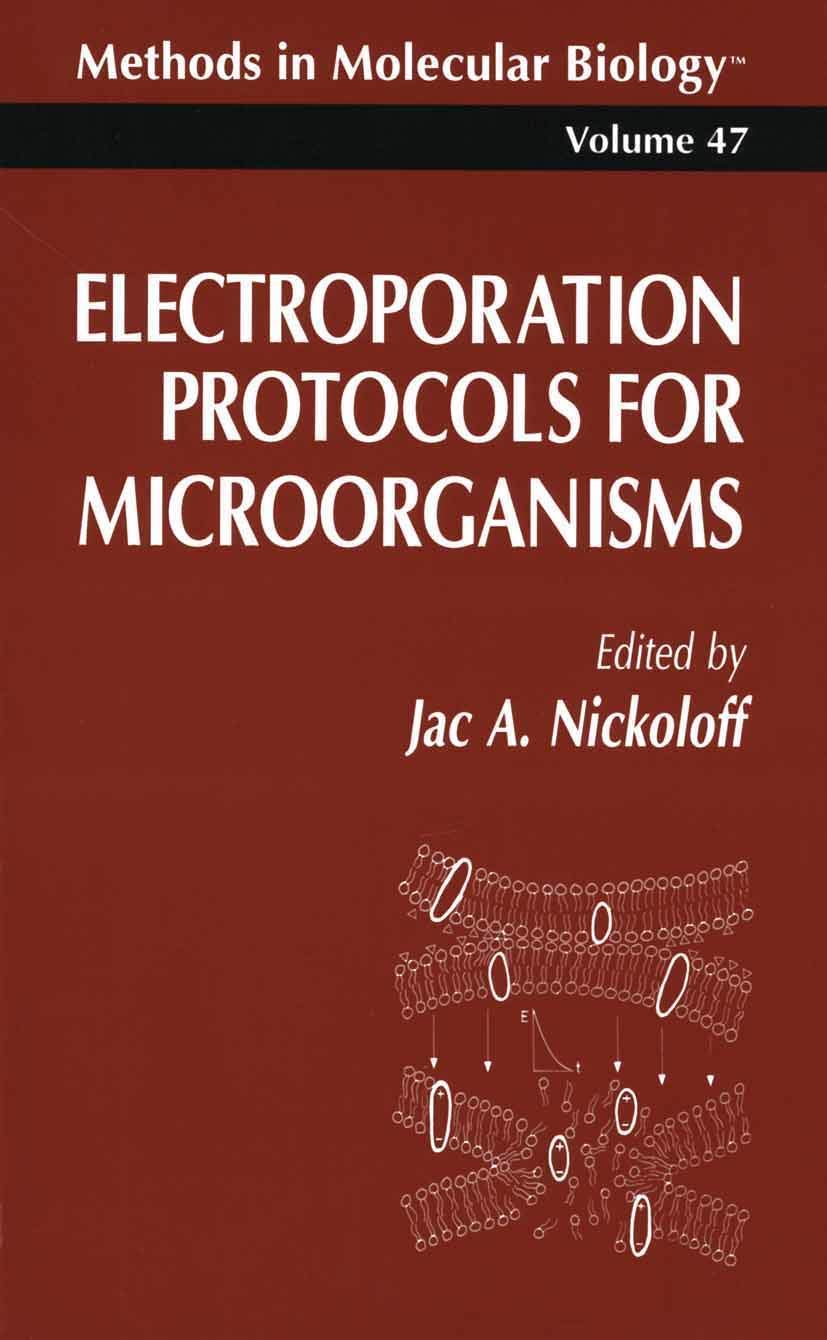
Title
Electroporation Protocols for Microorganisms (Methods in Molecular Biology, 47),New
Sold by Ergodebooks, an authorized reseller.
Returns accepted within 30 days | support@ergodebooks.com
Shipping Information
- Free Standard Shipping — United States only
- Processing Time: 3–5 business days
- Estimated Delivery: 6–10 business days after dispatch
- Double-boxed, fully insured & discreetly packaged
- Tracking number sent via email once dispatched
Returns & Refund
Returns accepted within 30 days of delivery.
Damaged or Defective Item
Free return shipping + replacement or full refund
Wrong Item Received
Free return shipping + replacement or full refund
Change of Mind
Return shipping at customer's expense · 25% restocking fee applies
Payment Option

Electroporation is one of the most widespread techniques used in modem molecular genetics. It is most commonly used to introduce DNA into cells for investigations of gene structure and function, and in this regard, electroporation is both highly versatile, being effective with nearly all species and cell types, and highly efficient. For many cell types, electroporation is either the most efficient or the only means known to effect gene transfer. However, exposure of cells to brief, hi intensity electric fields has found broad application in other aspects of biological research, and is now routinely used to introduce other types of biological and analytic molecules into cells, to induce cellcell fusion, and to transfer DNA directly between different species. The first seven chapters of Electroporation Protocols for Micro organisms describe the underlying theory of electroporation, the com mercially available instrumentation, and a number of specialized electroporation applications, such as cDNA library construction and interspecies DNA electrotransfer. Each of the remaining chapters pre sents a well developed method for electrotransformation of a particular bacterial, fungal, or protist species. These chapters also serve to intro duce those new to the field the important research questions that are currently being addressed with particular organisms, highlighting both the major advantages and limitations of each species as a model organ ism, and explaining the roles that electroporation has played in the development of the molecular genetic systems currently in use.
⚠️ WARNING (California Proposition 65):
This product may contain chemicals known to the State of California to cause cancer, birth defects, or other reproductive harm.
For more information, please visit www.P65Warnings.ca.gov.