
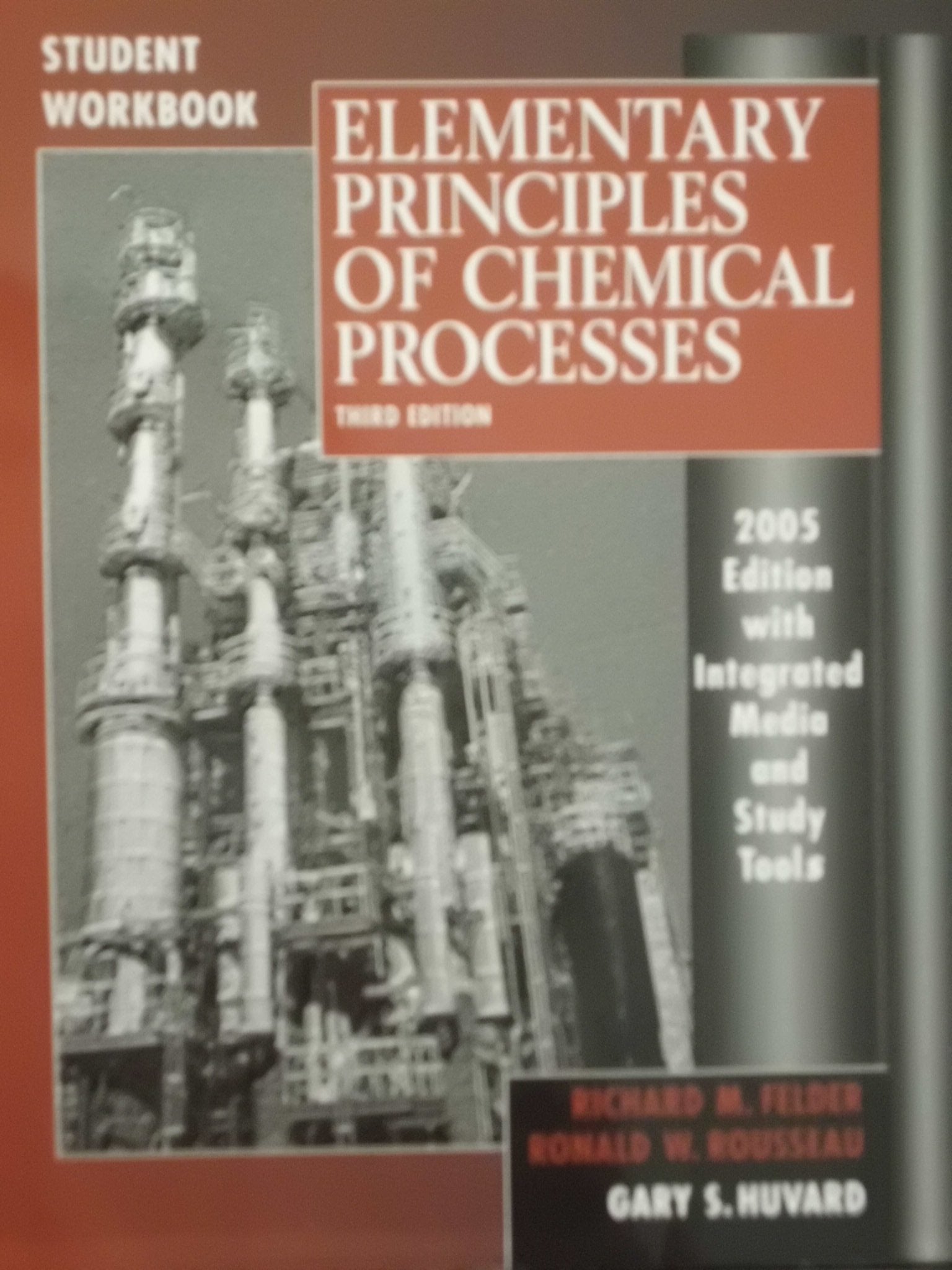
Title
Elementary Principles Of Chemical Processes,New
Sold by Ergodebooks, an authorized reseller.
Returns accepted within 30 days | support@ergodebooks.com
Shipping Information
- Free Standard Shipping — United States only
- Processing Time: 3–5 business days
- Estimated Delivery: 6–10 business days after dispatch
- Double-boxed, fully insured & discreetly packaged
- Tracking number sent via email once dispatched
Returns & Refund
Returns accepted within 30 days of delivery.
Damaged or Defective Item
Free return shipping + replacement or full refund
Wrong Item Received
Free return shipping + replacement or full refund
Change of Mind
Return shipping at customer's expense · 25% restocking fee applies
Payment Option

This Bestselling Book Prepares Readers To Formulate And Solve Material And Energy Balances In Chemical Process Systems. It Provides A Realistic, Informative, And Positive Introduction To The Practice Of Chemical Engineering.
⚠️ WARNING (California Proposition 65):
This product may contain chemicals known to the State of California to cause cancer, birth defects, or other reproductive harm.
For more information, please visit www.P65Warnings.ca.gov.
- Q: How many pages does the book have? A: The book has two hundred forty-eight pages. This makes it a comprehensive guide for readers looking to understand chemical engineering principles.
- Q: What are the dimensions of the book? A: The book measures seven point seven six inches in length, nine point seven six inches in height, and three quarters of an inch in width. These dimensions make it portable and easy to handle.
- Q: What type of binding does the book have? A: The book is paperback bound. This type of binding is lightweight and flexible, making it convenient for reading.
- Q: Who is the author of the book? A: The author of the book is Richard M. Felder. He is well-known in the field of chemical engineering education.
- Q: What is the category of this book? A: The book falls under the Chemical category. It is designed for students and professionals in the field of chemical engineering.
- Q: What is the target audience for this book? A: The book is suitable for undergraduate chemical engineering students. It helps them in understanding key concepts in material and energy balances.
- Q: Is this book suitable for beginners? A: Yes, this book is suitable for beginners. It offers a realistic and informative introduction to the practice of chemical engineering.
- Q: How can I use this book effectively? A: You can use this book as a textbook for your chemical engineering courses. It is also a helpful reference for solving material and energy balance problems.
- Q: What prerequisites should I have before reading this book? A: A basic understanding of chemistry and mathematics is recommended. This will help you grasp the concepts discussed in the book more effectively.
- Q: What is the best way to care for this book? A: To care for the book, store it in a dry place and avoid exposure to direct sunlight. This will help preserve its quality over time.
- Q: Can I keep this book in a backpack? A: Yes, you can keep this book in a backpack. Its paperback design makes it lightweight and easy to carry.
- Q: Is this book durable? A: While the book is paperback, it is reasonably durable for regular use. However, handle it with care to prevent bending or tearing.
- Q: What if the book arrives damaged? A: If the book arrives damaged, you should contact the seller for a return or exchange. Most sellers have policies in place to handle such issues.
- Q: Does this book come with a warranty? A: No, this book does not come with a warranty. However, you can check the seller's return policy for any concerns.
- Q: Are there any additional resources available with this book? A: The book may reference additional resources or online materials for further learning. Check the introduction or appendix for suggestions.
- Q: Is this book recommended by educators? A: Yes, many educators recommend this book for its practical approach to chemical engineering concepts. It is widely used in academic settings.