
Title
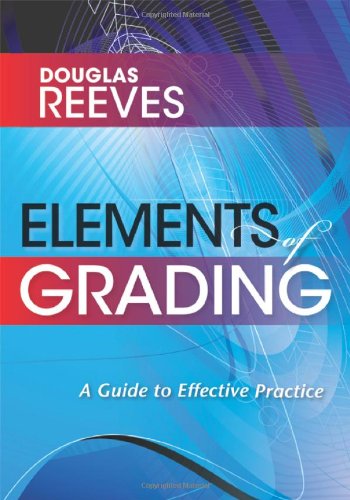
Elements Of Grading: A Guide To Effective Practice
Sold by Ergodebooks, an authorized reseller.
Returns accepted within 30 days | support@ergodebooks.com
Shipping Information
- Free Standard Shipping — United States only
- Processing Time: 3–5 business days
- Estimated Delivery: 6–10 business days after dispatch
- Double-boxed, fully insured & discreetly packaged
- Tracking number sent via email once dispatched
Returns & Refund
Returns accepted within 30 days of delivery.
Damaged or Defective Item
Free return shipping + replacement or full refund
Wrong Item Received
Free return shipping + replacement or full refund
Change of Mind
Return shipping at customer's expense · 25% restocking fee applies
Payment Option

Research Has Shown That The Quality Of Feedback Is One Of The Most Important Factors In Improving Student Learning. Elements Of Grading Addresses Problems With The Primary Source Of Feedback For Students: Grades. Author Douglas Reeves Argues That Grades Must Meet Four Essential Criteria: Accuracy. How Can We Ensure That Grading Systems Are The Result Of Evidence And Reason Rather Than Individual Judgment? Fairness. How Can We Ensure That Grades Are Based On Performance Rather Than Gender, Ethnicity, Or Socioeconomic Status? Specificity. How Can We Make Sure Grades Are Specific Enough To Help Students Improve Their Performance, Rather Than Simply Ranking Them? Timeliness. How Can We Ensure That Students Receive Fair, Accurate, And Specific Feedback While They Still Have The Time And Motivation To Use It? In Addressing These Four Issues, Elements Of Grading Does Not Offer An Ultimate Answer Or Perfect System But Shows How To Begin A Constructive, Evidencebased Conversation About Improving Grading Systems. Reeves Analyzes The Main Features Of The Grading Systems Many Schools Use Today (Such As The 100Point System And The Policy Of Giving No Points For Missing Work), Evaluating Each Of Them By His Four Criteria. While Addressing Common Arguments Against Reform, He Offers Practical Suggestions To Teachers To Make The Grading Process Not Only More Accurate, Fair, Specific, And Timely, But Quicker And More Efficient As Well. The Book Includes Examples, Case Studies, And Opportunities For Reflection To Facilitate Individual And Schoolwide Examinations Of Grading Policies.
⚠️ WARNING (California Proposition 65):
This product may contain chemicals known to the State of California to cause cancer, birth defects, or other reproductive harm.
For more information, please visit www.P65Warnings.ca.gov.
- Q: How many pages does this book have? A: This book has one hundred forty pages. It offers an in-depth exploration of grading systems and practices.
- Q: What are the dimensions of this book? A: The book measures six point seventy-three inches in length, zero point twenty-four inches in width, and nine point seventy-six inches in height.
- Q: What type of binding does this book have? A: This book is paperback bound. This makes it lightweight and easy to handle for reading.
- Q: Who is the author of this book? A: The author of this book is Douglas Reeves. He is known for his expertise in educational practices and grading.
- Q: What is the main focus of this book? A: The main focus of this book is effective grading practices. It discusses how grades can be improved to enhance student learning.
- Q: How do I use the concepts from this book in my classroom? A: You can apply the concepts by analyzing your grading practices. Implement the criteria of accuracy, fairness, specificity, and timeliness.
- Q: Is this book suitable for teachers of all grade levels? A: Yes, this book is suitable for teachers of all grade levels. It provides insights applicable to various educational contexts.
- Q: Can this book help with my grading policy? A: Yes, this book offers practical suggestions for improving grading policies. It aims to make grading more efficient and effective.
- Q: Are there any case studies included in this book? A: Yes, the book includes examples and case studies. These help illustrate the concepts discussed and facilitate reflection.
- Q: How should I care for this book? A: To care for this book, keep it in a dry place and handle it gently. Avoid exposing it to moisture to maintain its condition.
- Q: Is there a specific way to store this book? A: Yes, store this book upright on a shelf. This prevents bending or damaging the cover and pages.
- Q: What if the book arrives damaged? A: If the book arrives damaged, you should contact the seller for a return or exchange. They will provide instructions for the process.
- Q: Is this book appropriate for adult learners? A: Yes, this book is appropriate for adult learners. Its content is relevant for educators seeking to enhance their grading practices.
- Q: Does this book cover grading systems used in schools today? A: Yes, it analyzes the main features of contemporary grading systems. The book critiques popular methods like the 100-point system.
- Q: Are there reflective opportunities for teachers in this book? A: Yes, the book provides opportunities for reflection. This encourages educators to examine their own grading policies critically.
- Q: Can I find practical suggestions for teachers in this book? A: Yes, the book includes practical suggestions for teachers. These are designed to improve the grading process effectively.