
Title
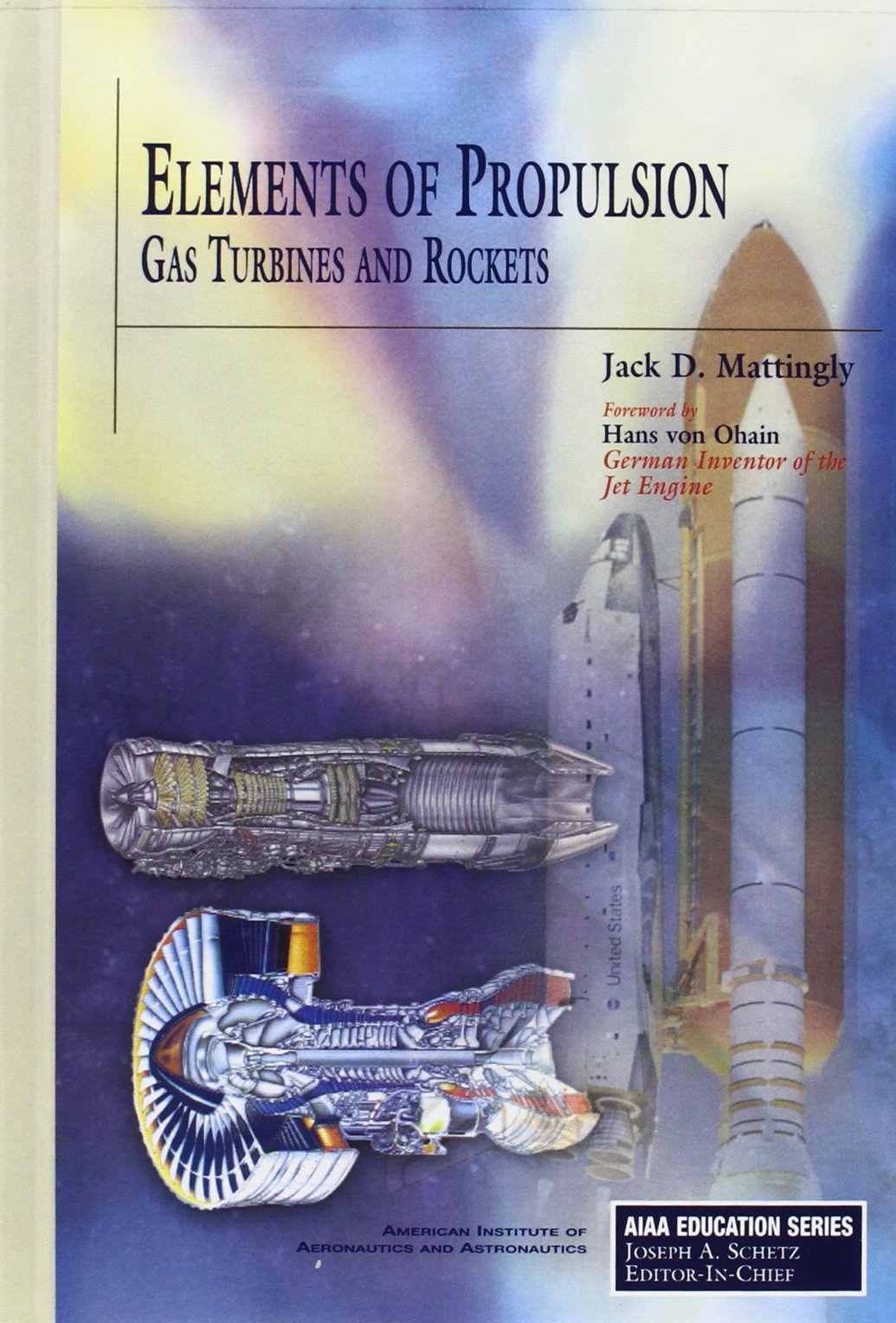
Elements of Propulsion: Gas Turbines and Rockets (AIAA Education Series),New
Sold by Ergodebooks, an authorized reseller.
Returns accepted within 30 days | support@ergodebooks.com
Shipping Information
- Free Standard Shipping — United States only
- Processing Time: 3–5 business days
- Estimated Delivery: 6–10 business days after dispatch
- Double-boxed, fully insured & discreetly packaged
- Tracking number sent via email once dispatched
Returns & Refund
Returns accepted within 30 days of delivery.
Damaged or Defective Item
Free return shipping + replacement or full refund
Wrong Item Received
Free return shipping + replacement or full refund
Change of Mind
Return shipping at customer's expense · 25% restocking fee applies
Payment Option

This text provides a complete introduction to gas turbine and rocket propulsion for aerospace and mechanical engineers. Building on the very successful Elements of Gas Turbine Propulsion, textbook coverage has been expanded to include rocket propulsion and the material on gas dynamics has been dramatically improved. The text is divided into four parts: basic concepts and gas dynamics; analysis of rocket propulsion systems; parametric (design point) and performance (offdesign) analysis of air breathing propulsion systems; and analysis and design of major gas turbine engine components (fans, compressors, turbines, inlets, nozzles, main burners, and afterburners).Design concepts are introduced early (aircraft and rocket performance in an introductory chapter) and integrated throughout. Written with extensive student input on the design of the book, the book builds upon definitions and gradually develops the thermodynamics, gas dynamics, rocket engine analysis, and gas turbine engine principles. The book contains over 100 worked examples and numerous homework problems so concepts are applied after they are introduced. Over 600 illustrations and pictures show basic concepts, trends, and design examples.Eight computer programs accompany the text, which allow for rapid calculation of trends, what if questions, conceptual design, homework problems, and homework verification. The software runs in the Windows operating system on PCcompatible systems.
⚠️ WARNING (California Proposition 65):
This product may contain chemicals known to the State of California to cause cancer, birth defects, or other reproductive harm.
For more information, please visit www.P65Warnings.ca.gov.
- Q: What is the main focus of 'Elements of Propulsion: Gas Turbines And Rockets'? A: The book provides a comprehensive introduction to gas turbine and rocket propulsion, specifically designed for aerospace and mechanical engineers.
- Q: How is the content of the book structured? A: The text is divided into four parts: basic concepts and gas dynamics, analysis of rocket propulsion systems, performance analysis of air breathing propulsion systems, and design analysis of major gas turbine engine components.
- Q: Does the book include practical examples and problems? A: Yes, it contains over 100 worked examples and numerous homework problems to help readers apply the concepts learned.
- Q: What type of illustrations are included in the book? A: The book features over 600 illustrations and pictures that demonstrate basic concepts, trends, and design examples in propulsion technology.
- Q: Is there any software included with the book? A: Yes, eight computer programs are included that facilitate rapid calculations, conceptual design, and homework verification.
- Q: What is the item condition of this book? A: The item is classified as 'New', ensuring that customers receive a pristine copy.
- Q: Who is the author of 'Elements of Propulsion: Gas Turbines And Rockets'? A: The book is authored by Jack D. Mattingly.
- Q: When was this book published? A: The book was published on August 1, 2006.
- Q: What is the binding type of the book? A: The book is available in hardcover binding.
- Q: What category does this book fall under? A: The book is categorized under Propulsion Technology.