If you have any questions, you are always welcome to contact us. We'll get back to you as soon as possible, withing 24 hours on weekdays.
Customer service
All questions about your order, return and delivery must be sent to our customer service team by e-mail at yourstore@yourdomain.com
Sale & Press
If you are interested in selling our products, need more information about our brand or wish to make a collaboration, please contact us at press@yourdomain.com
Help
If you have any questions, you are always welcome to contact us. We'll get back to you as soon as possible, withing 24 hours on weekdays.
Customer service
All questions about your order, return and delivery must be sent to our customer service team by e-mail at yourstore@yourdomain.com
Sale & Press
If you are interested in selling our products, need more information about our brand or wish to make a collaboration, please contact us at press@yourdomain.com
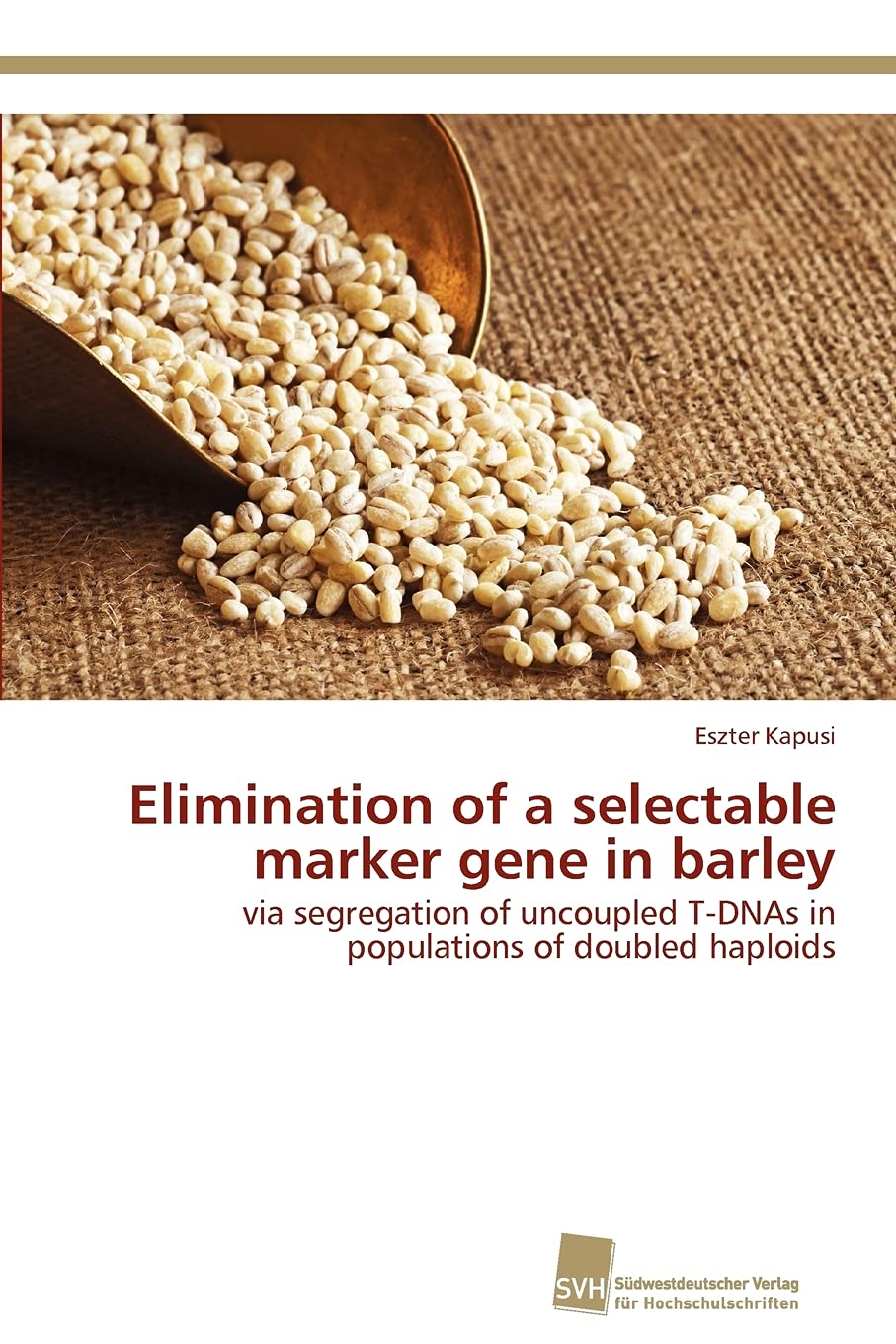
Barley represents one of the economically most important and widely distributed crops worldwide, and genetic engineering is expected to play a crucial role in its further improvement. However, once transgenic plants are obtained, the selectable marker gene is not necessary anymore or even unwanted, and thus viable means to circumvent the use of selectable markers or to remove them from transgenic plants are required. In the present study, a novel strategy has been pursued to generate selectable markerfree transgenic lines instantly homozygous for the geneofinterest. Primary cotransgenic plants (T0) containing both the selectable marker gene (hygromycin phosphotransferase) and a model geneofinterest (glucuronidase) were produced via Agrobacteriummediated gene transfer using two independent TDNAs. Both removal of the selectable marker and establishment of instant homozygosity of the geneofinterest was then achieved at a time through segregation of uncoupled TDNAs in populations of doubled haploid (DH) lines produced from the T0 plants via embryogenic pollen culture.
⚠️ WARNING (California Proposition 65):
This product may contain chemicals known to the State of California to cause cancer,
birth defects, or other reproductive harm.
For MAP (Minimum Advertised Price) violations and Intellectual Property (IP) or Trademark concerns, please contact:
support@ergodebooks.com
⚠️ California Proposition 65 Warning: Some products sold on this website may expose you to chemicals known to the State of California to cause cancer, birth defects, or other reproductive harm. For more information, visit www.P65Warnings.ca.gov.