If you have any questions, you are always welcome to contact us. We'll get back to you as soon as possible, withing 24 hours on weekdays.
Customer service
All questions about your order, return and delivery must be sent to our customer service team by e-mail at yourstore@yourdomain.com
Sale & Press
If you are interested in selling our products, need more information about our brand or wish to make a collaboration, please contact us at press@yourdomain.com
Help
If you have any questions, you are always welcome to contact us. We'll get back to you as soon as possible, withing 24 hours on weekdays.
Customer service
All questions about your order, return and delivery must be sent to our customer service team by e-mail at yourstore@yourdomain.com
Sale & Press
If you are interested in selling our products, need more information about our brand or wish to make a collaboration, please contact us at press@yourdomain.com
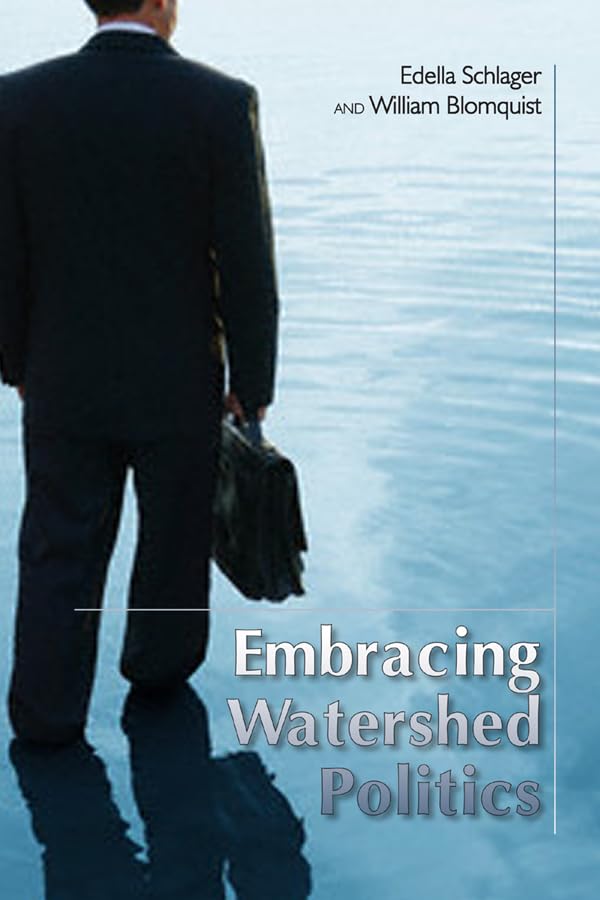
As Americans try to better manage and protect the natural resources of our watersheds, is politics getting in the way? Why does watershed management end up being so political? In Embracing Watershed Politics, political scientists Edella Schlager and William Blomquist provide timely illustrations and thoughtprovoking explanations of why political considerations are essential, unavoidable, and in some ways even desirable elements of decision making about water and watersheds. With decades of combined study of water management in the United States, they focus on the many contending interests and communities found in America's watersheds, the fundamental dimensions of decision making, and the impacts of science, complexity, and uncertainty on watershed management.Enriched by case studies of the organizations and decision making processes in several major U.S. watersheds (the Delaware River Basin, San Gabriel River, Platte River, and the Columbia River Basin), Embracing Watershed Politics presents a reasoned explanation of why there are so few watershedscale integrated management agencies and how the more diverse multiorganizational arrangements found in the vast majorities of watersheds work. Although the presence of multiple organizations representing a multitude of communities of interest complicates watershed management, these institutional arrangements canunder certain conditionssuit the complexity and uncertainty associated with watershed management in the twentyfirst century.
⚠️ WARNING (California Proposition 65):
This product may contain chemicals known to the State of California to cause cancer,
birth defects, or other reproductive harm.
For MAP (Minimum Advertised Price) violations and Intellectual Property (IP) or Trademark concerns, please contact:
support@ergodebooks.com
⚠️ California Proposition 65 Warning: Some products sold on this website may expose you to chemicals known to the State of California to cause cancer, birth defects, or other reproductive harm. For more information, visit www.P65Warnings.ca.gov.