
Title
EMD FUnit Locomotives (TrainTech),Used
Sold by Ergodebooks, an authorized reseller.
Returns accepted within 30 days | support@ergodebooks.com
Shipping Information
- Free Standard Shipping — United States only
- Processing Time: 3–5 business days
- Estimated Delivery: 6–10 business days after dispatch
- Double-boxed, fully insured & discreetly packaged
- Tracking number sent via email once dispatched
Returns & Refund
Returns accepted within 30 days of delivery.
Damaged or Defective Item
Free return shipping + replacement or full refund
Wrong Item Received
Free return shipping + replacement or full refund
Change of Mind
Return shipping at customer's expense · 25% restocking fee applies
Payment Option

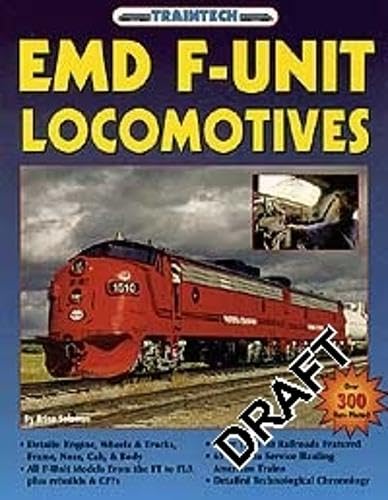
In the 1940s and 1950s, American railroads made the historic transition from steam to dieselelectric power. At a time when railroads still relied on steam power for most service and diesels remained a novelty, ElectroMotive took the nation by storm with its distinctivelooking fourmotor Funit locomotives that echoed across America. The F unit soon became the standard diesel on many American railroads for over two decades.This book covers the F from its humble beginnings, to a time when virtually every railroad operated F units, and beyond. This book displays the F unit's distinctive livery in just about every setting across the American landscape with over 300 rare photographs. Feel the power of the 567 engine as you learn about their specifications in detail. Read about the challenges faced by this phenomenon in freight and passenger service, how they were overcome, and why the F unit is still regarded as one of the most facinating locomotives in railroading.
⚠️ WARNING (California Proposition 65):
This product may contain chemicals known to the State of California to cause cancer, birth defects, or other reproductive harm.
For more information, please visit www.P65Warnings.ca.gov.
- Q: What is the size of the book? A: The book measures eight point two seven inches in length, zero point two five inches in width, and ten point seven five inches in height.
- Q: How many pages does this book have? A: This book contains one hundred twelve pages detailing the history of EMD F-Unit locomotives.
- Q: What type of binding does this book have? A: The book is published in paperback binding, making it lightweight and portable.
- Q: Who is the author of this book? A: The author of the book is Brian Solomon, known for his expertise in railroad history.
- Q: What type of book is this? A: This book is categorized under History, specifically focusing on the evolution of locomotives.
- Q: How do I use this book? A: You can read the book for educational purposes or as a reference for historical locomotives.
- Q: Is this book suitable for children? A: Yes, this book can be suitable for older children interested in trains and history.
- Q: What is the reading level of this book? A: The book is appropriate for young adults and adults, with a focus on historical content.
- Q: How should I store this book? A: Store the book in a cool, dry place to prevent damage from moisture and sunlight.
- Q: Can I clean the book if it gets dirty? A: Yes, use a soft, dry cloth to gently clean the book's cover if it gets dirty.
- Q: How do I keep this book in good condition? A: Avoid exposing the book to excessive moisture or direct sunlight to maintain its condition.
- Q: What if I receive a damaged book? A: If the book arrives damaged, contact the seller for return options or a replacement.
- Q: Is there a warranty for this book? A: Books typically do not come with a warranty, but check with the seller for return policies.
- Q: How does this book compare to other train history books? A: This book provides a detailed focus on EMD F-Unit locomotives, making it unique among train history books.
- Q: Is this book recommended for train enthusiasts? A: Yes, it is highly recommended for train enthusiasts interested in the history of locomotives.
- Q: Does this book cover modern trains? A: No, the book primarily focuses on locomotives from the 1940s and 1950s.