If you have any questions, you are always welcome to contact us. We'll get back to you as soon as possible, withing 24 hours on weekdays.
Customer service
All questions about your order, return and delivery must be sent to our customer service team by e-mail at yourstore@yourdomain.com
Sale & Press
If you are interested in selling our products, need more information about our brand or wish to make a collaboration, please contact us at press@yourdomain.com
Help
If you have any questions, you are always welcome to contact us. We'll get back to you as soon as possible, withing 24 hours on weekdays.
Customer service
All questions about your order, return and delivery must be sent to our customer service team by e-mail at yourstore@yourdomain.com
Sale & Press
If you are interested in selling our products, need more information about our brand or wish to make a collaboration, please contact us at press@yourdomain.com
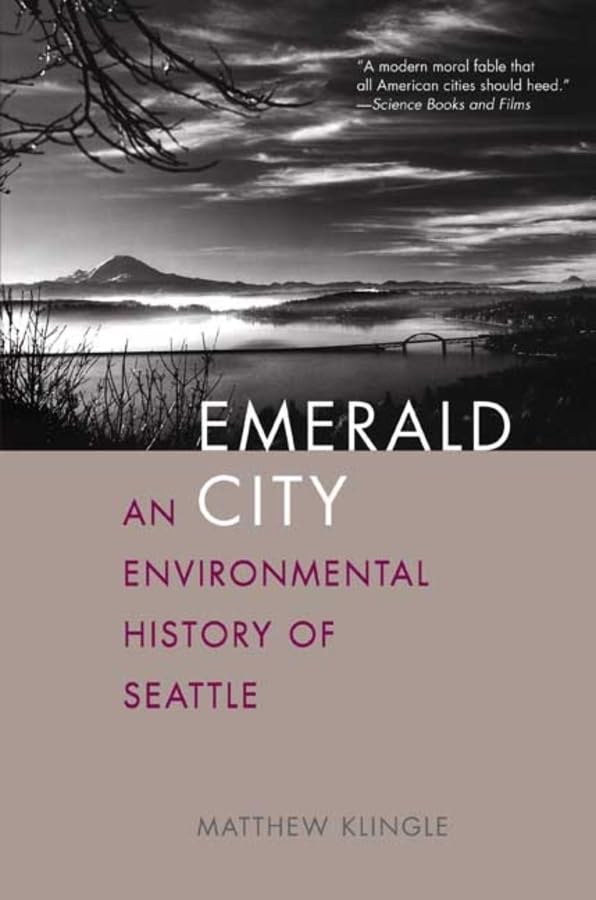
An exploration of the environmental history of Seattle and what it tells us about making cities that are both scenic and just for allAt the foot of the snowcapped Cascade Mountains on the forested shores of Puget Sound, Seattle is set in a location of spectacular natural beauty. Boosters of the city have long capitalized on this splendor, recently likening it to the fairytale capital of L. Frank Baums The Wizard of Oz, the Emerald City. But just as Dorothy, Toto, and their traveling companions discover a darker reality upon entering the green gates of the imaginary Emerald City, those who look more closely at Seattles landscape will find that it reveals a history marked by environmental degradation and urban inequality. This book explores the role of nature in the development of the city of Seattle from the earliest days of its settlement to the present. Combining environmental history, urban history, and human geography, Matthew Klingle shows how attempts to reshape nature in and around Seattle have often ended not only in ecological disaster but also social inequality. The price of Seattles centuries of growth and progress has been paid by its wildlife, including the famous Pacific salmon, and its poorest residents. Klingle proposes a bold new way of understanding the interdependence between nature and culture, and he argues for what he calls an ethic of place. Using Seattle as a compelling case study, he offers important insights for every city seeking to live in harmony with its natural landscape.
⚠️ WARNING (California Proposition 65):
This product may contain chemicals known to the State of California to cause cancer,
birth defects, or other reproductive harm.
For MAP (Minimum Advertised Price) violations and Intellectual Property (IP) or Trademark concerns, please contact:
support@ergodebooks.com
⚠️ California Proposition 65 Warning: Some products sold on this website may expose you to chemicals known to the State of California to cause cancer, birth defects, or other reproductive harm. For more information, visit www.P65Warnings.ca.gov.