
Title
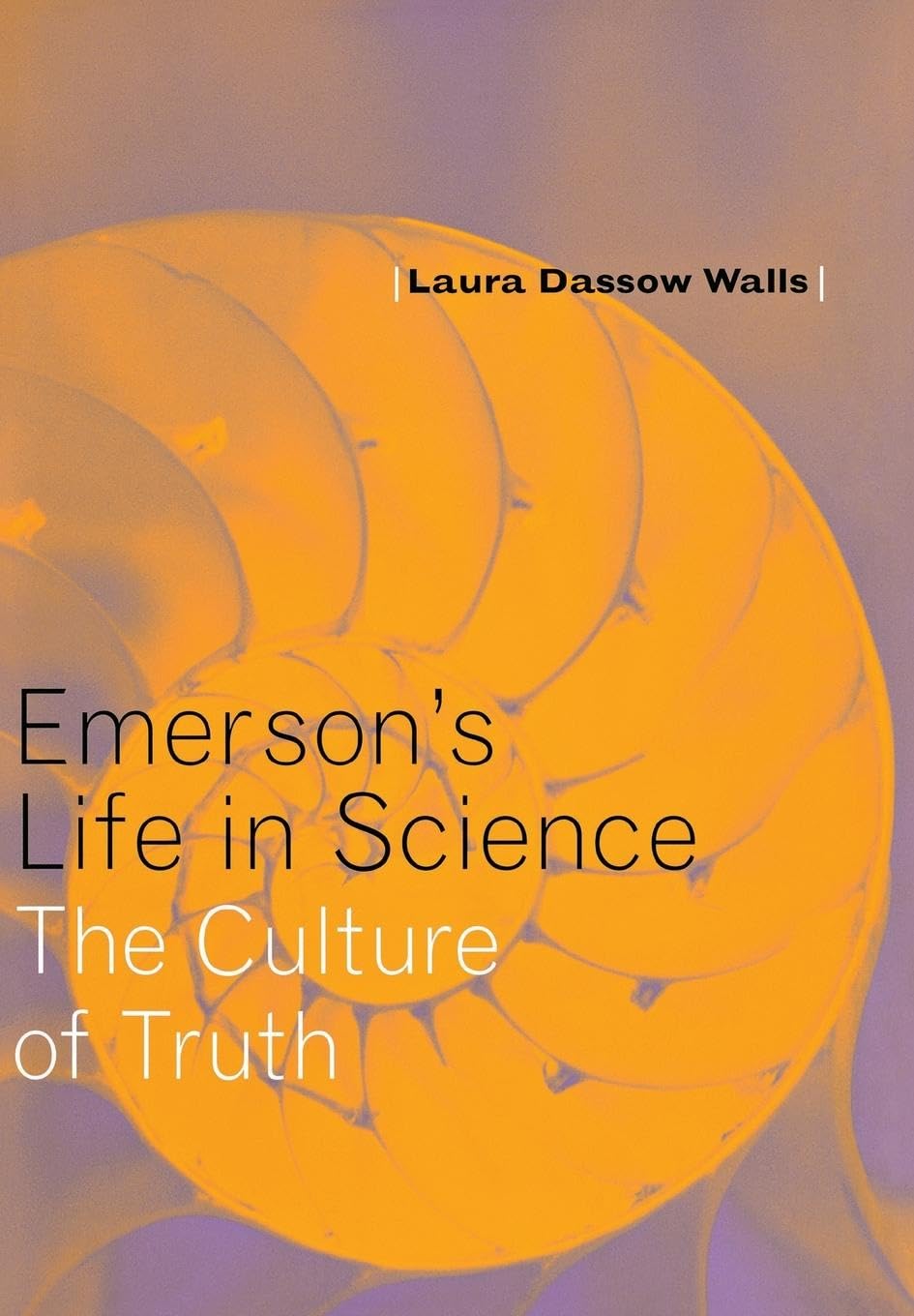
Emerson's Life in Science: The Culture of Truth,Used
Sold by Ergodebooks, an authorized reseller.
Returns accepted within 30 days | support@ergodebooks.com
Shipping Information
- Free Standard Shipping — United States only
- Processing Time: 3–5 business days
- Estimated Delivery: 6–10 business days after dispatch
- Double-boxed, fully insured & discreetly packaged
- Tracking number sent via email once dispatched
Returns & Refund
Returns accepted within 30 days of delivery.
Damaged or Defective Item
Free return shipping + replacement or full refund
Wrong Item Received
Free return shipping + replacement or full refund
Change of Mind
Return shipping at customer's expense · 25% restocking fee applies
Payment Option

Ralph Waldo Emerson has traditionally been cast as a dreamer and a mystic, concerned with the ideals of transcendentalism rather than the realities of contemporary science and technology. In Laura Dassow Walls's view Emerson was a leader of the secular avantgarde in his day. He helped to establish science as the popular norm of truth in America and to modernize American popular thought. In addition, he became a hero to a postDarwinian generation of Victorian Dissenters, exemplifying the strong connection between transcendentalism and later nineteenthcentury science.In his early years as a minister, Emerson read widely in natural philosophy (or physics), chemistry, geology, botany, and comparative anatomy. When he left the church, it was to seek the truths written in the book of nature rather than in books of scripture. While visiting the Paris Museum of Natural History during his first European tour, Emerson experienced a revelation so intense that he declared, 'I will be a naturalist.' Once he was back in the United States, his first step in realizing this ambition was to deliver a series of lectures on natural science. These lectures formed the basis for his first publication, Nature (1836), and his writings ever after reflected his intense and continuing interest in science.Walls finds that Emerson matured just as the concept of 'the two cultures' emerged, when the disciplines of literature and science were divorcing each other even as he called repeatedly for their marriage. Consequently, Walls writes, half of Emerson's thought has been invisible to us: science was central to Emerson, to his language, to the basic organization of his career. In Emerson's Life in Science, she makes the case that no study of literary history can be complete without embracing science as part of literature. Conversely, she maintains, no history of science is complete unless we consider the role played by writers of literature who helped to install science in the popular imagination.
⚠️ WARNING (California Proposition 65):
This product may contain chemicals known to the State of California to cause cancer, birth defects, or other reproductive harm.
For more information, please visit www.P65Warnings.ca.gov.