
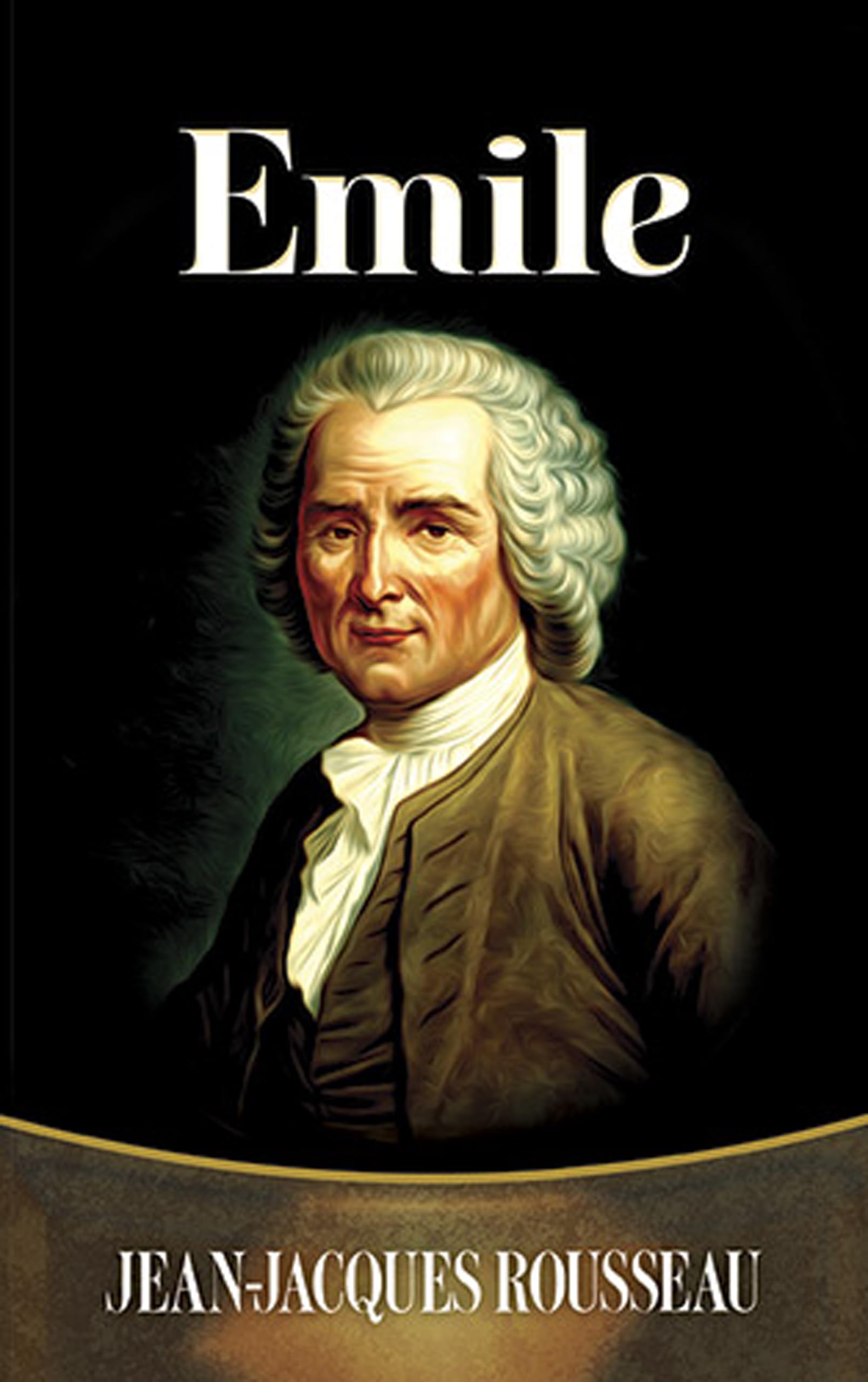
Title
Emile (Dover Literature: Nonfiction),Used
Sold by Ergodebooks, an authorized reseller.
Returns accepted within 30 days | support@ergodebooks.com
Shipping Information
- Free Standard Shipping — United States only
- Processing Time: 3–5 business days
- Estimated Delivery: 6–10 business days after dispatch
- Double-boxed, fully insured & discreetly packaged
- Tracking number sent via email once dispatched
Returns & Refund
Returns accepted within 30 days of delivery.
Damaged or Defective Item
Free return shipping + replacement or full refund
Wrong Item Received
Free return shipping + replacement or full refund
Change of Mind
Return shipping at customer's expense · 25% restocking fee applies
Payment Option

A foundational text of Western education, this 1762 treatise served as a model for a new approach to teaching during the French Revolution. Emile recounts a boy's education, and Rousseau considered it the most important of his writings. With its theories on the retention of innate human goodness and the avoidance of corruption from bourgeois society, the book offers prime examples of the author's philosophy.Rousseau's fivepart approach devotes the first three sections to Emile's early education, including the child's interactions with the larger world and the selection of a trade. The fourth part explores the cultivation of sentiment, with particular focus on natural religion. The book concludes with a profile of Emile's prospective bride, Sophie, that emphasizes the role of mothers in educating their children but encourages women to be submissive to their husbandsa view that excited controversy even among Rousseau's contemporaries and helped inspire Mary Wollstonecraft's A Vindication of the Rights of Woman.
⚠️ WARNING (California Proposition 65):
This product may contain chemicals known to the State of California to cause cancer, birth defects, or other reproductive harm.
For more information, please visit www.P65Warnings.ca.gov.
- Q: How many pages does 'Emile' have? A: This book has five hundred forty-four pages. It is a comprehensive work exploring the education of a boy during the French Revolution.
- Q: What is the binding type of 'Emile'? A: The binding type is paperback. This makes it lightweight and flexible, ideal for reading and carrying.
- Q: What are the dimensions of 'Emile'? A: The dimensions are five point twenty-five inches in length, one point zero four inches in width, and eight point twenty-four inches in height. These measurements make it a portable book.
- Q: Who is the author of 'Emile'? A: The author is Jean-Jacques Rousseau. He is a prominent philosopher known for his influential ideas on education and society.
- Q: What is the main theme of 'Emile'? A: The main theme is the education and development of a child. Rousseau discusses the importance of natural education and the impact of society.
- Q: Is 'Emile' suitable for all ages? A: No, it is generally recommended for older teens and adults. The themes and discussions are complex and may not be suitable for younger readers.
- Q: How should I read 'Emile' for the best understanding? A: Reading it slowly and taking notes is recommended. The philosophical concepts may require deeper reflection for full comprehension.
- Q: Can 'Emile' be used as a textbook? A: Yes, it can be used as a textbook for courses on philosophy or education. Its foundational ideas make it a valuable resource.
- Q: What is the best way to store 'Emile'? A: Store it in a cool, dry place away from direct sunlight. This will help preserve the book's condition over time.
- Q: How do I clean 'Emile' if it gets dirty? A: Use a soft, dry cloth to gently wipe the cover. Avoid using water or cleaning solutions, as they can damage the pages.
- Q: What if 'Emile' arrives damaged? A: Contact the seller for a return or exchange. Most sellers have policies in place for damaged items.
- Q: Are there any similar books to 'Emile'? A: Yes, 'A Vindication of the Rights of Woman' by Mary Wollstonecraft is a notable similar work, addressing education and societal roles.
- Q: Is 'Emile' considered an important literary work? A: Yes, it is considered a foundational text in Western education. Its influence on educational theory is significant.
- Q: What topics does 'Emile' cover? A: It covers topics such as education, innate goodness, and the impact of society on personal development. Rousseau's philosophy is central to these discussions.
- Q: What is the reading level of 'Emile'? A: The reading level is advanced. It is best suited for readers with a background in philosophy or literature.