If you have any questions, you are always welcome to contact us. We'll get back to you as soon as possible, withing 24 hours on weekdays.
Customer service
All questions about your order, return and delivery must be sent to our customer service team by e-mail at yourstore@yourdomain.com
Sale & Press
If you are interested in selling our products, need more information about our brand or wish to make a collaboration, please contact us at press@yourdomain.com
Help
If you have any questions, you are always welcome to contact us. We'll get back to you as soon as possible, withing 24 hours on weekdays.
Customer service
All questions about your order, return and delivery must be sent to our customer service team by e-mail at yourstore@yourdomain.com
Sale & Press
If you are interested in selling our products, need more information about our brand or wish to make a collaboration, please contact us at press@yourdomain.com
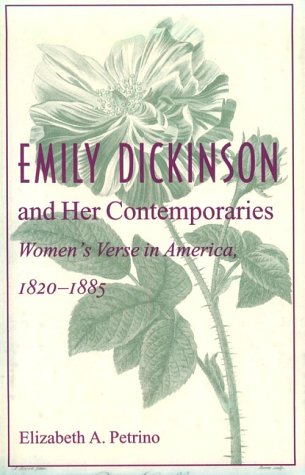
For many years, Emily Dickinson's cryptic verse was viewed as an isolated phenomenon, the poet herself an enigma whose motivations and influences were shrouded in mystery. Eschewing such stereotypes, Elizabeth A. Petrino places the Belle of Amherst within the context of other nineteenthcentury women poets and examines the feminist implications of their work. Dickinson and contemporaries like Lydia Sigourney, Louisa May Alcott, and Helen Hunt Jackson developed in their writing a rhetoric of duplicity that enabled them to question conventional values but still maintain the propriety necessary to achieve publication. To demonstrate these strategies, Petrino examines both Dickinson's poetry and a range of 'women's' genres, from the child elegy to the discourse of flowers. She also enlists contemporary magazines, unpublished professional correspondence, even gravestone inscriptions and posthumous paintings of children to explain what Petrino calls the most significant fact of Dickinson's literary biography, her decision not to publish. In the end, we see how, 'these poets create a kind of cultural palimpsest, writing and rewriting central tropes about death, marriage and motherhood, and the power and function of consolatory verse, barely visible under the erasures of literary history. Set against a new and recently recovered tradition of female verse writing, Dickinson's central place in the canon and her position as a consummate artist are clearly affirmed.'
⚠️ WARNING (California Proposition 65):
This product may contain chemicals known to the State of California to cause cancer,
birth defects, or other reproductive harm.
For MAP (Minimum Advertised Price) violations and Intellectual Property (IP) or Trademark concerns, please contact:
support@ergodebooks.com
⚠️ California Proposition 65 Warning: Some products sold on this website may expose you to chemicals known to the State of California to cause cancer, birth defects, or other reproductive harm. For more information, visit www.P65Warnings.ca.gov.