
Title
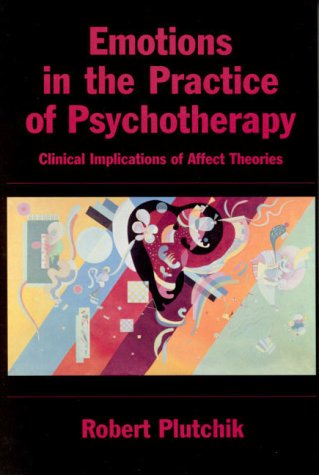
Emotions in the Practice of Psychotherapy: Clinical Implications of Affect Theories,Used
Sold by Ergodebooks, an authorized reseller.
Returns accepted within 30 days | support@ergodebooks.com
Shipping Information
- Free Standard Shipping — United States only
- Processing Time: 3–5 business days
- Estimated Delivery: 6–10 business days after dispatch
- Double-boxed, fully insured & discreetly packaged
- Tracking number sent via email once dispatched
Returns & Refund
Returns accepted within 30 days of delivery.
Damaged or Defective Item
Free return shipping + replacement or full refund
Wrong Item Received
Free return shipping + replacement or full refund
Change of Mind
Return shipping at customer's expense · 25% restocking fee applies
Payment Option

In the past two decades there has been increasing recognition of the role of emotions in psychotherapy as well as in daily life, and an awareness of the necessity of emotional changes in order for psychotherapy to be successful. This idea, of emotion as a central concept in therapy, is relevant to all schools of therapy, and all points of view. Clinicians who think of themselves as identified with cognitive, behavioral, rationalemotive, and psychodynamic approaches recognize the need to understand emotions and their role in psychotherapy.The present book does not take a partisan stand on what school of therapy is best or on what the goals of therapy should be. It does, however, examine in detail the role of emotions as the basis of many psychological symptoms, and how emotions can be uncovered, recognized, and measured. The book describes 26 therapists tactic and strategies for uncovering emotions, tactics that can be used by practitioners of any school of therapy. The book also describes 20 distinctions between social conversation and therapeutic communication, recognizing that such communication is the basis for much that goes on in therapy. Also included are descriptions of appropriate and inappropriate interventions based on empirical surveys of clinicians. The book also describes four existential crises that all people have to deal with, and presents some of the clinical manifestations of these existential issues.Of central significance in the book is the circumplex idea that emotions can be best described by means of a circular model. The book also demonstrates that personality, personality disorders, and ego defenses can also be described by means of a circumplex model, and that all are systematically related to one another. To support these ideas one chapter of the book is devoted to a description, along with empirical data, of five tests or scales for measuring emotions and their related states. Overall, the book provides an integration of a good many clinical ideas with ideas about emotions.
⚠️ WARNING (California Proposition 65):
This product may contain chemicals known to the State of California to cause cancer, birth defects, or other reproductive harm.
For more information, please visit www.P65Warnings.ca.gov.