
Title
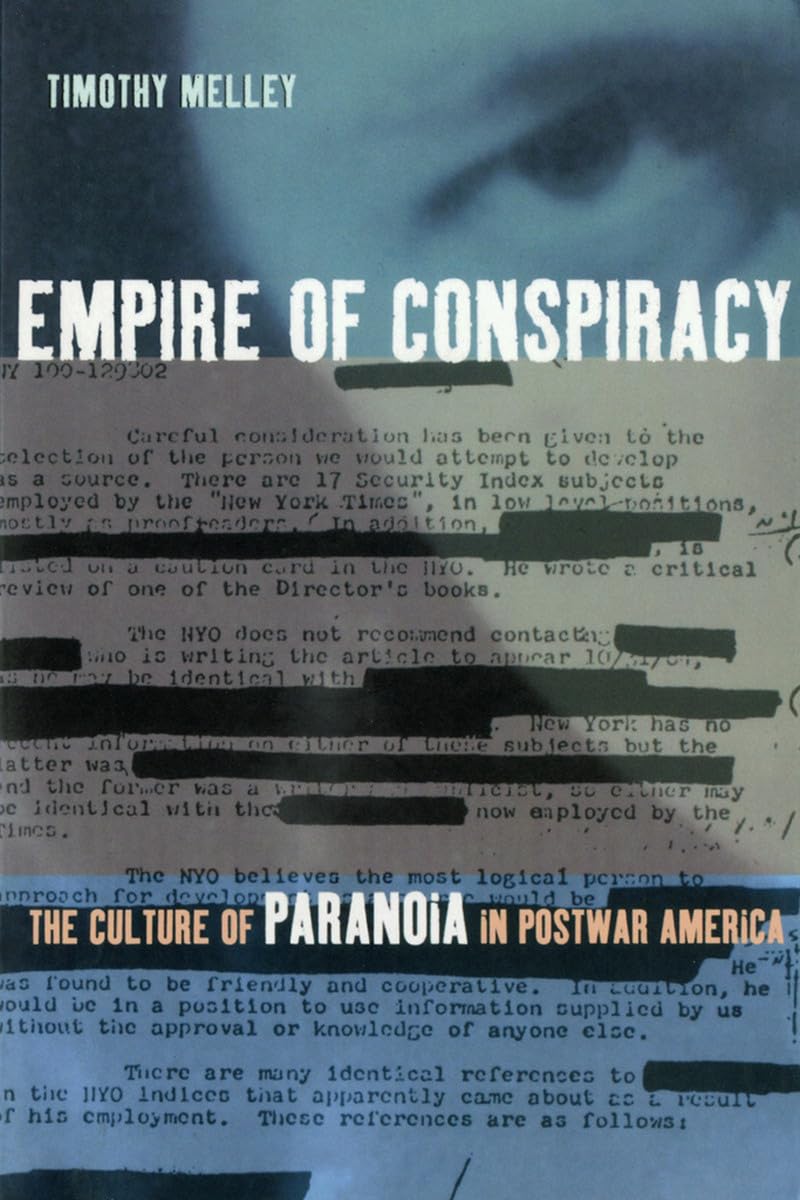
Empire of Conspiracy: The Culture of Paranoia in Postwar America,Used
Sold by Ergodebooks, an authorized reseller.
Returns accepted within 30 days | support@ergodebooks.com
Shipping Information
- Free Standard Shipping — United States only
- Processing Time: 3–5 business days
- Estimated Delivery: 6–10 business days after dispatch
- Double-boxed, fully insured & discreetly packaged
- Tracking number sent via email once dispatched
Returns & Refund
Returns accepted within 30 days of delivery.
Damaged or Defective Item
Free return shipping + replacement or full refund
Wrong Item Received
Free return shipping + replacement or full refund
Change of Mind
Return shipping at customer's expense · 25% restocking fee applies
Payment Option

Why, Timothy Melley asks, have paranoia and conspiracy theory become such prominent features of postwar American culture? In Empire of Conspiracy, Melley explores the recent growth of anxieties about thoughtcontrol, assassination, political indoctrination, stalking, surveillance, and corporate and government plots. At the heart of these developments, he believes, lies a widespread sense of crisis in the way Americans think about human autonomy and individuality. Nothing reveals this crisis more than the remarkably consistent form of expression that Melley calls 'agency panic'an intense fear that individuals can be shaped or controlled by powerful external forces. Drawing on a broad range of forms that manifest this fearincluding fiction, film, television, sociology, political writing, selfhelp literature, and cultural theoryMelley provides a new understanding of the relation between postwar American literature, popular culture, and cultural theory.Empire of Conspiracy offers insightful new readings of texts ranging from Joseph Heller's Catch22 to the Unabomber Manifesto, from Vance Packard's Hidden Persuaders to recent addiction discourse, and from the 'stalker' novels of Margaret Atwood and Diane Johnson to the conspiracy fictions of Thomas Pynchon, William Burroughs, Don DeLillo, and Kathy Acker. Throughout, Melley finds recurrent anxieties about the power of large organizations to control human beings. These fears, he contends, indicate the continuing appeal of a form of individualism that is no longer wholly accurate or useful, but that still underpins a national fantasy of freedom from social control.
⚠️ WARNING (California Proposition 65):
This product may contain chemicals known to the State of California to cause cancer, birth defects, or other reproductive harm.
For more information, please visit www.P65Warnings.ca.gov.