If you have any questions, you are always welcome to contact us. We'll get back to you as soon as possible, withing 24 hours on weekdays.
Customer service
All questions about your order, return and delivery must be sent to our customer service team by e-mail at yourstore@yourdomain.com
Sale & Press
If you are interested in selling our products, need more information about our brand or wish to make a collaboration, please contact us at press@yourdomain.com
Help
If you have any questions, you are always welcome to contact us. We'll get back to you as soon as possible, withing 24 hours on weekdays.
Customer service
All questions about your order, return and delivery must be sent to our customer service team by e-mail at yourstore@yourdomain.com
Sale & Press
If you are interested in selling our products, need more information about our brand or wish to make a collaboration, please contact us at press@yourdomain.com
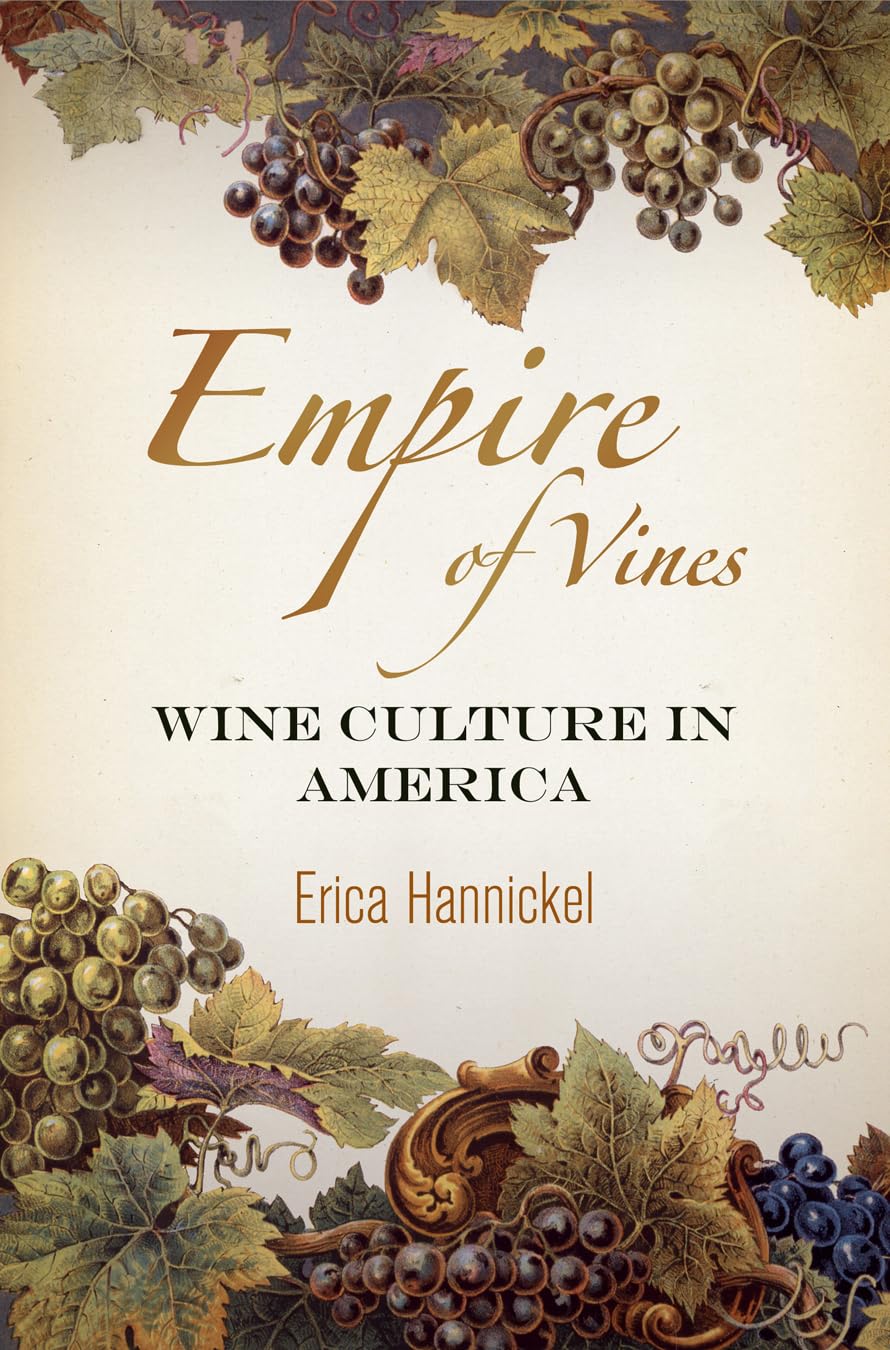
The lush, sundrenched vineyards of California evoke a romantic, agrarian image of winemaking, though in reality the industry reflects American agribusiness at its most successful. Nonetheless, as author Erica Hannickel shows, this fantasy is deeply rooted in the history of grape cultivation in America. Empire of Vines traces the development of wine culture as grape growing expanded from New York to the Midwest before gaining ascendancy in Californiaa progression that illustrates viticulture's centrality to the nineteenthcentury American projects of national expansion and the formation of a national culture.Empire of Vines details the ways wouldbe gentleman farmers, ambitious speculators, horticulturalists, and writers of all kinds deployed the animating myths of American wine culture, including the classical myth of Bacchus, the cult of terroir, and the fantasy of pastoral republicanism. Promoted by figures as varied as horticulturalist Andrew Jackson Downing, novelist Charles Chesnutt, railroad baron Leland Stanford, and Cincinnati land speculator Nicholas Longworth (known as the father of American wine), these myths naturalized claims to land for grape cultivation and legitimated national expansion. Vineyards were simultaneously lush and controlled, bearing fruit at once culturally refined and naturally robust, laying claim to both earthy authenticity and social pedigree. The history of wine culture thus reveals nineteenthcentury Americans' fascination with the relationship between nature and culture.
⚠️ WARNING (California Proposition 65):
This product may contain chemicals known to the State of California to cause cancer,
birth defects, or other reproductive harm.
For MAP (Minimum Advertised Price) violations and Intellectual Property (IP) or Trademark concerns, please contact:
support@ergodebooks.com
⚠️ California Proposition 65 Warning: Some products sold on this website may expose you to chemicals known to the State of California to cause cancer, birth defects, or other reproductive harm. For more information, visit www.P65Warnings.ca.gov.