If you have any questions, you are always welcome to contact us. We'll get back to you as soon as possible, withing 24 hours on weekdays.
Customer service
All questions about your order, return and delivery must be sent to our customer service team by e-mail at yourstore@yourdomain.com
Sale & Press
If you are interested in selling our products, need more information about our brand or wish to make a collaboration, please contact us at press@yourdomain.com
Help
If you have any questions, you are always welcome to contact us. We'll get back to you as soon as possible, withing 24 hours on weekdays.
Customer service
All questions about your order, return and delivery must be sent to our customer service team by e-mail at yourstore@yourdomain.com
Sale & Press
If you are interested in selling our products, need more information about our brand or wish to make a collaboration, please contact us at press@yourdomain.com
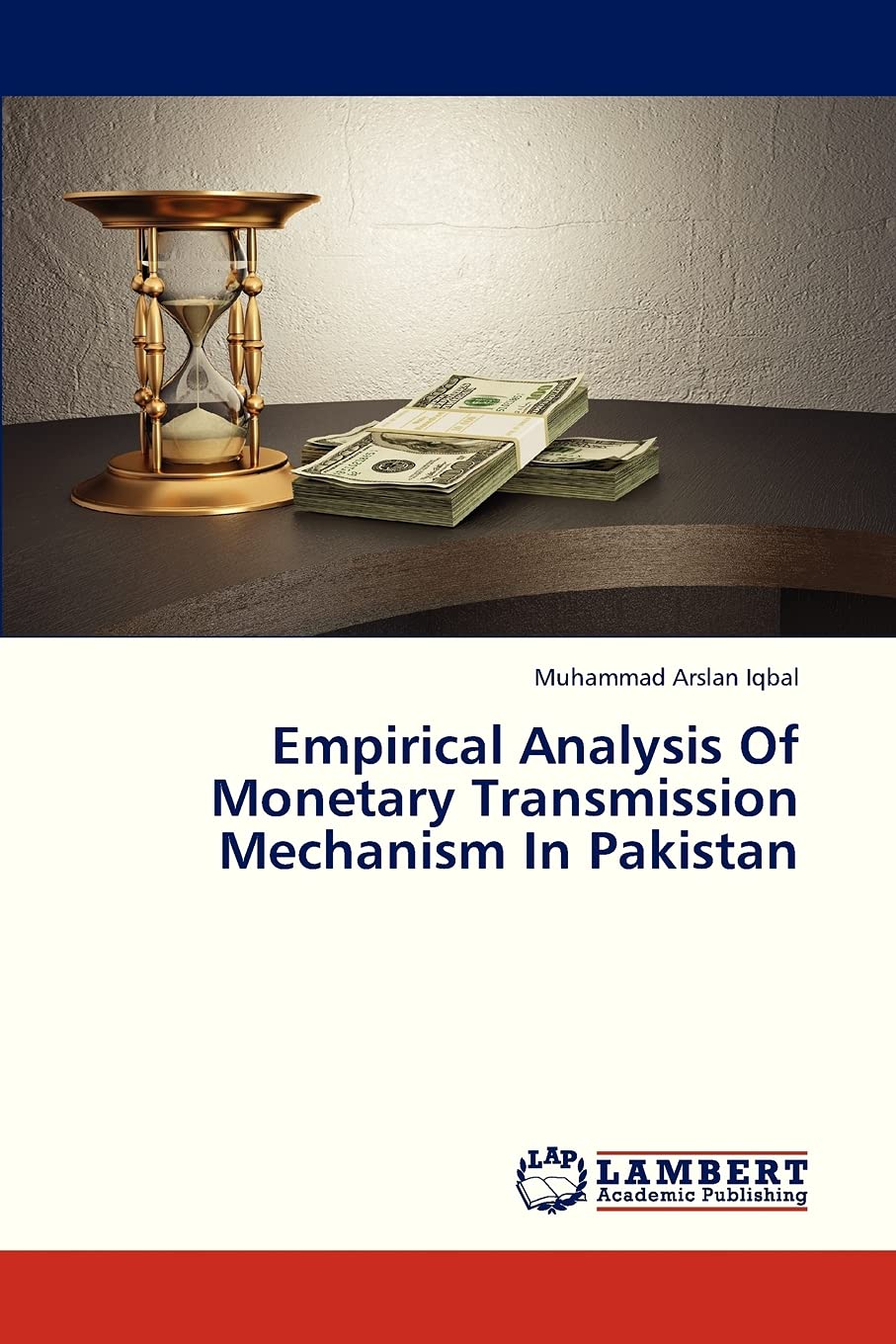
Monetary transmission mechanism is extremely important for central bank of every country to conduct an effective monetary policy. Monetary policy of developing countries i.e. Pakistan are constrained by international economic institutions. This research work investigates the nature and strength of monetary transmission mechanism and its channels by considering the external constraints on the monetary policy of Pakistan. VAR model with exogenous vector and seasonally adjusted quarterly data of different domestic and foreign variables over the period 2001:Q3 to 2011:Q2 have been used for this purpose. Surprisingly, price puzzle vanished after including external constraints to our monetary policy in our benchmark model. Bank lending channel is found to be efficient and significant in the transmission of monetary shock to the real output. Moreover, empirical results also indicate that asset price channel and exchange rate channel are not significant in propagation of monetary policy shock in Pakistan. This research would help economic researchers and policy makers of developing countries to analyze the effectiveness of monetary policy in a better way.
⚠️ WARNING (California Proposition 65):
This product may contain chemicals known to the State of California to cause cancer,
birth defects, or other reproductive harm.
For MAP (Minimum Advertised Price) violations and Intellectual Property (IP) or Trademark concerns, please contact:
support@ergodebooks.com
⚠️ California Proposition 65 Warning: Some products sold on this website may expose you to chemicals known to the State of California to cause cancer, birth defects, or other reproductive harm. For more information, visit www.P65Warnings.ca.gov.