If you have any questions, you are always welcome to contact us. We'll get back to you as soon as possible, withing 24 hours on weekdays.
Customer service
All questions about your order, return and delivery must be sent to our customer service team by e-mail at yourstore@yourdomain.com
Sale & Press
If you are interested in selling our products, need more information about our brand or wish to make a collaboration, please contact us at press@yourdomain.com
Help
If you have any questions, you are always welcome to contact us. We'll get back to you as soon as possible, withing 24 hours on weekdays.
Customer service
All questions about your order, return and delivery must be sent to our customer service team by e-mail at yourstore@yourdomain.com
Sale & Press
If you are interested in selling our products, need more information about our brand or wish to make a collaboration, please contact us at press@yourdomain.com
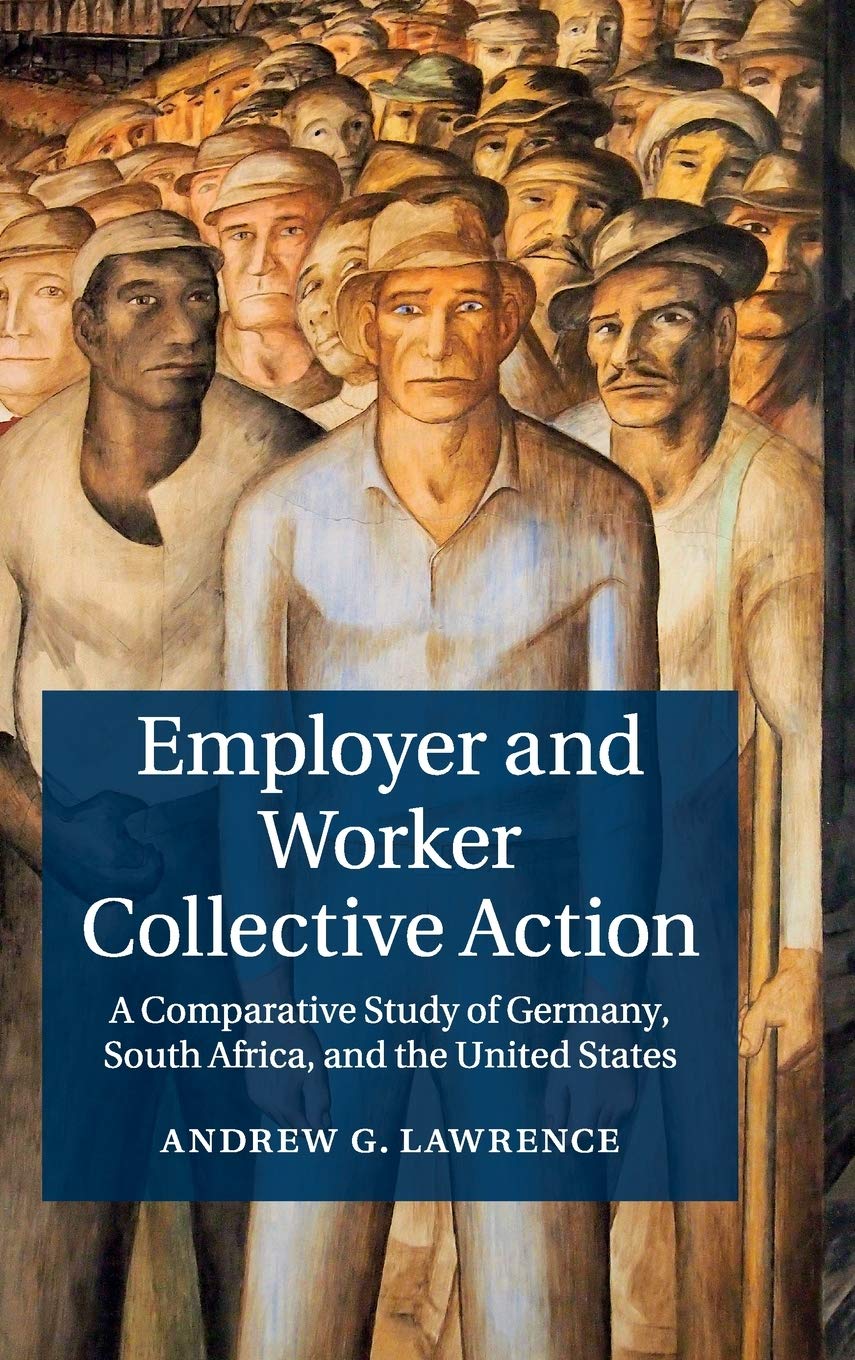
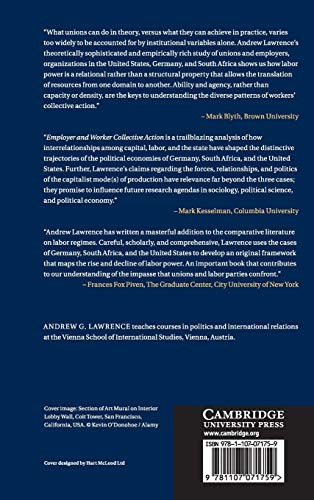
This book compares sources of worker and employer power in Germany, South Africa, and the United States in order to identify the sources of comparative U.S. decline in union power and to more precisely analyze the nature of labormovement power. It finds that this power is not confined to allied parties, union confederations, or strikes, but rather consists of the capacity to autonomously translate power from one context to the next. By combining their product, labor market, and labor law advantages through their dominant employers' associations, leading firms are able to impose constraints on labor's free collective bargaining regionally and nationally, defeating employer interests that are more amenable to labor in the process. Through an examination of these patterns of interest organization, the book shows, however, that initial employer advantages prove to be contingent and unstable and that employers are forced to cede to more farreaching demands of increasingly organized workers.
⚠️ WARNING (California Proposition 65):
This product may contain chemicals known to the State of California to cause cancer,
birth defects, or other reproductive harm.
For MAP (Minimum Advertised Price) violations and Intellectual Property (IP) or Trademark concerns, please contact:
support@ergodebooks.com
⚠️ California Proposition 65 Warning: Some products sold on this website may expose you to chemicals known to the State of California to cause cancer, birth defects, or other reproductive harm. For more information, visit www.P65Warnings.ca.gov.