
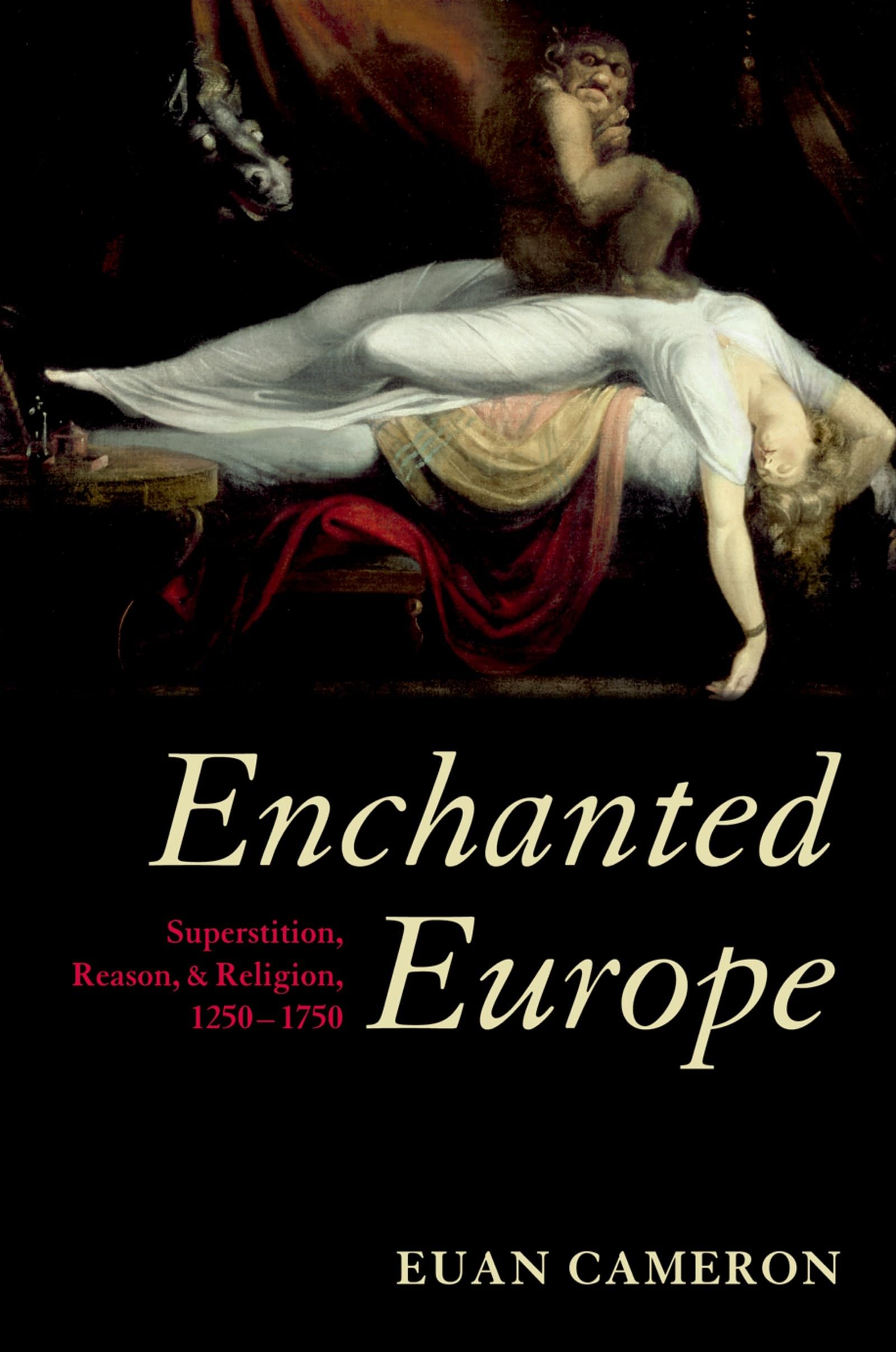
Title
Enchanted Europe: Superstition, Reason, And Religion, 12501750
Sold by Ergodebooks, an authorized reseller.
Returns accepted within 30 days | support@ergodebooks.com
Shipping Information
- Free Standard Shipping — United States only
- Processing Time: 3–5 business days
- Estimated Delivery: 6–10 business days after dispatch
- Double-boxed, fully insured & discreetly packaged
- Tracking number sent via email once dispatched
Returns & Refund
Returns accepted within 30 days of delivery.
Damaged or Defective Item
Free return shipping + replacement or full refund
Wrong Item Received
Free return shipping + replacement or full refund
Change of Mind
Return shipping at customer's expense · 25% restocking fee applies
Payment Option

Since the dawn of history people have used charms and spells to try to control their environment, and forms of divination to try to foresee the otherwise unpredictable chances of life. Many of these techniques were called 'superstitious' by educated elites.For centuries religious believers used 'superstition' as a term of abuse to denounce another religion that they thought inferior, or to criticize their fellowbelievers for practising their faith 'wrongly.' From the Middle Ages to the Enlightenment, scholars argued over what 'superstition' was, how to identify it, and how to persuade people to avoid it. Learned believers in demons and witchcraft, in their treatises and sermons, tried to make 'rational' sense of popular superstitions by blaming them on the deceptive tricks of seductive demons.Every major movement in Christian thought, from rival schools of medieval theology through to the Renaissance, the Reformation, and the Enlightenment, added new twists to the debates over superstition. Protestants saw Catholics as superstitious, and vice versa. Enlightened philosophers mocked traditional cults as superstitions. Eventually, the learned lost their worry about popular belief, and turned instead to chronicling and preserving 'superstitious' customs as folklore and ethnic heritage.Enchanted Europe offers the first comprehensive, integrated account of western Europe's long, complex dialogue with its own folklore and popular beliefs. Drawing on many littleknown and rarely used texts, Euan Cameron constructs a compelling narrative of the rise, diversification, and decline of popular 'superstition' in the European mind.
⚠️ WARNING (California Proposition 65):
This product may contain chemicals known to the State of California to cause cancer, birth defects, or other reproductive harm.
For more information, please visit www.P65Warnings.ca.gov.