
Title
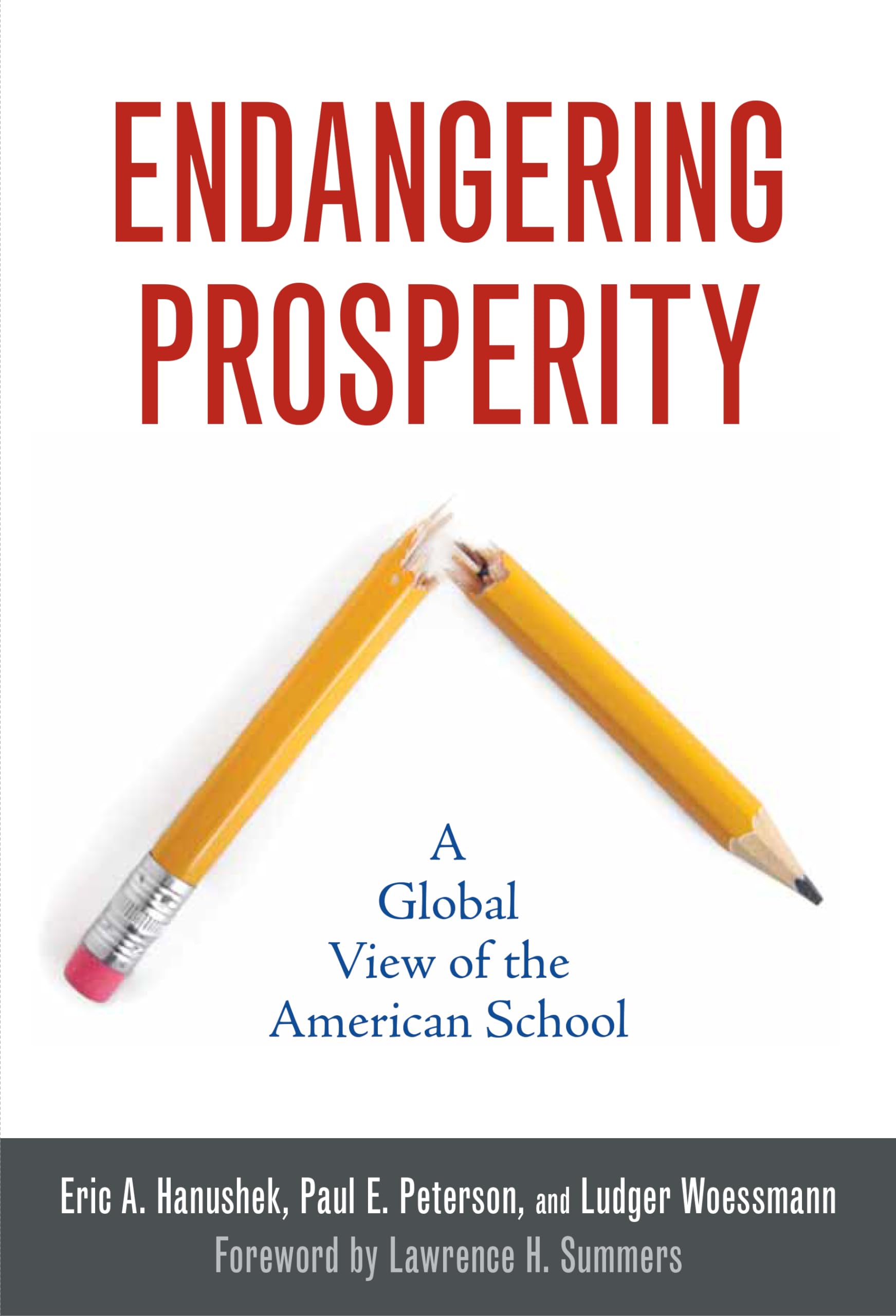
Endangering Prosperity: A Global View of the American School,New
Sold by Ergodebooks, an authorized reseller.
Returns accepted within 30 days | support@ergodebooks.com
Shipping Information
- Free Standard Shipping — United States only
- Processing Time: 3–5 business days
- Estimated Delivery: 6–10 business days after dispatch
- Double-boxed, fully insured & discreetly packaged
- Tracking number sent via email once dispatched
Returns & Refund
Returns accepted within 30 days of delivery.
Damaged or Defective Item
Free return shipping + replacement or full refund
Wrong Item Received
Free return shipping + replacement or full refund
Change of Mind
Return shipping at customer's expense · 25% restocking fee applies
Payment Option

The relative deficiencies of U.S. public schools are a serious concern to parents and policymakers. But they should be of concern to all Americans, as a globalizing world introduces new competition for talent, markets, capital, and opportunity. In Endangering Prosperity, a trio of experts on international education policy compares the performance of American schools against that of other nations. The net result is a mixed but largely disappointing picture that clearly shows where improvement is most needed. The authors' objective is not to explain the deep causes of past failures but to document how dramatically the U.S. school system has failed its students and its citizens. It is a wakeup call for structural reform. To move forward to a different and better future requires that we understand just how serious a situation America faces today.For example, the authors consider the Programme for International Student Assessment (PISA), an international mathematics examination. America is stuck in the middle of average scores, barely beating out European countries whose national economies are in the red zone. U.S. performance as measured against stronger economies is even weakerin total, 32 nations outperformed the United States. The authors also delve into comparative reading scores. A mere 31 percent of U.S. students in the class of 2011 could perform at the ''proficient'' level as measured by the National Assessment of Educational Progress (NAEP) program, compared with South Korea's result of 47 percent. And while some observers may downplay the significance of crossglobe comparisons, they should note that Canadian students are dramatically outpacing their U.S. counterparts as well.Clearly something is wrong with this picture, and this book clearly explicates the costs of inaction. The time for incremental tweaking the system is long pastwider, deeper, and more courageous steps are needed, as this book amply demonstrates with accessible prose, supported with hard data that simply cannot be ignored.'
⚠️ WARNING (California Proposition 65):
This product may contain chemicals known to the State of California to cause cancer, birth defects, or other reproductive harm.
For more information, please visit www.P65Warnings.ca.gov.