
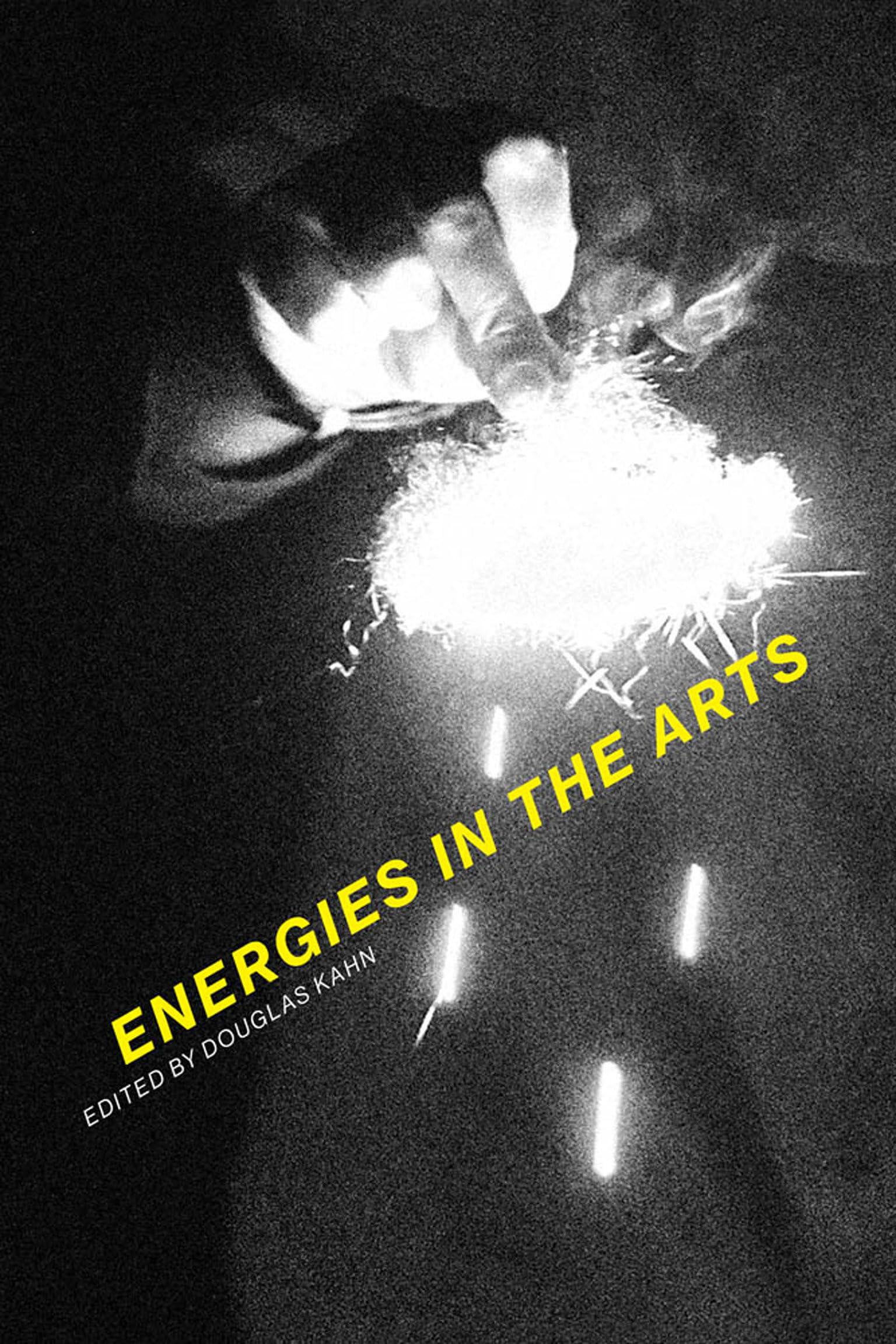
Title
Energies in the Arts (Mit Press),Used
Sold by Ergodebooks, an authorized reseller.
Returns accepted within 30 days | support@ergodebooks.com
Shipping Information
- Free Standard Shipping — United States only
- Processing Time: 3–5 business days
- Estimated Delivery: 6–10 business days after dispatch
- Double-boxed, fully insured & discreetly packaged
- Tracking number sent via email once dispatched
Returns & Refund
Returns accepted within 30 days of delivery.
Damaged or Defective Item
Free return shipping + replacement or full refund
Wrong Item Received
Free return shipping + replacement or full refund
Change of Mind
Return shipping at customer's expense · 25% restocking fee applies
Payment Option

Investigating the concepts and material realities of energy coursing through the arts: a foundational text.This book investigates energiesin the plural, the energies embedded and embodied in everything under the sun as they are expressed in the arts. With contributions from scholars and critics from the visual arts, art history, anthropology, music, literature, and the history of science, it offers the first multidisciplinary investigation of the concepts and material realities of energy coursing through the arts. Just as Douglas Kahn's earlier books helped introduce sound as a category for study in the arts, this new volume will be a foundational volume for future explorers in a largely uncharted domain.The modern concept of energy is only two hundred years oldan abstraction grounded in extractionbut this book takes a more expansive view. It opens with a clap: the sonic energies in a ceremony of the indigenous Goolarabooloo people of Australia. Other chapters explore the energies of photography; responses of artists in the early twentieth centuryincluding Marcel Duchampto scientific discoveries in electricity and electromagnetism; the aestheticization of entropy in works by Hans Haacke and Robert Smithson; freejazz musician Milford Graves's crosscultural engagement with music, science, and spiritualism; energy field performance; and the selfgenerating energy of rumor and gossip as artwork. Contributors include such leading scholars as Linda Dalrymple Henderson, John Tresch, and Caroline A. Jones. Practicing artists and students of art history will find Energies in the Arts an essential work.ContributorsSusan Ballard, Jennifer Biddle, Marcus Boon, Joan Brassil, Steven Connor, Milford Graves, Daniel Hackbarth, Linda Dalrymple Henderson, Caroline A. Jones, Douglas Kahn, David Mather, Stephen Muecke, James Nisbet, Daniela Silvestrin, Michael Taussig, John Tresch, Melissa Warak
⚠️ WARNING (California Proposition 65):
This product may contain chemicals known to the State of California to cause cancer, birth defects, or other reproductive harm.
For more information, please visit www.P65Warnings.ca.gov.
- Q: How many pages does 'Energies in the Arts' have? A: This book has four hundred eighty pages. It offers a comprehensive exploration of energy concepts in various art forms.
- Q: What is the binding type of this book? A: The binding type is hardcover. This ensures durability and a premium feel for readers.
- Q: What are the dimensions of 'Energies in the Arts'? A: The dimensions are seven point zero six inches in length, one point one six inches in width, and nine point eight eight inches in height. These measurements make it a convenient size for reading and display.
- Q: Who is the author of 'Energies in the Arts'? A: The author is Douglas Kahn. He is recognized for his contributions to the study of sound and energy in the arts.
- Q: What genre does 'Energies in the Arts' belong to? A: This book belongs to the History genre. It merges art history with scientific exploration of energy.
- Q: How can I apply the concepts in 'Energies in the Arts' to my studies? A: You can apply these concepts by exploring how energy influences various art forms. This book is ideal for students of art history and interdisciplinary studies.
- Q: Is 'Energies in the Arts' suitable for beginners in art studies? A: Yes, it is suitable for beginners. The book starts with foundational concepts and progresses to more complex discussions.
- Q: What specific themes are explored in this book? A: The book explores themes like sonic energies, photography, and the aestheticization of entropy. It covers a range of artistic disciplines.
- Q: How do I keep 'Energies in the Arts' in good condition? A: To keep it in good condition, store it upright in a dry place and avoid direct sunlight. Regularly dust the cover and pages.
- Q: Is this book safe for all age groups? A: Yes, it is generally safe for all age groups. However, it is more suitable for older students and adults due to its complex themes.
- Q: Can I return 'Energies in the Arts' if I am not satisfied? A: Yes, you can typically return it within a specified period if you are not satisfied. Check the retailer's return policy for details.
- Q: What if 'Energies in the Arts' arrives damaged? A: If it arrives damaged, contact the seller immediately for a replacement or refund. Most sellers have policies in place for such issues.
- Q: Are there any notable contributors to 'Energies in the Arts'? A: Yes, it includes contributions from scholars like Linda Dalrymple Henderson and John Tresch. Their insights enrich the book's content.
- Q: Is there a specific target audience for this book? A: The target audience includes scholars, practicing artists, and students of art history. It caters to those interested in the intersection of energy and art.
- Q: What unique perspectives does 'Energies in the Arts' offer? A: It offers a multidisciplinary perspective, linking energy concepts with various art forms and cultural practices, making it a foundational text.