
Title
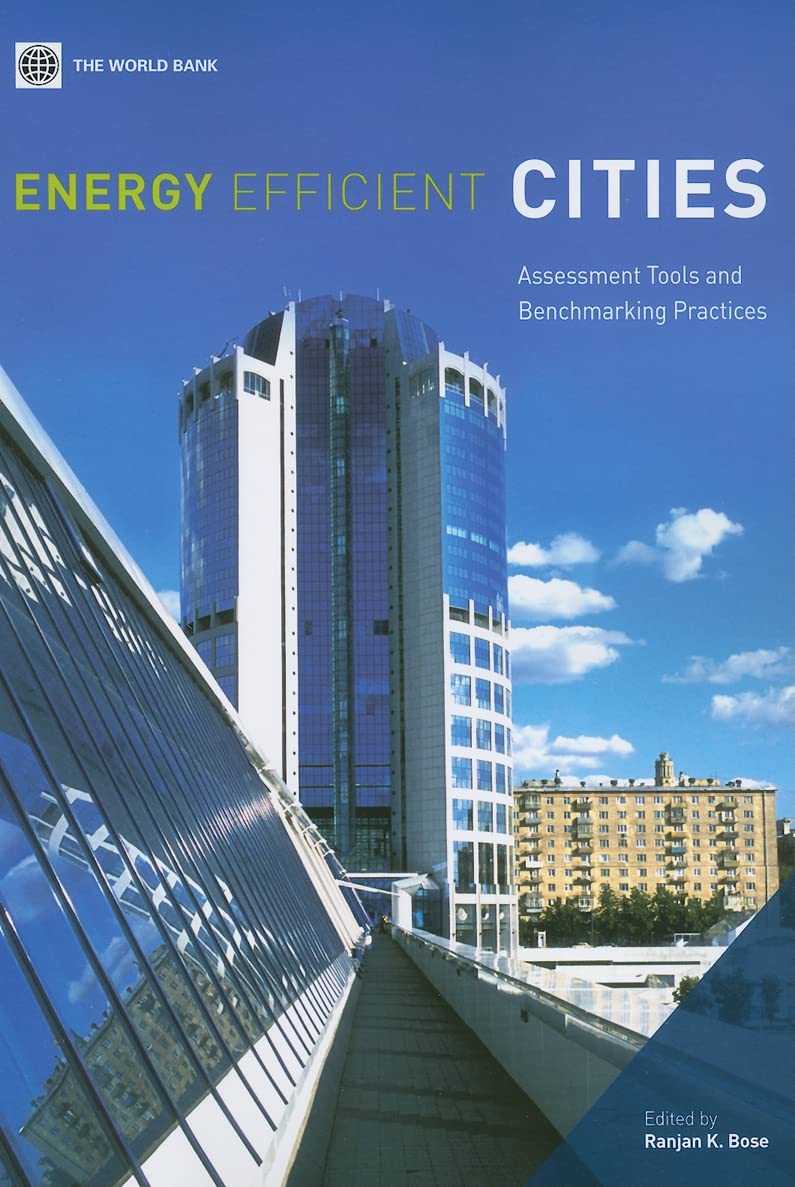
Energy Efficient Cities: Assessment Tools And Benchmarking Practices (Marseilles Symposium),New
Sold by Ergodebooks, an authorized reseller.
Returns accepted within 30 days | support@ergodebooks.com
Shipping Information
- Free Standard Shipping — United States only
- Processing Time: 3–5 business days
- Estimated Delivery: 6–10 business days after dispatch
- Double-boxed, fully insured & discreetly packaged
- Tracking number sent via email once dispatched
Returns & Refund
Returns accepted within 30 days of delivery.
Damaged or Defective Item
Free return shipping + replacement or full refund
Wrong Item Received
Free return shipping + replacement or full refund
Change of Mind
Return shipping at customer's expense · 25% restocking fee applies
Payment Option

Energy is intrinsic to urban settlements, embedded in the built environment, and directly used to power socioeconomic activity, transport and communications, and enable the provision of municipal services. In response to the crucial role of urban energy efficiency for environmentally sustainable and inclusive development processes, ESMAP s Energy Efficient Cities Initiative (EECI) was launched in October 2008 to facilitate the implementation of practical energy solutions that meet the development priorities of cities, and simultaneously build their climate resilience. Chapter 1 begins with a contextual background on the interrelated associations between energy, socioeconomic progress and urbanization. This edited volume compiles seven topical papers presented at the two EECI sponsored sessions during the World Bank s fifth Urban Research Symposium, held at Marseille, France, June 2830, 2009. Chapters 2 8 comprise the papers presented at these sessions: i) tools and assessment approaches on energy efficient urban development, and ii) good practices that promote low carbon sectoral interventions. The analytical tools and policy insights offered in this volume extend from integrated assessments of new cities to the impacts of socioeconomic, climate and demographic changes on existing cities. Sectorspecific interventions are discussed in the context of tools to green buildings in Australia, the transformation to efficient lighting systems in the Philippines, and Demand Responsive Transport Systems in France. In addition, the documentation and benchmarking of a variety of lowcarbon and carbon neutral good practices provides a range of practical insights on plausible energy efficient interventions in urban sectors. Thus the chapters in this publication comprise significant contributions to the ESMAP objective of mainstreaming and leveraging knowledge and initiatives on urban energy efficiency. Following from them, the last chapter 9 provides a contextual overview of ESMAP s programmatic priorities to support energy efficient urban growth, to be effected through EECI.
⚠️ WARNING (California Proposition 65):
This product may contain chemicals known to the State of California to cause cancer, birth defects, or other reproductive harm.
For more information, please visit www.P65Warnings.ca.gov.