
Title
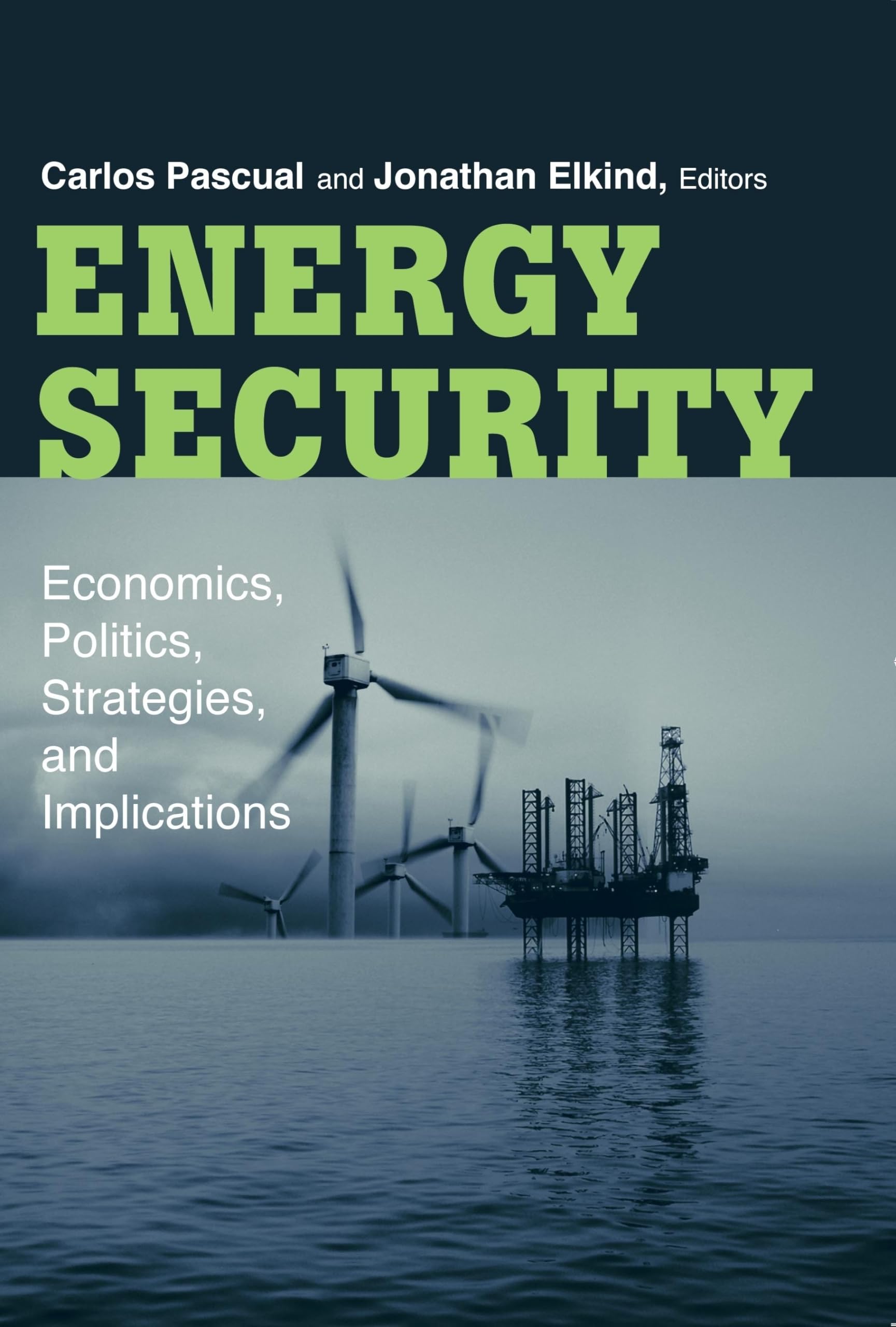
Energy Security: Economics, Politics, Strategies, And Implications,New
Sold by Ergodebooks, an authorized reseller.
Returns accepted within 30 days | support@ergodebooks.com
Shipping Information
- Free Standard Shipping — United States only
- Processing Time: 3–5 business days
- Estimated Delivery: 6–10 business days after dispatch
- Double-boxed, fully insured & discreetly packaged
- Tracking number sent via email once dispatched
Returns & Refund
Returns accepted within 30 days of delivery.
Damaged or Defective Item
Free return shipping + replacement or full refund
Wrong Item Received
Free return shipping + replacement or full refund
Change of Mind
Return shipping at customer's expense · 25% restocking fee applies
Payment Option

Energy security has become a top priority issue for the United States and countries around the globe, but what does the term ''energy security'' really mean? For many it is assuring the safe supply and transport of energy as a matter of national security. For others it is developing and moving toward sustainable and lowcarbon energy sources to avoid environmental catastrophe, while still others prioritize affordability and abundance of supply. The demand for energy has ramifications in every part of the globefrom growing demand in Asia, to the pursuit of reserves in Latin America and Africa, to the increased clout of energyproducing states such as Russia and Iran. Yet the fact remains that the vast majority of global energy production still comes from fossil fuels, and it will take a thorough understanding of the interrelationships of complex challengesfinite supply, environmental concerns, political and religious conflict, and economic volatilityto develop policies that will lead to true energy security. In E nergy Security, Brookings scholars present a realistic, crossdisciplinary look at the American and global quests for energy security within the context of these geopolitical, economic, and environmental challenges. For example, political analysts Pietro Nivola and Erin Carter wrap their arms around just what is means to be ''energy independent'' and whether that is an advisable or even feasible goal. Suzanne Maloney addresses ''Energy Security in the Persian Gulf: Opportunities and Challenges,'' while economist Jason Bordoff and energy analyst Bryan Mignone trace the links between climate policies and energyaccess policies. Carlos Pascual and his colleagues examine delicate geopolitical issues. Assuring longterm energy security remains one of the industrialized world's most pressing priorities, but steps in that direction have been controversial and often dangerous, and results thus far have been tenuous. In this insightful volume, Brookings assesses exactly what we're talking about, what it means in several contexts, and where we go from here.'
⚠️ WARNING (California Proposition 65):
This product may contain chemicals known to the State of California to cause cancer, birth defects, or other reproductive harm.
For more information, please visit www.P65Warnings.ca.gov.