If you have any questions, you are always welcome to contact us. We'll get back to you as soon as possible, withing 24 hours on weekdays.
Customer service
All questions about your order, return and delivery must be sent to our customer service team by e-mail at yourstore@yourdomain.com
Sale & Press
If you are interested in selling our products, need more information about our brand or wish to make a collaboration, please contact us at press@yourdomain.com
Help
If you have any questions, you are always welcome to contact us. We'll get back to you as soon as possible, withing 24 hours on weekdays.
Customer service
All questions about your order, return and delivery must be sent to our customer service team by e-mail at yourstore@yourdomain.com
Sale & Press
If you are interested in selling our products, need more information about our brand or wish to make a collaboration, please contact us at press@yourdomain.com
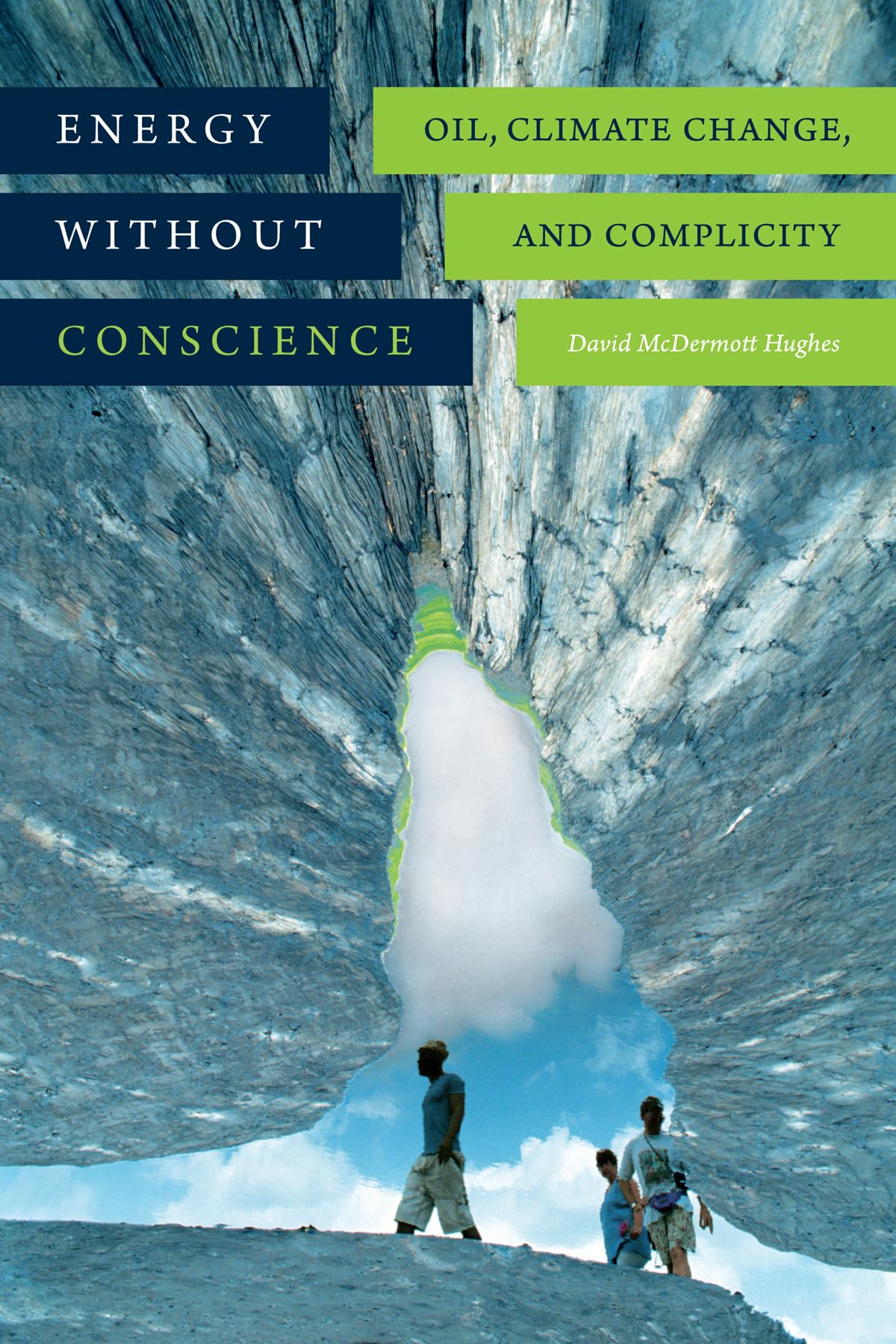
In Energy without Conscience David McDermott Hughes investigates why climate change has yet to be seen as a moral issue. He examines the forces that render the use of fossil fuels ordinary and therefore exempt from ethical evaluation. Hughes centers his analysis on Trinidad and Tobago, which is the world's oldest petrostate, having drilled the first continuously producing oil well in 1866. Marrying historical research with interviews with Trinidadian petroleum scientists, policymakers, technicians, and managers, he draws parallels between Trinidad's eighteenth and nineteenthcentury slave labor energy economy and its contemporary oil industry. Hughes shows how both forms of energy rely upon a complicity that absolves producers and consumers from acknowledging the immoral nature of each. He passionately argues that like slavery, producing oil is a moral choice and that oil is at its most dangerous when it is accepted as an ordinary part of everyday life. Only by rejecting arguments that oil is economically, politically, and technologically necessary, and by acknowledging our complicity in an immoral system, can we stem the damage being done to the planet.
⚠️ WARNING (California Proposition 65):
This product may contain chemicals known to the State of California to cause cancer,
birth defects, or other reproductive harm.
For MAP (Minimum Advertised Price) violations and Intellectual Property (IP) or Trademark concerns, please contact:
support@ergodebooks.com
⚠️ California Proposition 65 Warning: Some products sold on this website may expose you to chemicals known to the State of California to cause cancer, birth defects, or other reproductive harm. For more information, visit www.P65Warnings.ca.gov.