
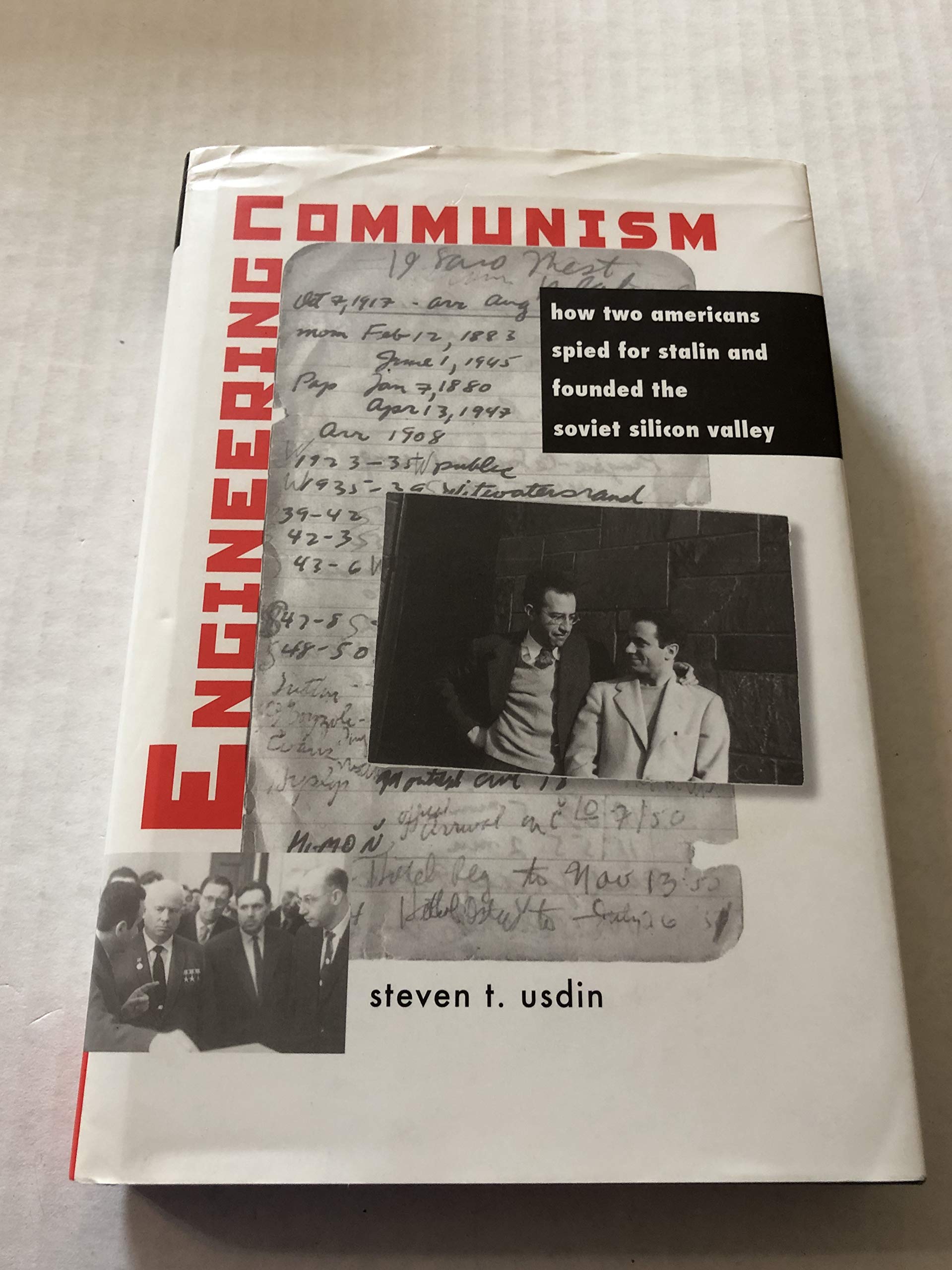
Title
Engineering Communism: How Two Americans Spied For Stalin And Founded The Soviet Silicon Valley,New
Sold by Ergodebooks, an authorized reseller.
Returns accepted within 30 days | support@ergodebooks.com
Shipping Information
- Free Standard Shipping — United States only
- Processing Time: 3–5 business days
- Estimated Delivery: 6–10 business days after dispatch
- Double-boxed, fully insured & discreetly packaged
- Tracking number sent via email once dispatched
Returns & Refund
Returns accepted within 30 days of delivery.
Damaged or Defective Item
Free return shipping + replacement or full refund
Wrong Item Received
Free return shipping + replacement or full refund
Change of Mind
Return shipping at customer's expense · 25% restocking fee applies
Payment Option

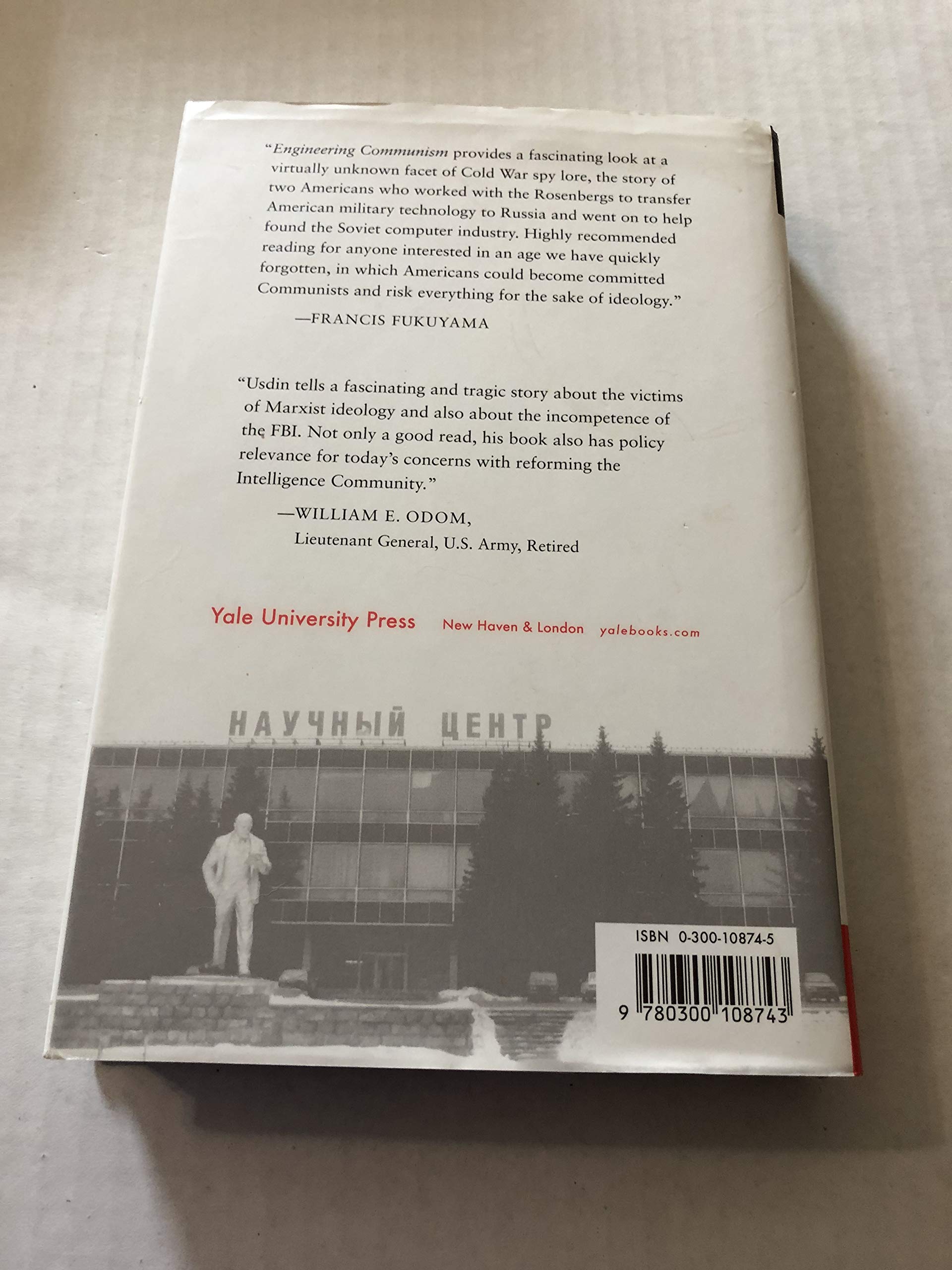
Product Descriptionengineering Communism Is The Fascinating Story Of Joel Barr And Alfred Sarant, Dedicated Communists And Members Of The Rosenberg Spy Ring, Who Stole Information From The United States During World War Ii That Proved Crucial To Building The First Advanced Weapons Systems In The Ussr. On The Brink Of Arrest, They Escaped With Kgbs Help And Eluded American Intelligence For Decades.Drawing On Extensive Interviews With Barr And New Archival Evidence, Steve Usdin Explains Why Barr And Sarant Became Spies, How They Obtained Military Secrets, And How Fbi Blunders Led To Their Escape. He Chronicles Their Pioneering Role In The Soviet Computer Industry, Including Their Success In Convincing Nikita Khrushchev To Build A Secret Silicon Valley.The Book Is Rich With Details Of Barrs And Sarants Intriguing Andexciting Personal Lives, Their Families, As Well As Their Integration Into Russian Society. Engineering Communism Follows The Two Spies Through Sarants Death And Barrs Unbelievable Return To The United States.Review'Engineering Communism Provides A Fascinating Look At A Virtually Unknown Facet Of Cold War Spy Lorethe Story Of Two Americans Who Worked With The Rosenbergs To Transfer American Military Technology To Russia And Went On To Help Found The Soviet Computer Industry. Highly Recommended Reading For Anyone Interested In An Age We Have Quicklyforgotten, In Which Americans Could Become Committed Communists And Risk Everything For The Sake Of Ideology.'Francis Fukuyama (Bernard L. Schwartz Professor Of International Political Economy, The Paul H. Nitze School Of Advanced International Studies, Johns Hopkins University; Author Of 'Statebuilding: Governance And World Order In The 21St Century, And 'The End Of History And The Last Man')(Francis Fukuyama)[An] Outstanding Book. . . . A Valuable Addition To The Literature On The Soviet Spy Efforts In The U.S. . . . . Highly Recommended.'(Choice)About The Authorsteve Usdin Is Senior Editor At Biocentury Publications.
⚠️ WARNING (California Proposition 65):
This product may contain chemicals known to the State of California to cause cancer, birth defects, or other reproductive harm.
For more information, please visit www.P65Warnings.ca.gov.
- Q: How many pages does this book have? A: This book has three hundred fifty-two pages. It offers an in-depth exploration of the lives of spies Joel Barr and Alfred Sarant.
- Q: What is the binding type of this book? A: The binding type is hardcover. This ensures durability and a premium feel for readers who appreciate a quality book.
- Q: What are the dimensions of this book? A: The dimensions are six point two six inches in length, one point two six inches in width, and nine point two five inches in height. These measurements make it a standard-sized hardcover book.
- Q: What is the reading level for this book? A: This book is suitable for adult readers. It delves into complex historical themes and requires a mature understanding of the subject matter.
- Q: Is this book appropriate for young adults? A: No, this book is not recommended for young adults. The content discusses espionage and communism, which may not be suitable for younger audiences.
- Q: How can I read this book effectively? A: To read this book effectively, find a quiet place and take notes on key themes. Engaging with the material will enhance understanding of Barr and Sarant's impact.
- Q: Is there any specific historical context I should know before reading? A: Yes, understanding World War II and the Cold War will enrich your reading experience. The book provides insights into espionage during these significant historical periods.
- Q: How do I care for this hardcover book? A: To care for this hardcover book, keep it in a dry place away from direct sunlight. Avoid bending the cover and store it upright or flat to preserve its condition.
- Q: Can I clean the pages if they get dirty? A: No, it is not recommended to clean the pages directly. Instead, keep the book in a clean environment to prevent dust and stains.
- Q: What should I do if the book arrives damaged? A: If the book arrives damaged, contact the seller for a return or exchange. Most sellers have policies in place to address such issues.
- Q: Does this book come with a warranty? A: No, this book does not come with a warranty. However, you can inquire about return policies if you face issues.
- Q: Is there an ebook version available? A: Yes, there is an ebook version available. This allows for easier access and portability for readers who prefer digital formats.
- Q: How does this book compare to other historical espionage books? A: This book offers a unique perspective on American spies during World War II. Unlike many others, it focuses on the Soviet side and provides detailed personal accounts.
- Q: Is this book suitable for beginners in history? A: No, this book is more suited for those with some background knowledge in history. Its complex themes may be challenging for beginners.
- Q: What makes this book a good choice for history enthusiasts? A: This book provides a detailed narrative of espionage and its impact on technology in the USSR. It’s based on extensive research and interviews, appealing to history enthusiasts.