
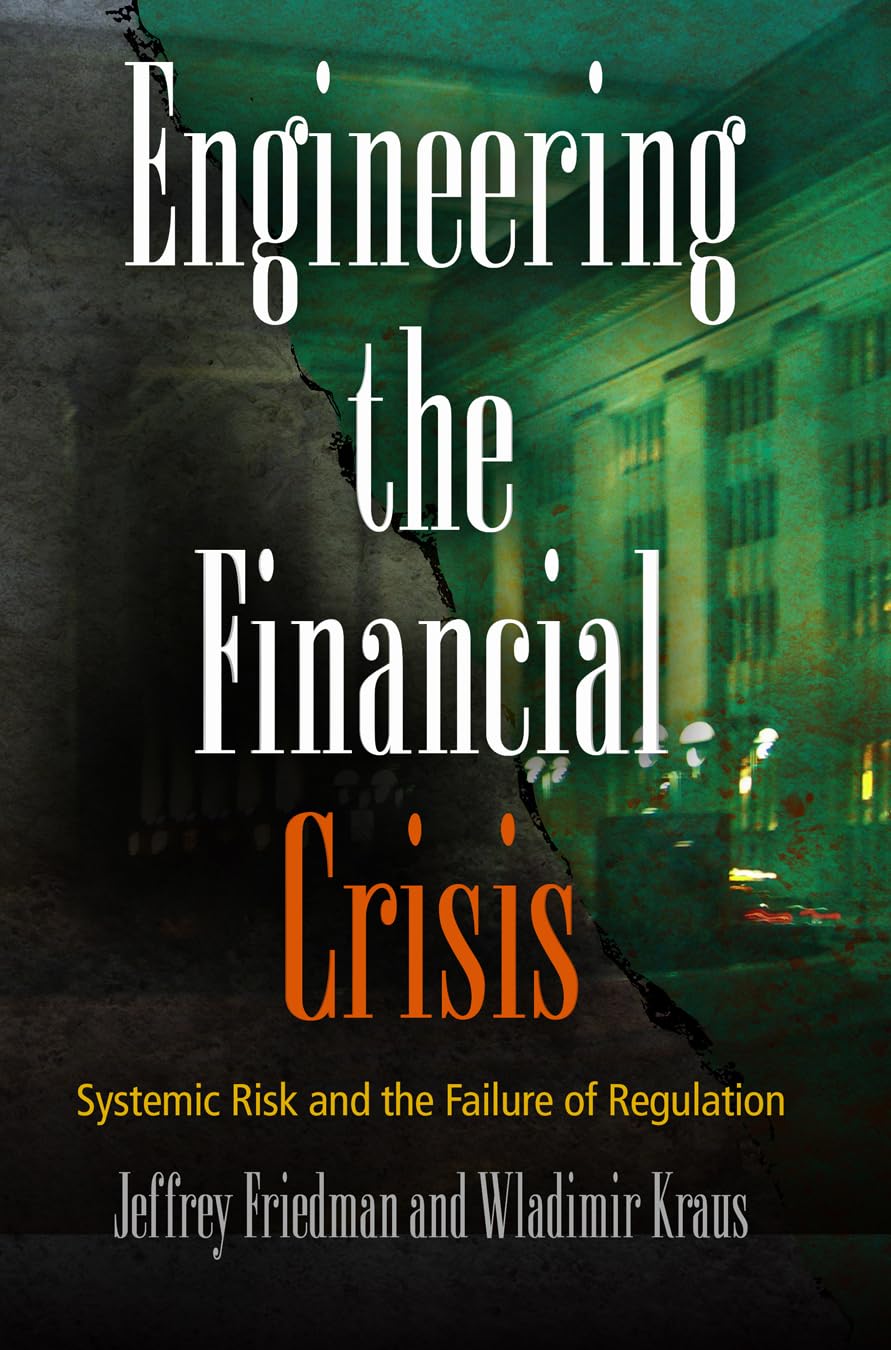
Title
Engineering The Financial Crisis: Systemic Risk And The Failure Of Regulation,Used
Sold by Ergodebooks, an authorized reseller.
Returns accepted within 30 days | support@ergodebooks.com
Shipping Information
- Free Standard Shipping — United States only
- Processing Time: 3–5 business days
- Estimated Delivery: 6–10 business days after dispatch
- Double-boxed, fully insured & discreetly packaged
- Tracking number sent via email once dispatched
Returns & Refund
Returns accepted within 30 days of delivery.
Damaged or Defective Item
Free return shipping + replacement or full refund
Wrong Item Received
Free return shipping + replacement or full refund
Change of Mind
Return shipping at customer's expense · 25% restocking fee applies
Payment Option

The financial crisis has been blamed on reckless bankers, irrational exuberance, government support of mortgages for the poor, financial deregulation, and expansionary monetary policy. Specialists in banking, however, tell a story with less emotional resonance but a better correspondence to the evidence: the crisis was sparked by the international regulatory accords on bank capital levels, the Basel Accords.In one of the first studies critically to examine the Basel Accords, Engineering the Financial Crisis reveals the crucial role that bank capital requirements and other government regulations played in the recent financial crisis. Jeffrey Friedman and Wladimir Kraus argue that by encouraging banks to invest in highly rated mortgagebacked bonds, the Basel Accords created an overconcentration of risk in the banking industry. In addition, accounting regulations required banks to reduce lending if the temporary market value of these bonds declined, as they did in 2007 and 2008 during the panic over subprime mortgage defaults.The book begins by assessing leading theories about the crisisderegulation, bank compensation practices, excessive leverage, 'too big to fail,' and Fannie Mae and Freddie Macand, through careful evidentiary scrutiny, debunks much of the conventional wisdom about what went wrong. It then discusses the Basel Accords and how they contributed to systemic risk. Finally, it presents an analysis of socialscience expertise and the fallibility of economists and regulators. Engagingly written, theoretically inventive, yet empirically grounded, Engineering the Financial Crisis is a timely examination of the unintendedand sometimes disastrouseffects of regulation on complex economies.
⚠️ WARNING (California Proposition 65):
This product may contain chemicals known to the State of California to cause cancer, birth defects, or other reproductive harm.
For more information, please visit www.P65Warnings.ca.gov.