If you have any questions, you are always welcome to contact us. We'll get back to you as soon as possible, withing 24 hours on weekdays.
Customer service
All questions about your order, return and delivery must be sent to our customer service team by e-mail at yourstore@yourdomain.com
Sale & Press
If you are interested in selling our products, need more information about our brand or wish to make a collaboration, please contact us at press@yourdomain.com
Help
If you have any questions, you are always welcome to contact us. We'll get back to you as soon as possible, withing 24 hours on weekdays.
Customer service
All questions about your order, return and delivery must be sent to our customer service team by e-mail at yourstore@yourdomain.com
Sale & Press
If you are interested in selling our products, need more information about our brand or wish to make a collaboration, please contact us at press@yourdomain.com
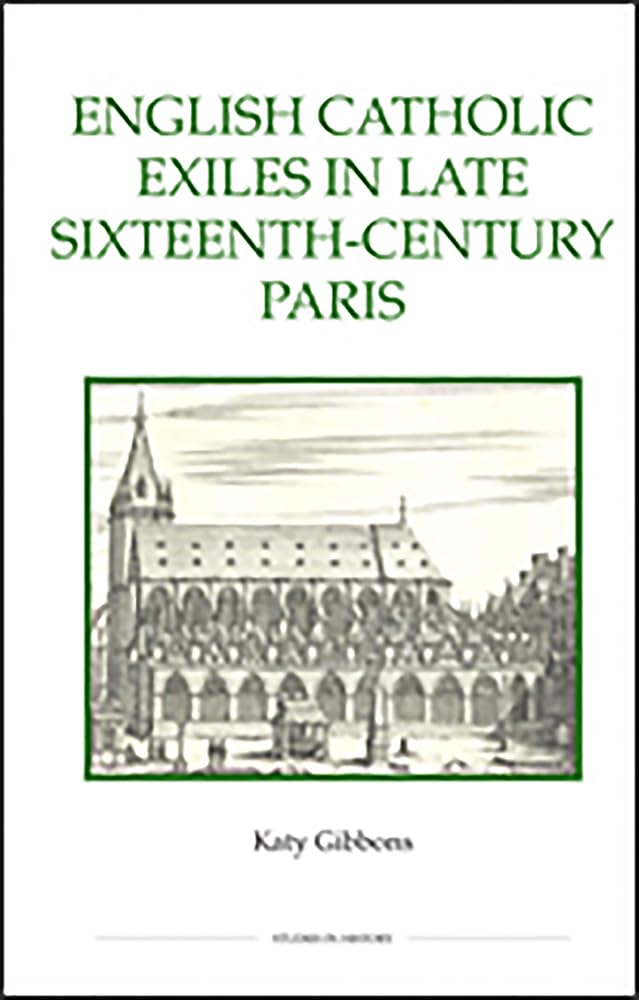
An investigation of the activities of Catholic exiles in Paris, showing them to have a wider influence on both sides of the Channel.Religious exile was both a familiar and a deeply discomforting phenomenon in Reformation Europe. In the turbulent context of the later sixteenth century, a group of English Catholic exiles in Paris became a source of serious concern to the Protestant government at home and a destabilising presence in their host environment; their residence in Paris coincided with and contributed to a crisis in authority for the French Crown, and the buildup to the Spanishenterprise of England.This book uses a range of evidence from both sides of the Channel to investigate the polemical and practical impact of religious exile. It reconstructs the experience and priorities of the English Catholic laity and clergy in Paris, moving beyond contemporary stereotypes of the exiles, and the traditional historiographical view of English Catholicism as isolated and introverted. It emphasises the importance of placing English Catholic experience into a broader European context, shedding light on the significant place of France in their activity, thus offering a new angle entirely on the relationship between England and the continent in the early modern period.Katy Gibbons is Senior Lecturer in History at the University of Portsmouth.
⚠️ WARNING (California Proposition 65):
This product may contain chemicals known to the State of California to cause cancer,
birth defects, or other reproductive harm.
For MAP (Minimum Advertised Price) violations and Intellectual Property (IP) or Trademark concerns, please contact:
support@ergodebooks.com
⚠️ California Proposition 65 Warning: Some products sold on this website may expose you to chemicals known to the State of California to cause cancer, birth defects, or other reproductive harm. For more information, visit www.P65Warnings.ca.gov.