
Title
Enterprise Application Integration,Used
Sold by Ergodebooks, an authorized reseller.
Returns accepted within 30 days | support@ergodebooks.com
Shipping Information
- Free Standard Shipping — United States only
- Processing Time: 3–5 business days
- Estimated Delivery: 6–10 business days after dispatch
- Double-boxed, fully insured & discreetly packaged
- Tracking number sent via email once dispatched
Returns & Refund
Returns accepted within 30 days of delivery.
Damaged or Defective Item
Free return shipping + replacement or full refund
Wrong Item Received
Free return shipping + replacement or full refund
Change of Mind
Return shipping at customer's expense · 25% restocking fee applies
Payment Option

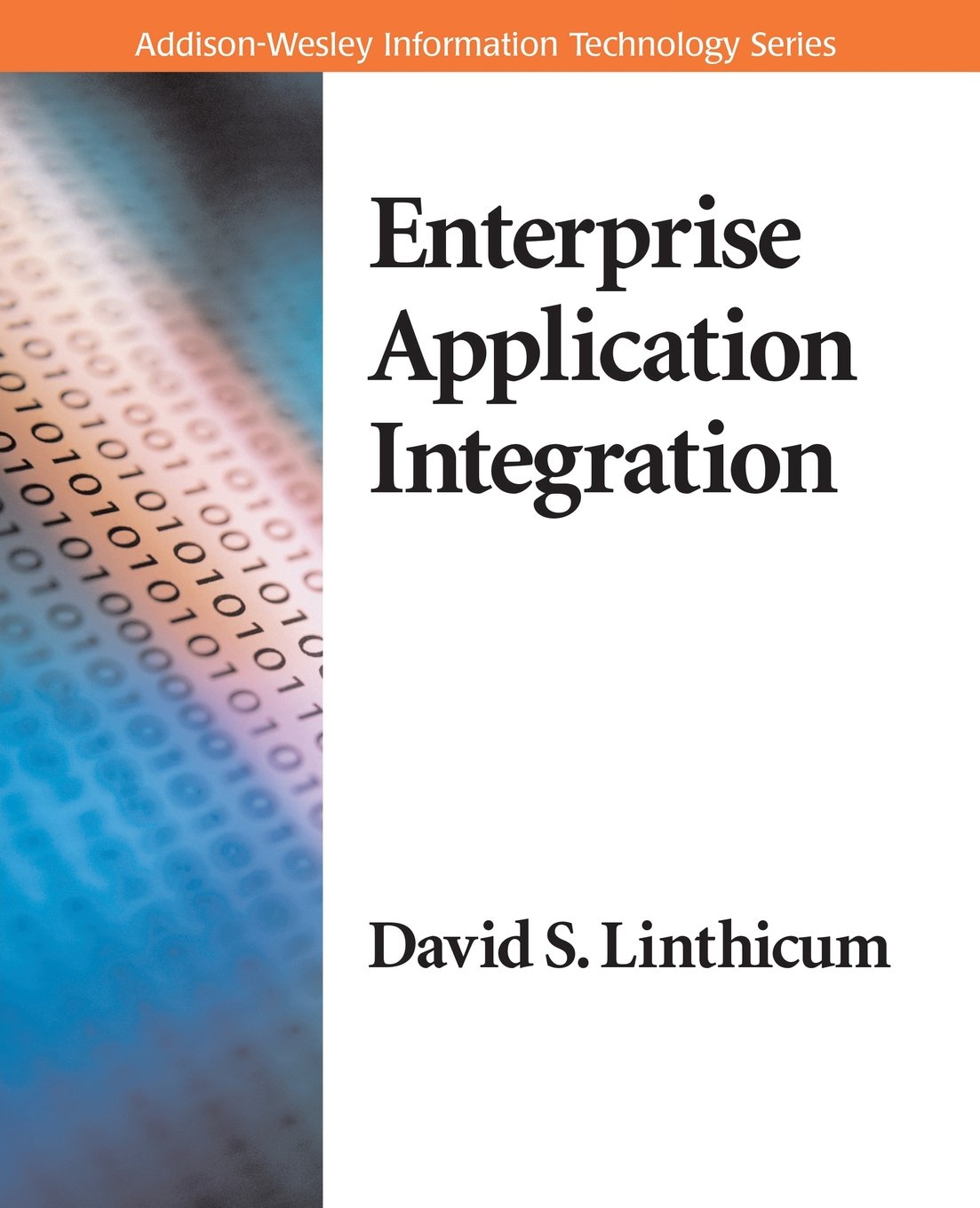
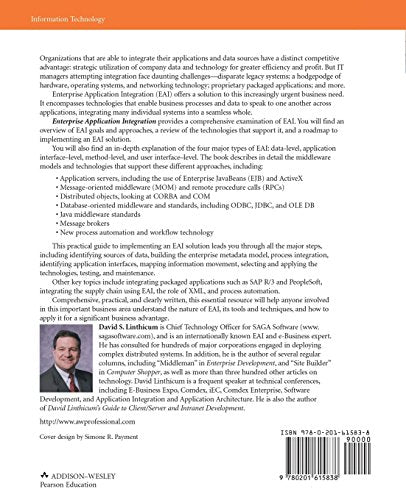
Organizations that are able to integrate their applications and data sources have a distinct competitive advantage: strategic utilization of company data and technology for greater efficiency and profit. But IT managers attempting integration face daunting challengesdisparate legacy systems; a hodgepodge of hardware, operating systems, and networking technology; proprietary packaged applications; and more.Enterprise Application Integration (EAI) offers a solution to this increasingly urgent business need. It encompasses technologies that enable business processes and data to speak to one another across applications, integrating many individual systems into a seamless whole.Enterprise Application Integration provides a comprehensive examination of EAI. You will find an overview of EAI goals and approaches, a review of the technologies that support it, and a roadmap to implementing an EAI solution. You will also find an indepth explanation of the four major types of EAI: datalevel, application interfacelevel, methodlevel, and user interfacelevel. The book describes in detail the middleware models and technologies that support these different approaches, including:* Application servers, including the use of Enterprise JavaBeans (EJB) and ActiveX * Messageoriented middleware (MOM) and remote procedure calls (RPCs) * Distributed objects, looking at CORBA and COM * Databaseoriented middleware and standards, including ODBC, JDBC, and OLE DB * Java middleware standards * Message brokers * New process automation and workflow technologyThis practical guide to implementing an EAI solution leads you through all the major steps, including identifying sources of data, building the enterprise metadata model, process integration, identifying application interfaces, mapping information movement, selecting and applying the technologies, testing, and maintenance. Other key topics include integrating packaged applications such as SAP R/3 and PeopleSoft, integrating the supply chain using EAI, the role of XML, and process automation. Comprehensive, practical, and clearly written, this essential resource will help anyone involved in this important business area understand the nature of EAI, its tools and techniques, and how to apply it for a significant business advantage.
⚠️ WARNING (California Proposition 65):
This product may contain chemicals known to the State of California to cause cancer, birth defects, or other reproductive harm.
For more information, please visit www.P65Warnings.ca.gov.