If you have any questions, you are always welcome to contact us. We'll get back to you as soon as possible, withing 24 hours on weekdays.
Customer service
All questions about your order, return and delivery must be sent to our customer service team by e-mail at yourstore@yourdomain.com
Sale & Press
If you are interested in selling our products, need more information about our brand or wish to make a collaboration, please contact us at press@yourdomain.com
Help
If you have any questions, you are always welcome to contact us. We'll get back to you as soon as possible, withing 24 hours on weekdays.
Customer service
All questions about your order, return and delivery must be sent to our customer service team by e-mail at yourstore@yourdomain.com
Sale & Press
If you are interested in selling our products, need more information about our brand or wish to make a collaboration, please contact us at press@yourdomain.com
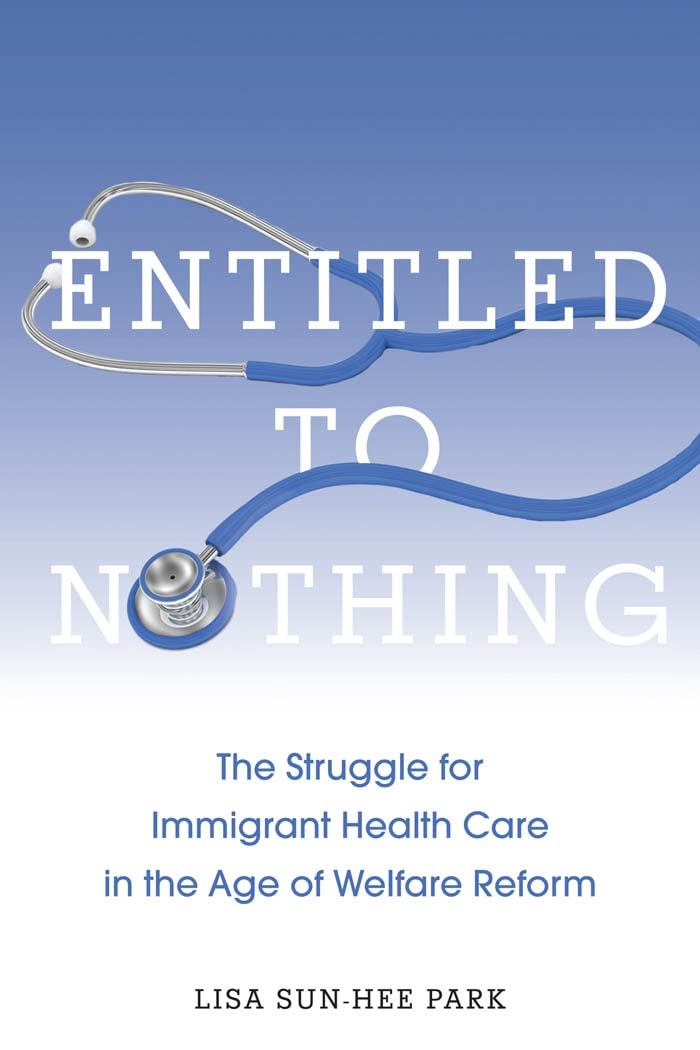
In Entitled to Nothing, Lisa SunHee Park investigates how the politics of immigration, health care, and welfare are intertwined. Documenting the formal return of the immigrant as a public charge, or a burden upon the State, the author shows how the concept has been revived as states adopt punitive policies targeting immigrants of color and require them to pay back benefits for which they are legally eligible during a time of intense debate regarding welfare reform.Park argues that the notions of public charge and public burden were reinvigorated in the 1990s to target immigrant women of reproductive age for deportation and as part of a larger project of disciplining immigrants. Drawing on nearly 200 interviews with immigrant organizations, government agencies and safety net providers, as well as careful tracking of policies and media coverage, Park provides vivid, firstperson accounts of how struggles over the public charge doctrine unfolded on the ground, as well as its consequences for the immigrant community. Ultimately, she shows that the concept of public charge continues to lurk in the background, structuring our conception of who can legitimately access public programs and of the moral economy of work and citizenship in the U.S., and makes important policy suggestions for reforming our immigration system.
⚠️ WARNING (California Proposition 65):
This product may contain chemicals known to the State of California to cause cancer,
birth defects, or other reproductive harm.
For MAP (Minimum Advertised Price) violations and Intellectual Property (IP) or Trademark concerns, please contact:
support@ergodebooks.com
⚠️ California Proposition 65 Warning: Some products sold on this website may expose you to chemicals known to the State of California to cause cancer, birth defects, or other reproductive harm. For more information, visit www.P65Warnings.ca.gov.