
Title
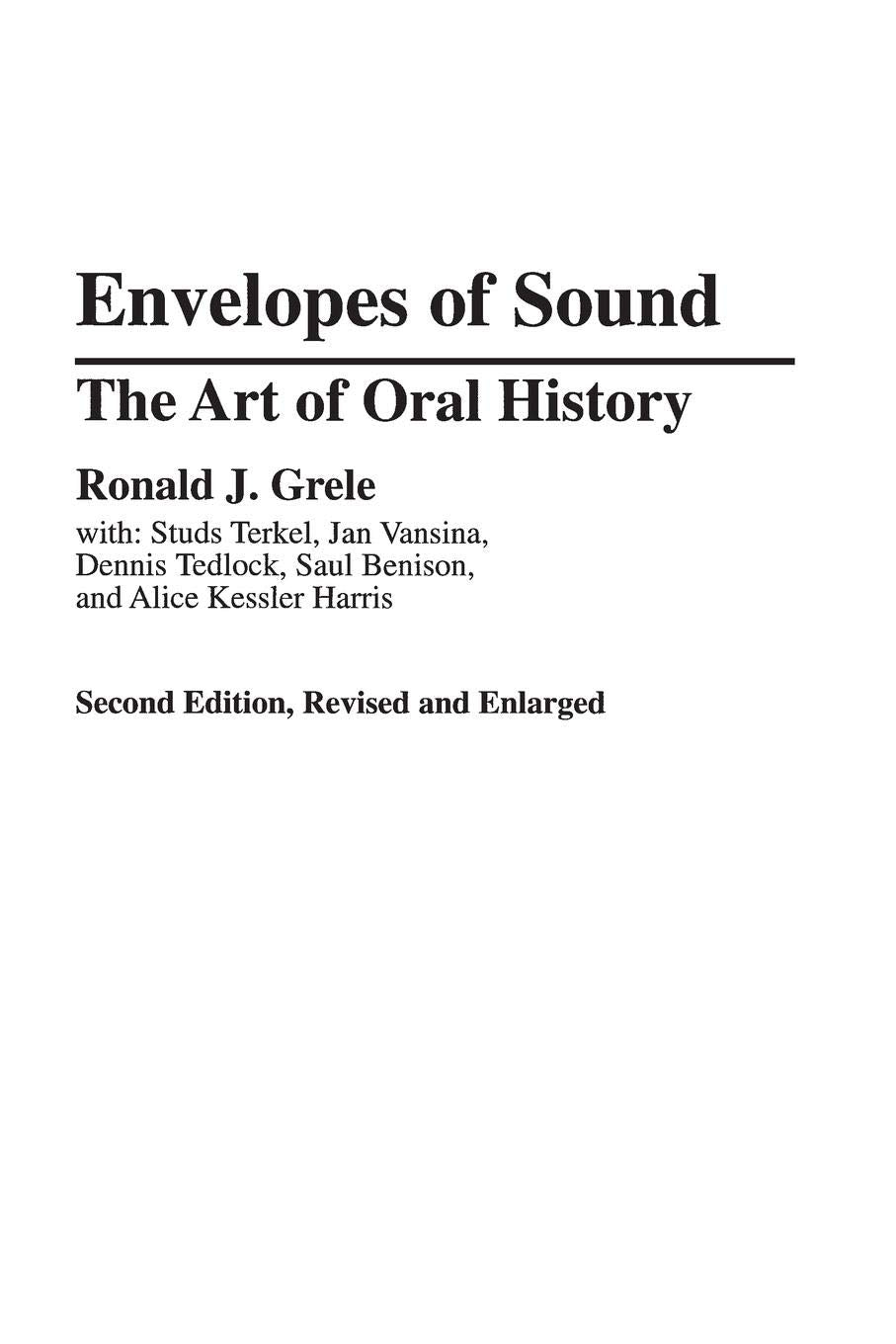
Envelopes Of Sound: The Art Of Oral History
Sold by Ergodebooks, an authorized reseller.
Returns accepted within 30 days | support@ergodebooks.com
Shipping Information
- Free Standard Shipping — United States only
- Processing Time: 3–5 business days
- Estimated Delivery: 6–10 business days after dispatch
- Double-boxed, fully insured & discreetly packaged
- Tracking number sent via email once dispatched
Returns & Refund
Returns accepted within 30 days of delivery.
Damaged or Defective Item
Free return shipping + replacement or full refund
Wrong Item Received
Free return shipping + replacement or full refund
Change of Mind
Return shipping at customer's expense · 25% restocking fee applies
Payment Option

What Is It That Oral Historians Do? Prior To The Publication Of Envelopes Of Sound Oral History Was Regarded As An Archival Practice And Interviews Were Considered The Repositories Of Data. Envelopes Shows That The Interview Is A Series Of Dialectical Relationships Embedded In Language, Social Practice, And Historical Imagination. It Merges Theory And Method Through The Analysis Of The Basic Structures Of The Interview. It Incorporates New Thinking On The Nature Of Narrative And Conversation, And It Covers New Ground In Examining Fieldwork In A Number Of Disciplines. While Strongly Theoretical, It Also Has Direct Application In Conducting Oral History Interviews. Ronald Grele Is The Dean Of Oral History In The United States, And Envelopes Of Sound Is The Volume By Which Others Will Continue To Be Judged. Its Contributions To Methods And To Meaning Are Still The Place To Start A Serious Discussion, Whether With Scholars Or With High School Students Interviewing Their Grandparents.Paul M. Buhle Director, Oral History Of The American Left New York Universitygrele'S Early, Groundbreaking Book On Oral History Remains A Classic. It Continues To Challenge The Practitioner To Be More Selfconscious Of And Attentive To The Nuances Of The Oral History Interview.Sherna Berger Gluck Director, Oral History California State University, Long Beachwhat Is It That Oral Historians Do? Prior To The Publication Of Envelopes Of Sound Oral History Was Regarded As An Archival Practice And Interviews Were Considered The Repositories Of Data. Envelopes Shows That The Interview Is A Series Of Dialectical Relationships Embedded In Language, Social Practice, And Historical Imagination. It Calls Upon Oral Historians To Begin To Step Back, To Think Seriously About What It Is They Do, And To Ask What Kind Of Documentation It Is That They Produce And How They Can Make It Better.This Volume Merges Theory And Method Through The Analysis Of The Basic Structures Of The Interview. It Incorporates New Thinking On The Nature Of Narrative And Conversation, And It Covers New Ground In Examining Fieldwork In A Number Of Disciplines. While Strongly Theoretical, It Also Has Direct Application In Conducting Oral History Interviews. It Moves From Relatively Easy And Simple Considerations To Increasingly Complex Issues. Envelopes Of Sound Can Be Used By A Variety Of Students In Discplines Ranging From History And Sociology To Anthropology And Contemporary Literature, And It Can Be Used In A Variety Of Ways To Raise Issues On A Number Of Theoretical Levels.
⚠️ WARNING (California Proposition 65):
This product may contain chemicals known to the State of California to cause cancer, birth defects, or other reproductive harm.
For more information, please visit www.P65Warnings.ca.gov.
- Q: How many pages are in 'Envelopes of Sound'? A: This book contains three hundred twelve pages. It provides an in-depth exploration of oral history practices and methodologies.
- Q: What are the dimensions of 'Envelopes of Sound'? A: The dimensions of the book are six point fourteen inches in length, zero point sixty-seven inches in width, and nine point twenty-one inches in height.
- Q: What type of binding does 'Envelopes of Sound' have? A: The book is available in paperback binding. This makes it lightweight and easy to carry for readers.
- Q: Who is the author of 'Envelopes of Sound'? A: The author is Ronald J. Grele. He is recognized as a leading figure in the field of oral history.
- Q: What is the main focus of 'Envelopes of Sound'? A: The book focuses on the art and practice of oral history. It examines the complexities of conducting interviews and their theoretical implications.
- Q: Is 'Envelopes of Sound' suitable for beginners? A: Yes, it is suitable for both beginners and advanced practitioners. The book provides foundational insights into oral history and its methodologies.
- Q: Can students use 'Envelopes of Sound' for their studies? A: Yes, students from various disciplines can benefit from this book. It is useful for courses in history, sociology, and anthropology.
- Q: How can I apply the teachings from 'Envelopes of Sound'? A: You can apply its teachings by using the methodologies outlined for conducting oral history interviews. The book includes practical applications and examples.
- Q: Is 'Envelopes of Sound' appropriate for high school students? A: Yes, it is appropriate for high school students. It can assist them in learning how to conduct interviews for projects or personal research.
- Q: What should I do if I receive a damaged copy of 'Envelopes of Sound'? A: If you receive a damaged copy, you should contact the seller for a return or exchange. Most retailers have customer service policies for such issues.
- Q: Does 'Envelopes of Sound' have a warranty? A: No, books typically do not come with a warranty. However, you may have return options based on the retailer's policies.
- Q: How should I store 'Envelopes of Sound' to keep it in good condition? A: Store the book in a cool, dry place away from direct sunlight. This helps prevent damage to the cover and pages.
- Q: Are there any specific cleaning instructions for 'Envelopes of Sound'? A: No specific cleaning instructions are needed for the book. Just handle it with care to avoid wear and tear.
- Q: How does 'Envelopes of Sound' compare to other oral history books? A: It is considered a classic in oral history literature, often regarded as a benchmark for others. Its theoretical depth sets it apart from many contemporary works.
- Q: What audience is 'Envelopes of Sound' intended for? A: It is intended for scholars, students, and practitioners interested in oral history. The insights provided cater to a wide range of audiences.