
Title
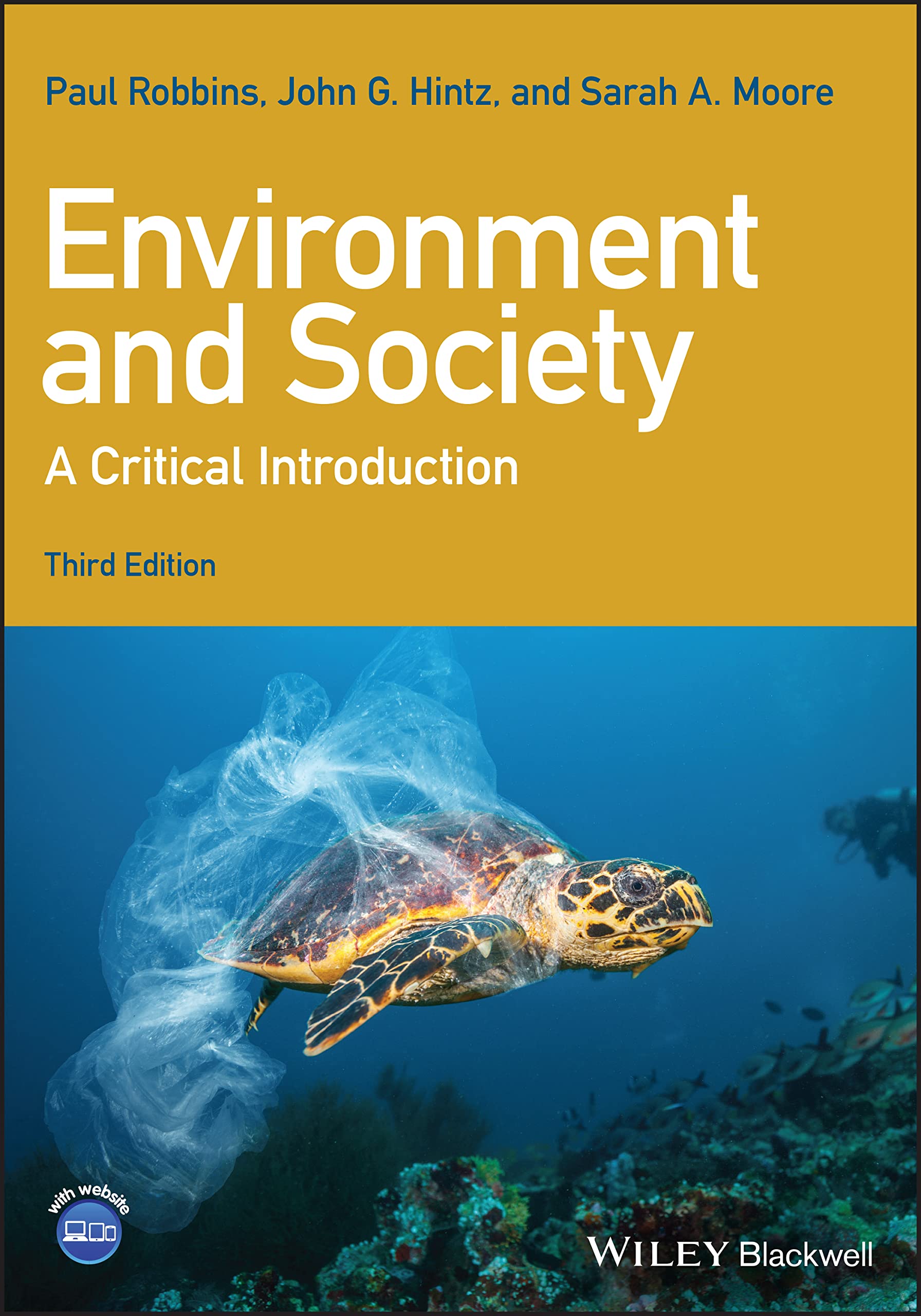
Environment and Society: A Critical Introduction (Critical Introductions to Geography),Used
Sold by Ergodebooks, an authorized reseller.
Returns accepted within 30 days | support@ergodebooks.com
Shipping Information
- Free Standard Shipping — United States only
- Processing Time: 3–5 business days
- Estimated Delivery: 6–10 business days after dispatch
- Double-boxed, fully insured & discreetly packaged
- Tracking number sent via email once dispatched
Returns & Refund
Returns accepted within 30 days of delivery.
Damaged or Defective Item
Free return shipping + replacement or full refund
Wrong Item Received
Free return shipping + replacement or full refund
Change of Mind
Return shipping at customer's expense · 25% restocking fee applies
Payment Option

A comprehensive yet accessible introduction to the conceptual tools used to explore realworld environmental problemsEnvironment and Society: A Critical Introduction, Third Edition demonstrates how theoretical approaches such as environmental ethics, political economy, and social construction work as conceptual tools to identify and clarify contemporary environmental issues. Assuming no background knowledge in the subject, this readerfriendly textbook uses clear language and engaging examples to first describe nine key conceptual tools, and then apply them to a variety of familiar objectsfrom bottled water and French fries to trees, wolves, and carbon dioxide. Throughout the text, highly accessible chapters provide insight into the relationship between the environment and presentday society.Divided into two parts, the text begins by explaining major theoretical approaches for interpreting the environmentsociety relationship and discussing different perspectives about environmental problems. Part II examines a series of objects, each viewed through a sample of the theoretical tools from Part I, helping readers think critically about critical environmental topics such as deforestation, climate change, the global water supply, and hazardous ewaste. This fully revised third edition stresses a wider range of competing ways of thinking about environmental issues and features additional cases studies, uptodate conceptual understandings, and new chapters in Part I on racializd environments and feminist approaches. Environment and Society: A Critical Introduction, Third Edition: Covers theoretical lenses such as commodities, environmental ethics, and risks and hazards, and applies them to touchstone environmentsociety objects like wolves, tuna, trees, and carbon dioxide Uses a conversational narrative to explain key historical events, topical issues and policies, and scientific concepts Features substantial revisions and updates, including new chapters on feminism and race, and improved maps and illustrations Includes a wealth of inbook and online resources, including exercises and boxed discussions, chapter summaries, review questions, references, suggested readings, an online test bank, and internet links Provides additional instructor support such as suggested teaching models, fullcolor PowerPoint slides, and supplementary teaching materialRetaining the innovative approach of its predecessors, Environment and Society: A Critical Introduction, Third Edition remains the ideal textbook for courses in environmental issues, environmental science, and nature and society theory.
⚠️ WARNING (California Proposition 65):
This product may contain chemicals known to the State of California to cause cancer, birth defects, or other reproductive harm.
For more information, please visit www.P65Warnings.ca.gov.
- Q: How many pages does the book have? A: This book has four hundred pages. It provides a comprehensive introduction to environmental issues and theories.
- Q: What is the binding type of this book? A: The binding type is paperback. This makes it lightweight and easy to handle.
- Q: What are the dimensions of this book? A: The book measures six point nine inches in length, zero point nine one inches in width, and nine point nine inches in height.
- Q: Who is the author of this book? A: The author is Paul Robbins. He is known for his scholarly work in environmental geography.
- Q: What is the main topic of the book? A: The main topic is the relationship between environment and society. It explores various theoretical approaches to environmental problems.
- Q: What is the reading level of this book? A: This book is suitable for undergraduate students and anyone interested in environmental issues. It assumes no prior knowledge.
- Q: How can I use this book in my studies? A: You can use this book as a textbook for courses in environmental science and sociology. It includes exercises and discussion questions.
- Q: Is this book suitable for beginners? A: Yes, this book is suitable for beginners. It explains concepts in clear language with engaging examples.
- Q: Are there any additional resources included? A: Yes, the book includes in-book resources, chapter summaries, and an online test bank for further study.
- Q: How should I store this book? A: Store the book in a cool, dry place. Avoid exposure to direct sunlight to prevent fading and wear.
- Q: Can this book be used for group discussions? A: Yes, it is ideal for group discussions. The book features boxed discussions and questions to stimulate conversation.
- Q: What if the book arrives damaged? A: If the book arrives damaged, you should contact customer support for a return or exchange. Make sure to keep the packaging.
- Q: Is there a warranty for this book? A: No, books typically do not come with a warranty. However, check the return policy for any issues.
- Q: How do I care for this book? A: To care for this book, handle it gently and avoid bending the spine. Keep it on a shelf to prevent damage.
- Q: What topics are covered in this book? A: The book covers topics such as environmental ethics, climate change, and the global water supply. It offers various theoretical lenses.
- Q: Is this book appropriate for high school students? A: Yes, it can be appropriate for advanced high school students interested in environmental science. It is accessible and informative.