If you have any questions, you are always welcome to contact us. We'll get back to you as soon as possible, withing 24 hours on weekdays.
Customer service
All questions about your order, return and delivery must be sent to our customer service team by e-mail at yourstore@yourdomain.com
Sale & Press
If you are interested in selling our products, need more information about our brand or wish to make a collaboration, please contact us at press@yourdomain.com
Help
If you have any questions, you are always welcome to contact us. We'll get back to you as soon as possible, withing 24 hours on weekdays.
Customer service
All questions about your order, return and delivery must be sent to our customer service team by e-mail at yourstore@yourdomain.com
Sale & Press
If you are interested in selling our products, need more information about our brand or wish to make a collaboration, please contact us at press@yourdomain.com
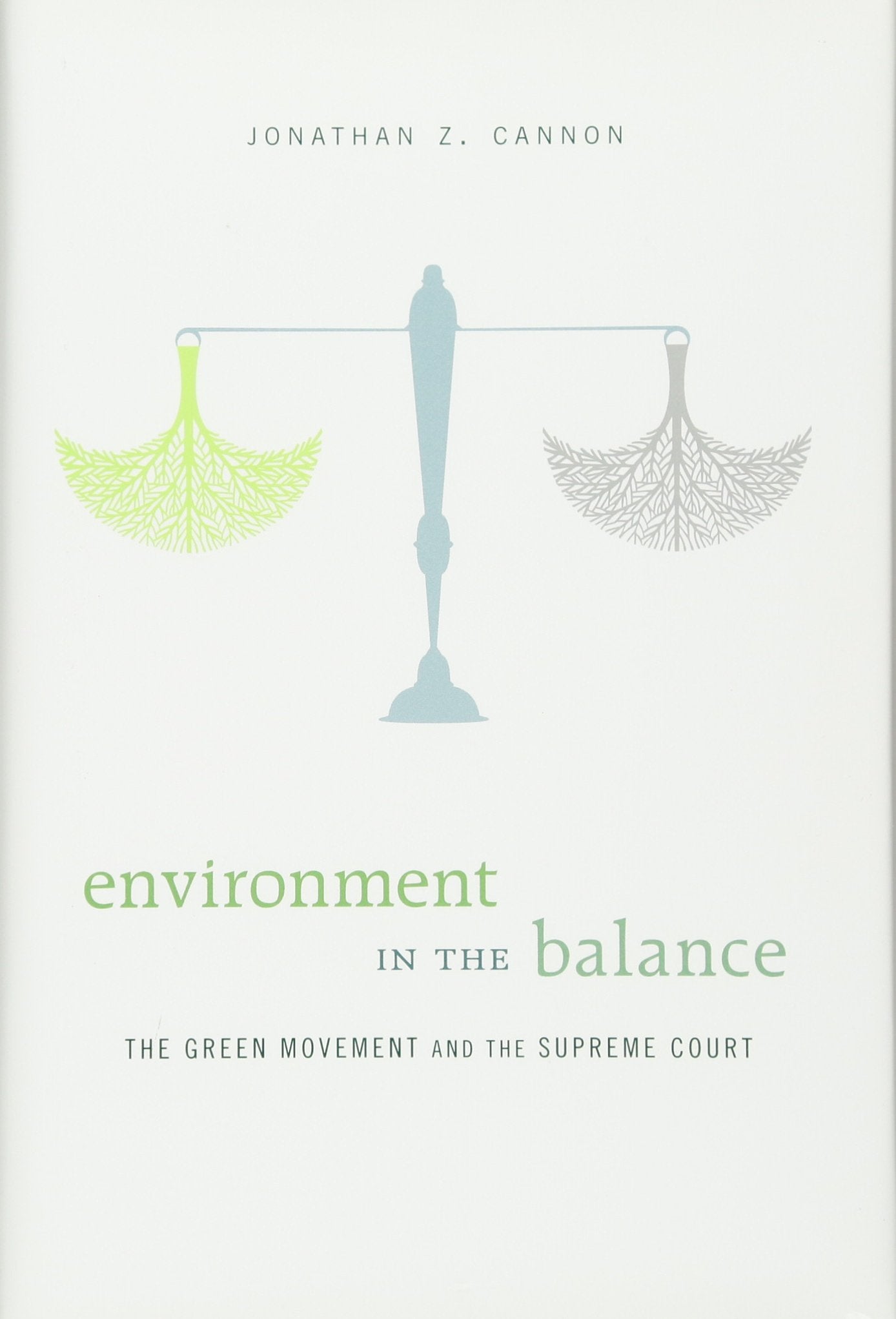
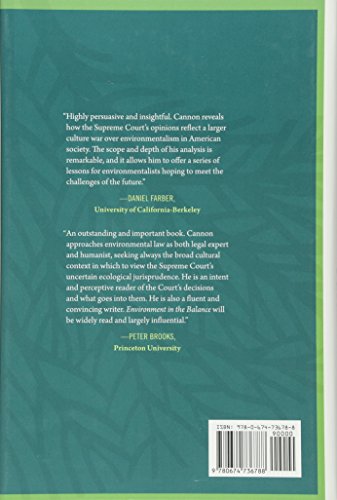
The first Earth Day in 1970 marked environmentalisms comingofage in the United States. More than four decades later, does the green movement remain a transformative force in American life? Presenting a new account from a legal perspective, Environment in the Balance interprets a wide range of U.S. Supreme Court decisions, along with social science research and the literature of the movement, to gauge the practical and cultural impact of environmentalism and its future prospects.Jonathan Z. Cannon demonstrates that from the 1960s onward, the Courts rulings on such legal issues as federalism, landowners rights, standing, and the scope of regulatory authority have reflected deepseated cultural differences brought out by the mass movement to protect the environment. In the early years, environmentalists won some important victories, such as the Supreme Courts 1973 decision allowing them to sue against barriers to recycling. But over time the Court has become more skeptical of their claims and more solicitous of values embodied in private property rights, technological mastery and economic growth, and limited government.Today, facing the looming threat of global warming, environmentalists struggle to break through a cultural stalemate that threatens their goals. Cannon describes the current ferment in the movement, and chronicles efforts to broaden its cultural appeal while staying connected to its historical roots, and to ideas of nature that have been the source of its distinctive energy and purpose.
⚠️ WARNING (California Proposition 65):
This product may contain chemicals known to the State of California to cause cancer,
birth defects, or other reproductive harm.
For MAP (Minimum Advertised Price) violations and Intellectual Property (IP) or Trademark concerns, please contact:
support@ergodebooks.com
⚠️ California Proposition 65 Warning: Some products sold on this website may expose you to chemicals known to the State of California to cause cancer, birth defects, or other reproductive harm. For more information, visit www.P65Warnings.ca.gov.