
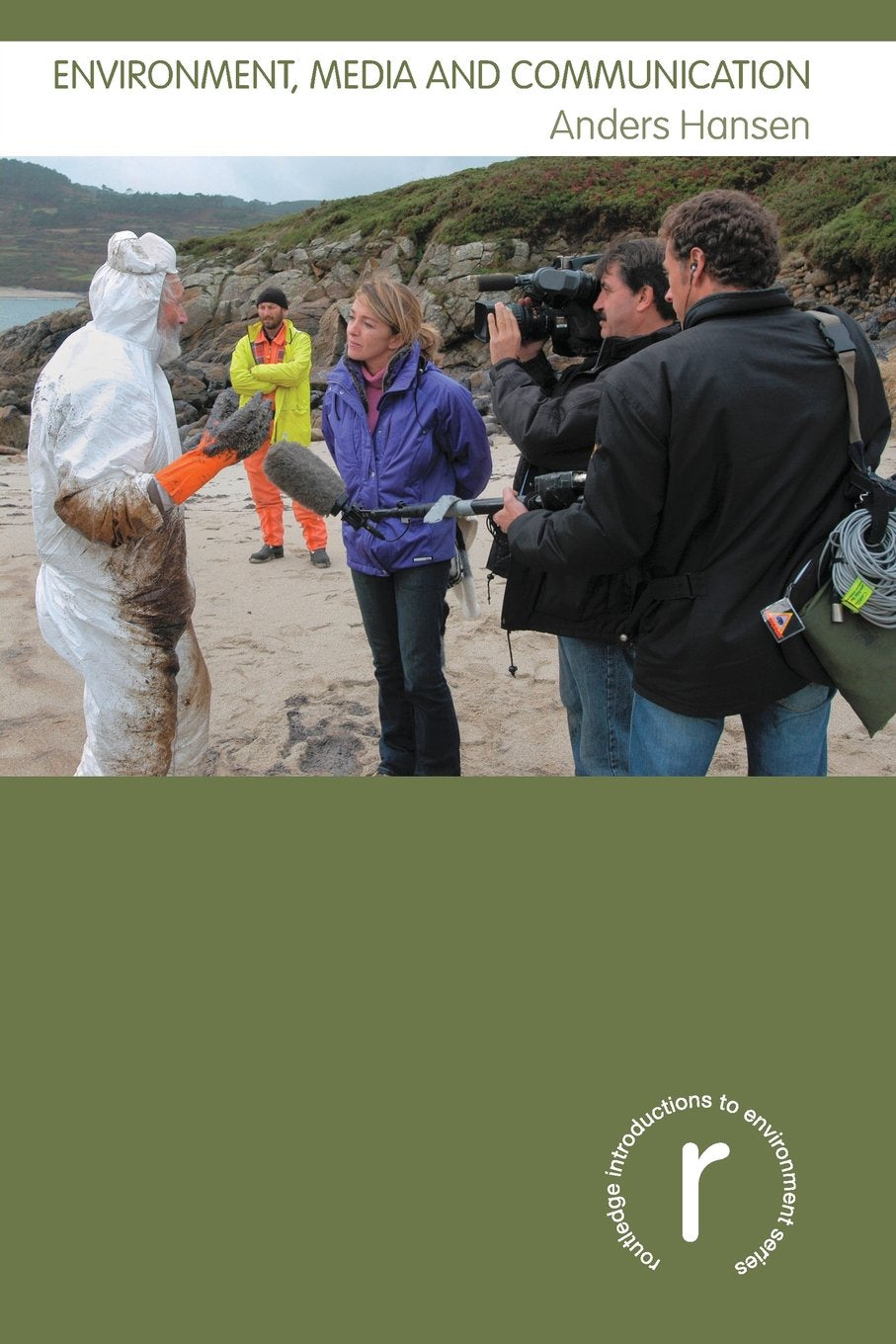
Title
Environment, Media And Communicatio (Routledge Introductions to Environment: Environment and Society Texts),Used
Sold by Ergodebooks, an authorized reseller.
Returns accepted within 30 days | support@ergodebooks.com
Shipping Information
- Free Standard Shipping — United States only
- Processing Time: 3–5 business days
- Estimated Delivery: 6–10 business days after dispatch
- Double-boxed, fully insured & discreetly packaged
- Tracking number sent via email once dispatched
Returns & Refund
Returns accepted within 30 days of delivery.
Damaged or Defective Item
Free return shipping + replacement or full refund
Wrong Item Received
Free return shipping + replacement or full refund
Change of Mind
Return shipping at customer's expense · 25% restocking fee applies
Payment Option

Communication about the environment in and through a broad array of news, advertising, art and entertainment media is one of the major sources of public and political understanding of definitions, issues and problems associated with the environment. Environment, Media and Communication examines the social, cultural and political roles of the media as a public arena for images, representations, definitions and controversy regarding the environment.The book starts by discussing and outlining a framework for analyzing media and communication roles in the emergence of the environment and environmental problems as issues for public and political concern. It proceeds to examine who and what drives the public agenda on environmental issues, addressing questions about how governments, scientists, experts, pressure groups and other stakeholders have sought to use traditional as well as newer media for promoting their definitions of the key issues. The media are not merely an open public arena or stage, but rather themselves a key gatekeeper and influence in the process of communicating about the environment: the role of news values, organizational arrangements and professional practices, are thus examined next. Recognizing the importance of wider popular culture narratives to public understanding and communication about the environment and nature, the book proceeds with a discussion of the messages and moral tales communicated about the environment, science and nature in a range of media, including film and advertising media. It shows how this wider context provides important clues to understanding the successes and failures of selected environmental issues or campaigns. The book finishes with an examination of the key approaches and models used for understanding how the media influence and interact with public opinion and political decisionmaking on environmental issues.Offering a comprehensive introduction to theoretical approaches and models for the study of media and communication roles regarding the environment, and drawing on empirical research evidence and examples from Europe, America, Australia and Asia, the book will be of interest to students in media/communication studies, geography, environmental studies, political science and sociology as wll as to environmental professionals and activists.
⚠️ WARNING (California Proposition 65):
This product may contain chemicals known to the State of California to cause cancer, birth defects, or other reproductive harm.
For more information, please visit www.P65Warnings.ca.gov.