
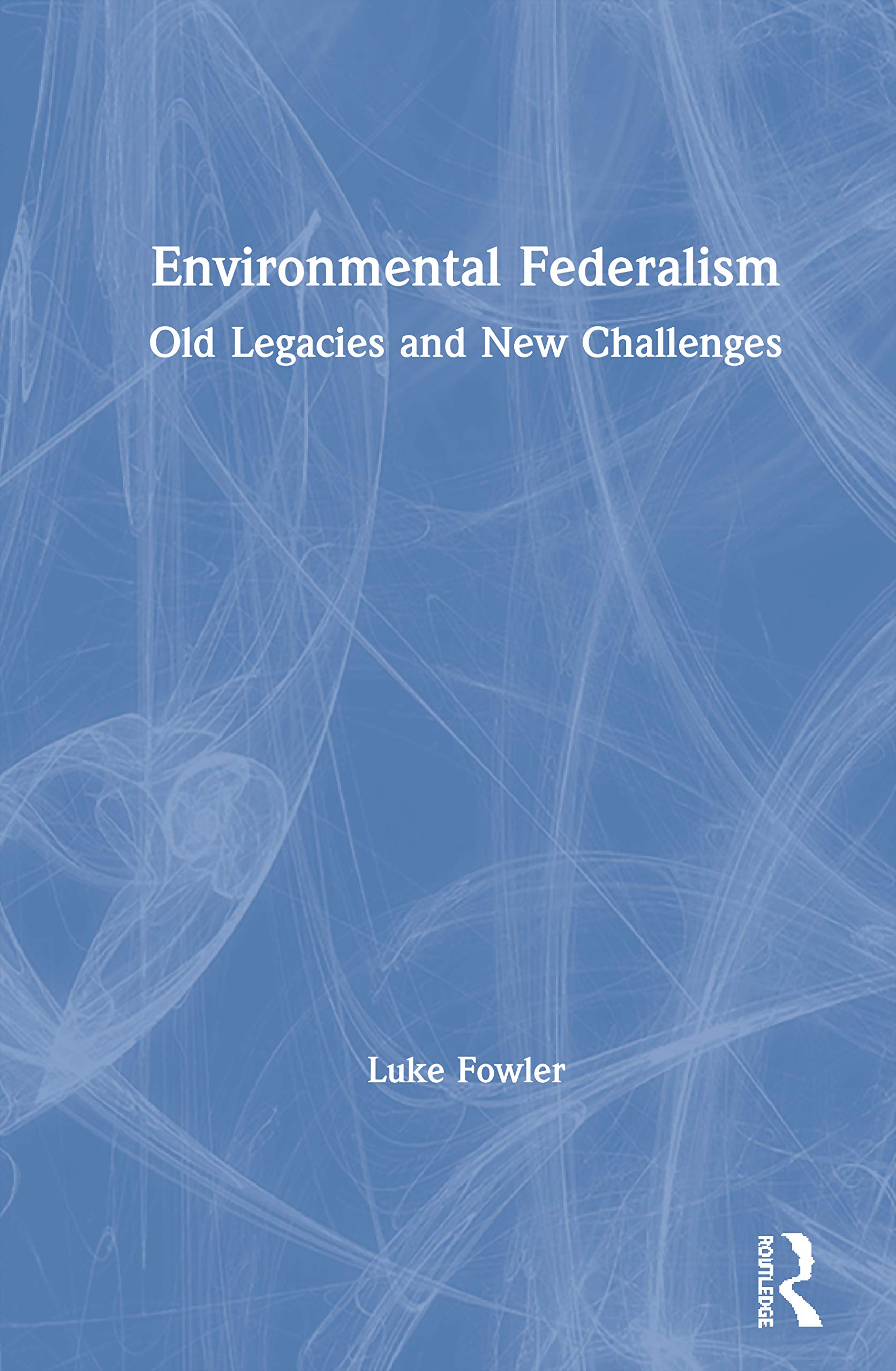
Title
Environmental Federalism: Old Legacies and New Challenges,New
Sold by Ergodebooks, an authorized reseller.
Returns accepted within 30 days | support@ergodebooks.com
Shipping Information
- Free Standard Shipping — United States only
- Processing Time: 3–5 business days
- Estimated Delivery: 6–10 business days after dispatch
- Double-boxed, fully insured & discreetly packaged
- Tracking number sent via email once dispatched
Returns & Refund
Returns accepted within 30 days of delivery.
Damaged or Defective Item
Free return shipping + replacement or full refund
Wrong Item Received
Free return shipping + replacement or full refund
Change of Mind
Return shipping at customer's expense · 25% restocking fee applies
Payment Option

In Environmental Federalism, Luke Fowler helps to refocus muchneeded attention on the role of state governments in environmental policy creation and implementation in the United States. While the national government receives most of the attention when it comes to environmental policy, state governments play a vital role in protecting our natural resources. Legacy problems, like air, water, and land pollution, present one set of challenges for environmental federalism, but new problems emerging as a result of climate change further test the bounds of federal institutions.Examining patterns of pollution and case studies from the Clean Air Act and the Clean Water Act, Fowler explores two questions: has environmental federalism worked in managing legacy environmental problems, and can it work to manage climate change? In order to answer these questions, Fowler extends James Lesters typology using political incentives and administrative capacities to identify four types of states (progressive, delayers, strugglers, and regressives) and assesses how they are linked to the success of federal environmental programs and conf licts in intergovernmental relations. He then considers what lessons we can learn from these programs and whether those lessons can help us better understand climate policy and multilevel institutions for environmental governance.This timely read will be a valuable contribution to students, researchers, and scholars of political science, public policy, public administration, and environmental studies.
⚠️ WARNING (California Proposition 65):
This product may contain chemicals known to the State of California to cause cancer, birth defects, or other reproductive harm.
For more information, please visit www.P65Warnings.ca.gov.