
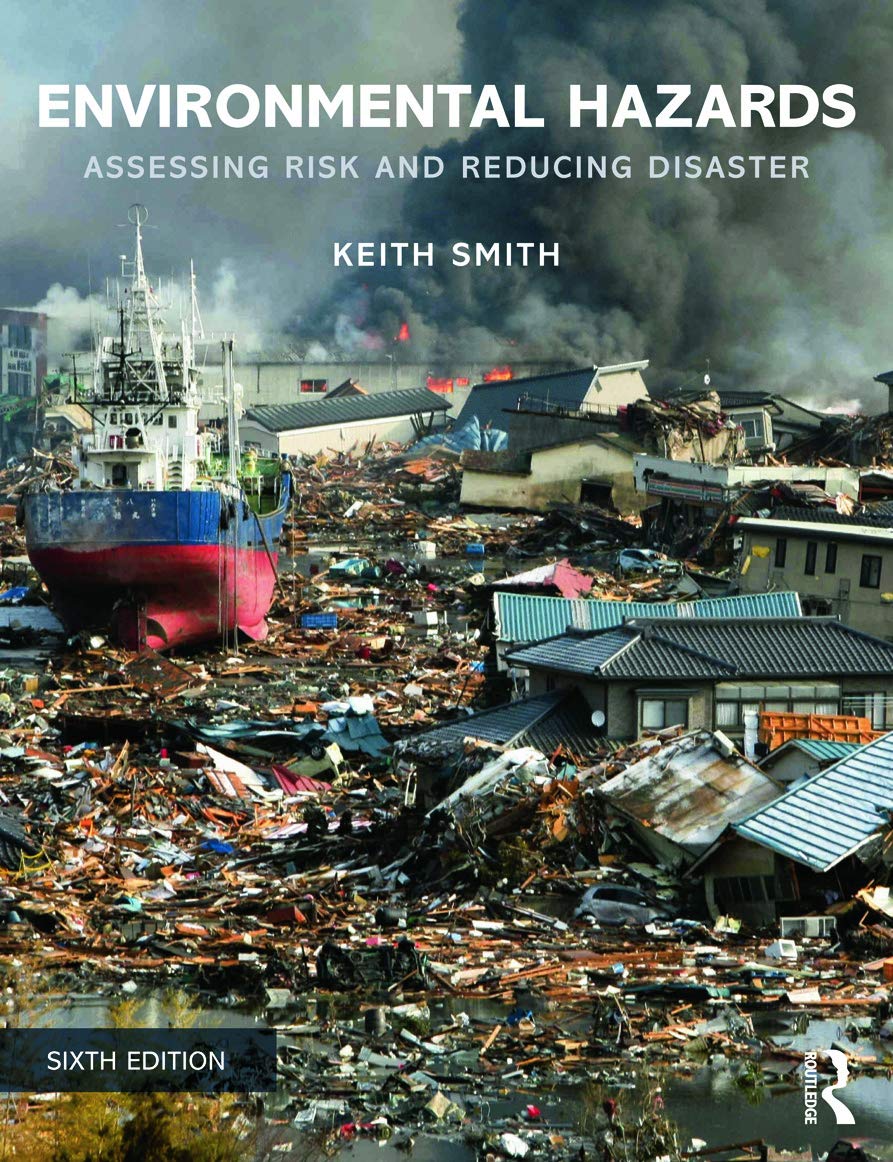
Title
Environmental Hazards: Assessing Risk and Reducing Disaster,New
Sold by Ergodebooks, an authorized reseller.
Returns accepted within 30 days | support@ergodebooks.com
Shipping Information
- Free Standard Shipping — United States only
- Processing Time: 3–5 business days
- Estimated Delivery: 6–10 business days after dispatch
- Double-boxed, fully insured & discreetly packaged
- Tracking number sent via email once dispatched
Returns & Refund
Returns accepted within 30 days of delivery.
Damaged or Defective Item
Free return shipping + replacement or full refund
Wrong Item Received
Free return shipping + replacement or full refund
Change of Mind
Return shipping at customer's expense · 25% restocking fee applies
Payment Option

The much expanded sixth edition of Environmental Hazards provides a fully uptodate overview of all the extreme events that threaten people and what they value in the 21st century. It integrates cuttingedge material from the physical and social sciences to illustrate how natural and human systems interact to place communities of all sizes, and at all stages of economic development, at risk. It also explains in detail the various measures available to reduce the ongoing losses to life and property. Part One of this established textbook defines basic concepts of hazard, risk, vulnerability and disaster. Attention is given to the evolution of theory, to the scales and patterns of disaster impact and to the optimum management strategies needed to minimize the future impact of damaging events. Part Two employs a consistent chapter structure to demonstrate how individual hazards, such as earthquakes, severe storms, floods and droughts, plus biophysical and technological processes, create distinctive impacts and challenges throughout the world. The ways in which different societies can make positive responses to these threats are placed firmly in the context of sustainable development and global environmental change.This extensively revised edition includes:A new concluding chapter that summarizes the globalization of hazard and critically examines the latest perspectives on climaterelated disastersFresh perspectives on the reliability of disaster data, disaster risk reduction, severe storms, droughts and technological hazardsMore boxed sections with a focus on both generic issues and the lessons to be learned from a carefully selected range of recent extreme eventsAn annotated list of key resources, including further reading and relevant websites, for all chapters183 diagrams, now in full colour, and available to download on: www.routledge.com/9780415681063/ Over 30 colour photographs and more than 1,000 references to some of the most significant and recent published material.Environmental Hazards is a clearlywritten, authoritative account of the causes and consequences of the extreme natural and technological processes that cause death and destruction across the globe. It draws on the latest research findings to guide the reader from common problems, theories and policies to explore practical, realworld situations and solutions. This carefully structured and balanced book captures the complexity and dynamism of environmental hazards and has become essential reading for students of every kind seeking to understand this most important contemporary issue.
⚠️ WARNING (California Proposition 65):
This product may contain chemicals known to the State of California to cause cancer, birth defects, or other reproductive harm.
For more information, please visit www.P65Warnings.ca.gov.
- Q: How many pages does this book have? A: This book has four hundred seventy-eight pages. It offers comprehensive coverage of environmental hazards and risk assessment.
- Q: What is the binding type of the book? A: The binding type is paperback. This makes it lightweight and easy to handle for readers.
- Q: What are the dimensions of the book? A: The book measures seven point four four inches in length, one point one nine inches in width, and nine point six nine inches in height. These dimensions make it suitable for standard book storage.
- Q: What topics can I expect to learn from this book? A: You will learn about environmental hazards, risk assessment, and disaster reduction strategies. The book also covers the interaction of natural and human systems.
- Q: Is this book suitable for beginners? A: Yes, this book is suitable for beginners. It presents complex topics in a clear and accessible manner for all readers.
- Q: Who is the author of this book? A: The author is Keith Smith. He is known for his expertise in environmental science and risk assessment.
- Q: How should I store this book? A: Store the book in a cool, dry place to maintain its condition. Avoid direct sunlight to prevent fading of the cover and pages.
- Q: Can this book be used as a reference for academic studies? A: Yes, this book is an excellent reference for academic studies. It includes over one thousand references to significant research in environmental hazards.
- Q: What is the focus of the book's content? A: The book focuses on assessing risk and reducing disaster related to environmental hazards. It integrates both physical and social sciences.
- Q: Are there illustrations or diagrams in this book? A: Yes, the book contains one hundred eighty-three diagrams in full color. These visuals enhance understanding of the material presented.
- Q: Is the book updated with recent research? A: Yes, the book includes updated information and fresh perspectives on climate-related disasters and risk reduction strategies.
- Q: What kind of additional resources does the book provide? A: The book offers an annotated list of key resources, including further reading and relevant websites for each chapter.
- Q: Does the book cover both natural and technological hazards? A: Yes, it covers both natural and technological hazards. This comprehensive approach provides a holistic view of environmental risks.
- Q: Is there a focus on sustainable development in the book? A: Yes, sustainable development is a key theme throughout the book. It examines how societies can respond positively to environmental threats.
- Q: What edition of the book is this? A: This is the sixth edition of the book. It has been extensively revised to include the latest research and findings.
- Q: Are there any case studies included in the book? A: Yes, the book includes case studies that illustrate the impacts of various hazards and the effectiveness of disaster management strategies.