
Title

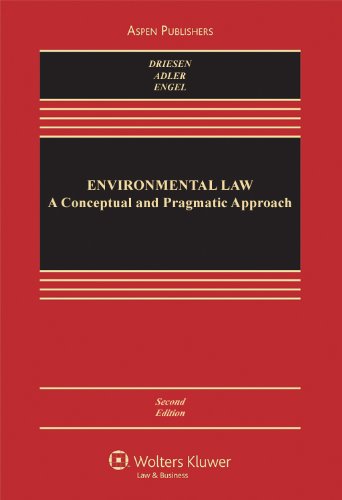
Environmental Law: Conceptual & Functional Approach 2e (Aspen Casebook),Used
Sold by Ergodebooks, an authorized reseller.
Returns accepted within 30 days | support@ergodebooks.com
Shipping Information
- Free Standard Shipping — United States only
- Processing Time: 3–5 business days
- Estimated Delivery: 6–10 business days after dispatch
- Double-boxed, fully insured & discreetly packaged
- Tracking number sent via email once dispatched
Returns & Refund
Returns accepted within 30 days of delivery.
Damaged or Defective Item
Free return shipping + replacement or full refund
Wrong Item Received
Free return shipping + replacement or full refund
Change of Mind
Return shipping at customer's expense · 25% restocking fee applies
Payment Option

Environmental Law: A Conceptual and Pragmatic Approach, Second Edition, uses illustrative cases and statutory provisions to offer a structured treatment of federal environmental law. It focuses on the core concepts and practical questions that those practicing in the field confront on a daily basis and provides students with the knowledge of the basic policy choices available while explaining the practical difficulties regulators and courts face in implementing the law.Kirsten H. Engle joins the author team for the Second Edition, which has been expanded to include various strategies for addressing climate disruption. The new edition also includes a new chapter on ecological restoration and has been updated throughout.This compact and accessible casebook: Highlights the concepts that will enable students to understand almost any part of any statutory scheme as well as to understand the statutes' basic goals. Facilitates a concrete understanding of the field and the overarching framework that will aid students in making sense of the details. Takes a more focused approach than other texts, teaching about the various ways of setting environmental goals, dealing with costs and feasibility of controls, economic incentives, traditional means of regulation, and defining the roles of federal and state governments in setting requirements. Is organized around the following key questions, rather than statute by statute: How do we establish environmental goals? What means do we use to achieve these goals? How should responsibility for cleanup and cleanup decisions be allocated? How should we enforce environmental law? Features a current unresolved environmental issue, that of how to address climate disruption, as an example that runs throughout the book to assist students in understanding how the concepts and law they are learning apply to a new issue.The Second Edition offers: Discussion of a new environmental issuevarious strategies to address climate disruptionthat runs through the book. New material on the concept of restoration, which is becoming a central part of environmental law as we address already degraded ecosystems and adapt to climate disruption. Selected new cases and discussion of new cases in the notes and questions, emphasizing cases that help explain the book's core concepts or that significantly changed the law.
⚠️ WARNING (California Proposition 65):
This product may contain chemicals known to the State of California to cause cancer, birth defects, or other reproductive harm.
For more information, please visit www.P65Warnings.ca.gov.