
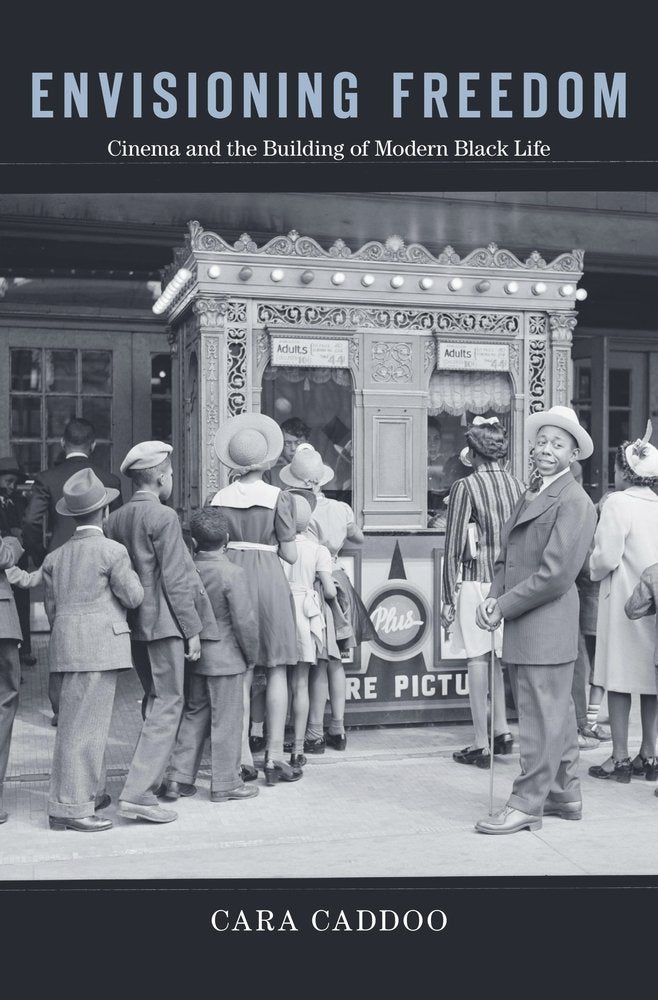
Title

Envisioning Freedom: Cinema And The Building Of Modern Black Life
Sold by Ergodebooks, an authorized reseller.
Returns accepted within 30 days | support@ergodebooks.com
Shipping Information
- Free Standard Shipping — United States only
- Processing Time: 3–5 business days
- Estimated Delivery: 6–10 business days after dispatch
- Double-boxed, fully insured & discreetly packaged
- Tracking number sent via email once dispatched
Returns & Refund
Returns accepted within 30 days of delivery.
Damaged or Defective Item
Free return shipping + replacement or full refund
Wrong Item Received
Free return shipping + replacement or full refund
Change of Mind
Return shipping at customer's expense · 25% restocking fee applies
Payment Option

Viewing Turnofthecentury African American History Through The Lens Of Cinema, Envisioning Freedom Examines The Forgotten History Of Early Black Film During The Era Of Mass Migration And Jim Crow. By Embracing The New Medium Of Moving Pictures At The Turn Of The Twentieth Century, Black Americans Forged A Collectiveif Fraughtculture Of Freedom.In Cara Caddoo'S Perspectivechanging Study, African Americans Emerge As Pioneers Of Cinema From The 1890S To The 1920S. Across The South And Midwest, Moving Pictures Presented In Churches, Lodges, And Schools Raised Money And Created Shared Social Experiences For Black Urban Communities. As Migrants Moved Northward, Bound For Chicago And New York, Cinema Moved With Them. Along These Routes, Ministers And Reformers, Preaching Messages Of Racial Uplift, Used Moving Pictures As An Enticement To Attract Followers.But As It Gained Popularity, Black Cinema Also Became Controversial. Facing A Losing Competition With Movie Houses, Oncesupportive Ministers Denounced The Evils Of The Colored Theater. Onscreen Images Sparked Arguments Over Black Identity And The Meaning Of Freedom. In 1910, When Boxing Champion Jack Johnson Became The World'S First Black Movie Star, Representation In Film Vaulted To The Center Of Black Concerns About Racial Progress. Black Leaders Demanded Selfrepresentation And An End To Cinematic Mischaracterizations Which, They Charged, Violated The Civil Rights Of African Americans. In 1915, These Ideas Both Led To The Creation Of An Industry That Produced Race Films By And For Black Audiences And Sparked The First Mass Black Protest Movement Of The Twentieth Century.
⚠️ WARNING (California Proposition 65):
This product may contain chemicals known to the State of California to cause cancer, birth defects, or other reproductive harm.
For more information, please visit www.P65Warnings.ca.gov.
- Q: How many pages are in this book? A: This book contains three hundred four pages. It provides an in-depth examination of early black cinema and its cultural significance.
- Q: What are the dimensions of this book? A: The book measures six point fourteen inches in length, one inch in width, and nine point twenty-five inches in height. These dimensions make it a standard hardcover size.
- Q: What type of binding does this book have? A: This book features a hardcover binding. This type of binding is durable and ideal for long-term use.
- Q: Who is the author of this book? A: The author is Cara Caddoo. She explores the intersection of cinema and African American history in this work.
- Q: What is the genre of this book? A: The genre of this book falls under Performing Arts. It specifically addresses the role of cinema in African American culture.
- Q: How should I read this book? A: You can read this book at your own pace. It’s suitable for anyone interested in history, film, or African American studies.
- Q: Is this book suitable for academic study? A: Yes, this book is suitable for academic study. It provides valuable insights into the history of black cinema and its cultural impact.
- Q: What themes are covered in this book? A: The book covers themes such as migration, identity, and cultural representation. It examines how cinema shaped the collective identity of African Americans.
- Q: Is this book appropriate for young readers? A: This book is intended for an adult audience. It deals with complex themes related to race and identity in history.
- Q: How do I keep this book in good condition? A: To keep this book in good condition, store it upright in a cool, dry place. Avoid exposure to direct sunlight to prevent fading.
- Q: Can I clean the book's cover? A: Yes, you can clean the book's cover gently with a soft, dry cloth. Avoid using water or cleaning solutions.
- Q: What if my book arrives damaged? A: If your book arrives damaged, contact the seller for a return or replacement. Most sellers offer a satisfaction guarantee.
- Q: Does this book have a return policy? A: Yes, this book typically has a return policy. Check with the retailer for specific details regarding returns.
- Q: Is there a warranty for this book? A: No, there is generally no warranty for books. However, check with the seller for their return or exchange policies.
- Q: What if I have questions about the content? A: If you have questions about the content, consider reaching out to academic forums or book clubs focused on African American history.
- Q: Is this book available in digital format? A: Yes, this book may be available in digital format. Check major online retailers for eBook options.