If you have any questions, you are always welcome to contact us. We'll get back to you as soon as possible, withing 24 hours on weekdays.
Customer service
All questions about your order, return and delivery must be sent to our customer service team by e-mail at yourstore@yourdomain.com
Sale & Press
If you are interested in selling our products, need more information about our brand or wish to make a collaboration, please contact us at press@yourdomain.com
Help
If you have any questions, you are always welcome to contact us. We'll get back to you as soon as possible, withing 24 hours on weekdays.
Customer service
All questions about your order, return and delivery must be sent to our customer service team by e-mail at yourstore@yourdomain.com
Sale & Press
If you are interested in selling our products, need more information about our brand or wish to make a collaboration, please contact us at press@yourdomain.com
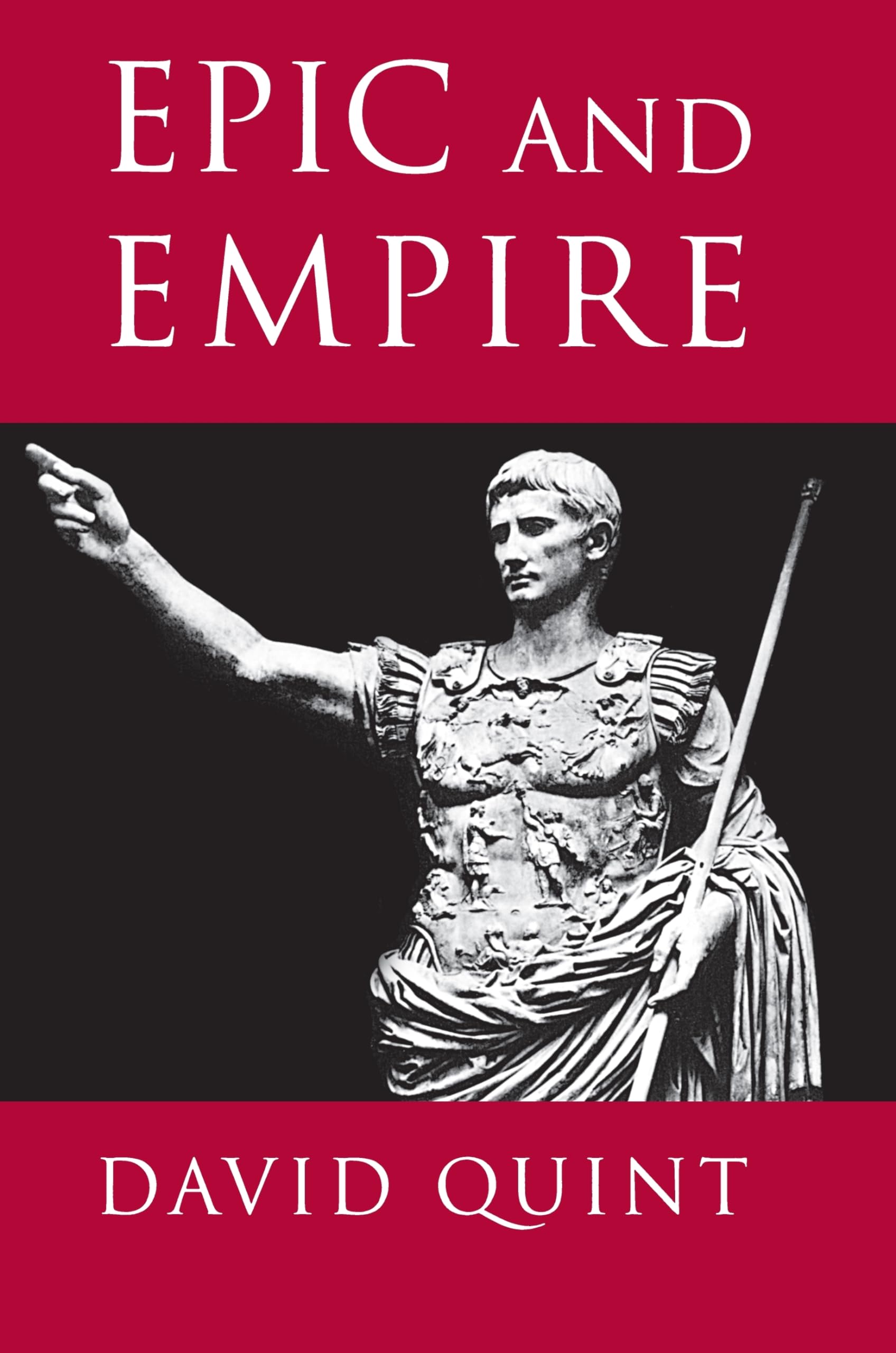
Alexander the Great, according to Plutarch, carried on his campaigns a copy of the Iliad, kept alongside a dagger; on a more pronounced ideological level, ancient Romans looked to the Aeneid as an argument for imperialism. In this major reinterpretation of epic poetry beginning with Virgil, David Quint explores the political context and meanings of key works in Western literature. He divides the history of the genre into two political traditions: the Virgilian epics of conquest and empire that take the victors' side (the Aeneid itself, Camoes's Lusadas, Tasso's Gerusalemme liberata) and the countervailing epic of the defeated and of republican liberty (Lucan's Pharsalia, Ercilla's Araucana, and d'Aubign's Les tragiques). These traditions produce opposing ideas of historical narrative: a linear, teleological narrative that belongs to the imperial conquerors, and an episodic and openended narrative identified with 'romance,' the story told of and by the defeated.Quint situates Paradise Lost and Paradise Regained within these rival traditions. He extends his political analysis to the scholarly revival of medieval epic in the late eighteenth and nineteenth centuries and to Sergei Eisenstein's epic film, Alexander Nevsky. Attending both to the topical contexts of individual poems and to the larger historical development of the epic genre, Epic and Empire provides new models for exploring the relationship between ideology and literary form.
⚠️ WARNING (California Proposition 65):
This product may contain chemicals known to the State of California to cause cancer,
birth defects, or other reproductive harm.
For MAP (Minimum Advertised Price) violations and Intellectual Property (IP) or Trademark concerns, please contact:
support@ergodebooks.com
⚠️ California Proposition 65 Warning: Some products sold on this website may expose you to chemicals known to the State of California to cause cancer, birth defects, or other reproductive harm. For more information, visit www.P65Warnings.ca.gov.