
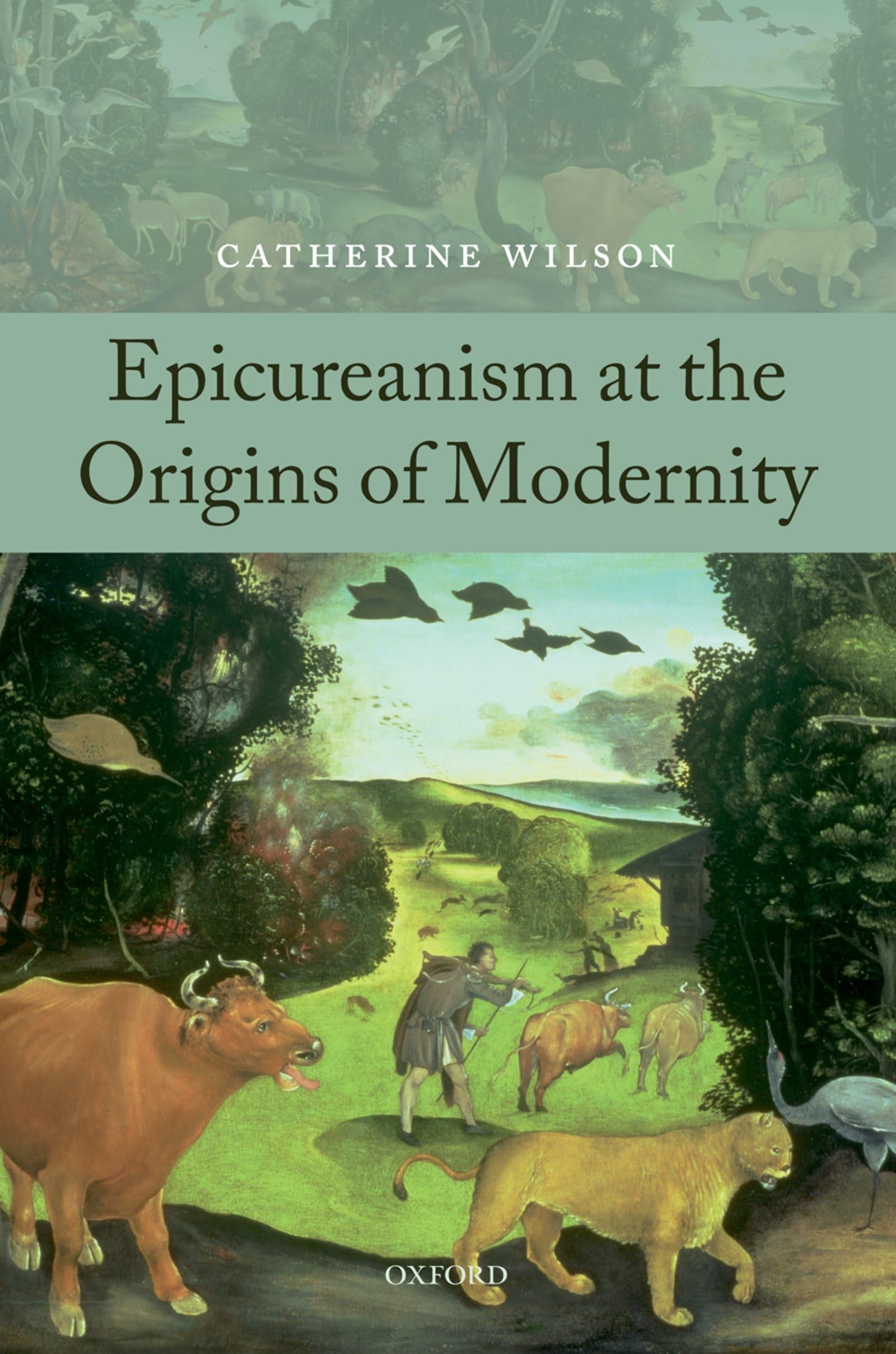
Title
Epicureanism at the Origins of Modernity,Used
Sold by Ergodebooks, an authorized reseller.
Returns accepted within 30 days | support@ergodebooks.com
Shipping Information
- Free Standard Shipping — United States only
- Processing Time: 3–5 business days
- Estimated Delivery: 6–10 business days after dispatch
- Double-boxed, fully insured & discreetly packaged
- Tracking number sent via email once dispatched
Returns & Refund
Returns accepted within 30 days of delivery.
Damaged or Defective Item
Free return shipping + replacement or full refund
Wrong Item Received
Free return shipping + replacement or full refund
Change of Mind
Return shipping at customer's expense · 25% restocking fee applies
Payment Option

This landmark study examines the role played by the rediscovery of the writings of the ancient atomists, Epicurus and Lucretius, in the articulation of the major philosophical systems of the seventeenth century, and, more broadly, their influence on the evolution of natural science and moral and political philosophy. The target of sustained and trenchant philosophical criticism by Cicero, and of opprobrium by the Christian Fathers of the early Church, for its unflinching commitment to the absence of divine supervision and the finitude of life, the Epicurean philosophy surfaced again in the period of the Scientific Revolution, when it displaced scholastic Aristotelianism. Both modern social contract theory and utilitarianism in ethics were grounded in its tenets. Catherine Wilson shows how the distinctive Epicurean image of the natural and social worlds took hold in philosophy, and how it is an acknowledged, and often unacknowledged presence in the writings of Descartes, Gassendi, Hobbes, Boyle, Locke, Leibniz, Berkeley. With chapters devoted to Epicurean physics and cosmology, the corpuscularian or "mechanical" philosophy, the question of the mortality of the soul, the grounds of political authority, the contested nature of the experimental philosophy, sensuality, curiosity, and the role of pleasure and utility in ethics, the author makes a persuasive case for the significance of materialism in seventeenthcentury philosophy without underestimating the depth and significance of the opposition to it, and for its continued importance in the contemporary world. Lucretius's great poem, On the Nature of Things, supplies the frame of reference for this deeplyresearched inquiry into the origins of modern philosophy..
⚠️ WARNING (California Proposition 65):
This product may contain chemicals known to the State of California to cause cancer, birth defects, or other reproductive harm.
For more information, please visit www.P65Warnings.ca.gov.