
Title
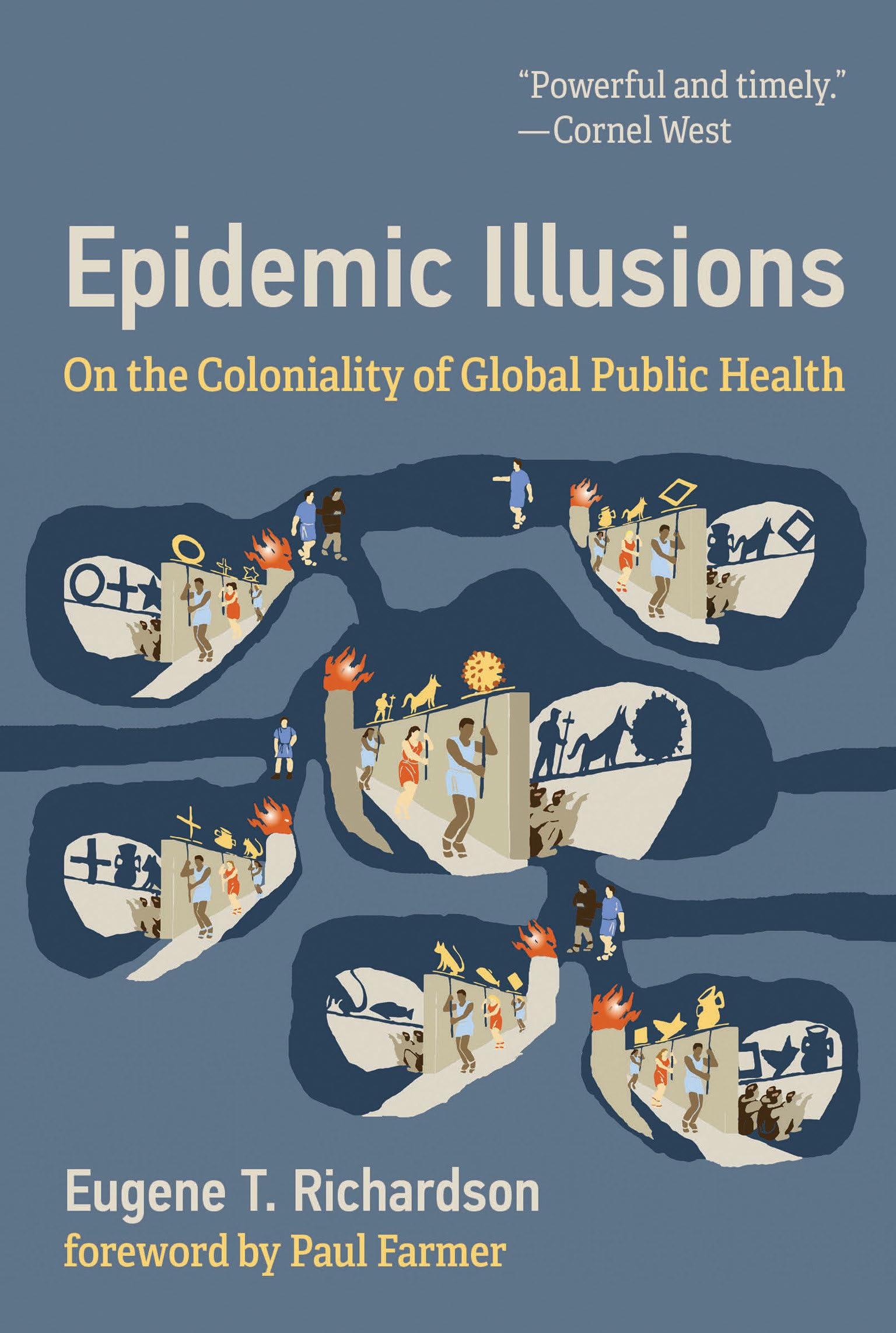
Epidemic Illusions: On the Coloniality of Global Public Health,Used
Sold by Ergodebooks, an authorized reseller.
Returns accepted within 30 days | support@ergodebooks.com
Shipping Information
- Free Standard Shipping — United States only
- Processing Time: 3–5 business days
- Estimated Delivery: 6–10 business days after dispatch
- Double-boxed, fully insured & discreetly packaged
- Tracking number sent via email once dispatched
Returns & Refund
Returns accepted within 30 days of delivery.
Damaged or Defective Item
Free return shipping + replacement or full refund
Wrong Item Received
Free return shipping + replacement or full refund
Change of Mind
Return shipping at customer's expense · 25% restocking fee applies
Payment Option

A physiciananthropologist explores how public health practicesfrom epidemiological modeling to outbreak containmenthelp perpetuate global inequities.In Epidemic Illusions, Eugene Richardson, a physician and an anthropologist, contends that public health practicesfrom epidemiological modeling and outbreak containment to Big Data and causal inferenceplay an essential role in perpetuating a range of global inequities. Drawing on postcolonial theory, medical anthropology, and critical science studies, Richardson demonstrates the ways in which the flagship discipline of epidemiology has been shaped by the colonial, racist, and patriarchal system that had its inception in 1492.Deploying a range of rhetorical tools and drawing on his clinical work in a variety of epidemics, including Ebola in West Africa and the Democratic Republic of Congo, leishmania in the Sudan, HIV/TB in southern Africa, diphtheria in Bangladesh, and SARSCoV2 in the United States, Richardson concludes that the biggest epidemic we currently face is an epidemic of illusionsone that is propagated by the coloniality of knowledge production.
⚠️ WARNING (California Proposition 65):
This product may contain chemicals known to the State of California to cause cancer, birth defects, or other reproductive harm.
For more information, please visit www.P65Warnings.ca.gov.
- Q: What is the main theme of 'Epidemic Illusions'? A: The main theme of 'Epidemic Illusions' is the exploration of how public health practices contribute to global inequities, drawing on postcolonial theory and medical anthropology.
- Q: Who is the author of this book? A: The author of 'Epidemic Illusions' is Eugene T. Richardson, who is both a physician and an anthropologist.
- Q: What topics are covered in 'Epidemic Illusions'? A: The book covers topics such as epidemiological modeling, outbreak containment, Big Data, and the colonial roots of modern public health practices.
- Q: What is the publication date of 'Epidemic Illusions'? A: Epidemic Illusions was published on December 22, 2020.
- Q: How many pages does the book have? A: The book consists of 232 pages.
- Q: What is the binding type of this book? A: The binding type of 'Epidemic Illusions' is paperback.
- Q: Is 'Epidemic Illusions' suitable for academic study? A: Yes, 'Epidemic Illusions' is suitable for academic study, especially for those interested in public health, epidemiology, and medical anthropology.
- Q: What are some epidemics discussed in the book? A: Richardson discusses various epidemics, including Ebola, leishmania, HIV/TB, diphtheria, and SARS-CoV-2.
- Q: What unique perspective does the author provide? A: The author provides a unique perspective by linking public health practices to colonial histories and systemic inequities.
- Q: Is the book intended for a general audience or specialists? A: While the book is academically rigorous, it is written in a way that is accessible to both general readers and specialists interested in public health issues.