If you have any questions, you are always welcome to contact us. We'll get back to you as soon as possible, withing 24 hours on weekdays.
Customer service
All questions about your order, return and delivery must be sent to our customer service team by e-mail at yourstore@yourdomain.com
Sale & Press
If you are interested in selling our products, need more information about our brand or wish to make a collaboration, please contact us at press@yourdomain.com
Help
If you have any questions, you are always welcome to contact us. We'll get back to you as soon as possible, withing 24 hours on weekdays.
Customer service
All questions about your order, return and delivery must be sent to our customer service team by e-mail at yourstore@yourdomain.com
Sale & Press
If you are interested in selling our products, need more information about our brand or wish to make a collaboration, please contact us at press@yourdomain.com
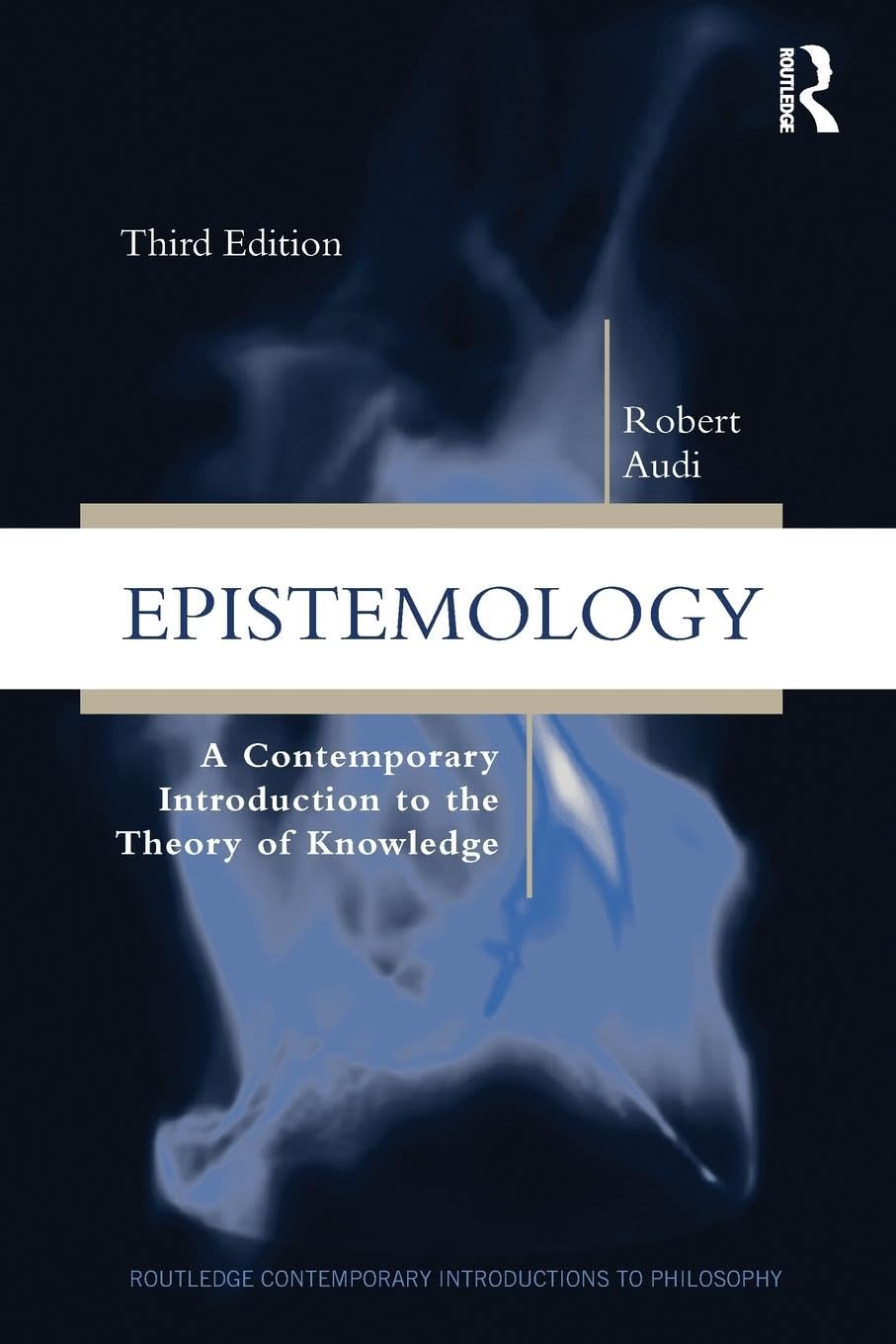
Epistemology, or the theory of knowledge, is concerned with how we know what we know, what justifies us in believing what we believe, and what standards of evidence we should use in seeking truths about the world and human experience. This comprehensive introduction to the field of epistemology explains the concepts and theories central to understanding knowledge. Along with covering the traditional topics of the discipline in detail, Epistemology explores emerging areas of research. The third edition features new sections on such topics as the nature of intuition, the skeptical challenge of rational disagreement, and the value problem the range of questions concerning why knowledge and justified true belief have value beyond that of merely true belief. Updated and expanded, Epistemology remains a superb introduction to one of the most fundamental fields of philosophy.Special features of the third edition of Epistemology include: a comprehensive survey of basic concepts, major theories, and emerging research in the field enhanced treatment of key topics such as contextualism, perception (including perceptual content), scientific hypotheses, selfevidence and the a priori, testimony, understanding, and virtue epistemology expanded discussion of the relation between epistemology and related fields, especially philosophy of mind, philosophy of science, and ethics increased clarity and ease of understanding for an undergraduate audience an updated list of key literature and annotated bibliography.
⚠️ WARNING (California Proposition 65):
This product may contain chemicals known to the State of California to cause cancer,
birth defects, or other reproductive harm.
For MAP (Minimum Advertised Price) violations and Intellectual Property (IP) or Trademark concerns, please contact:
support@ergodebooks.com
⚠️ California Proposition 65 Warning: Some products sold on this website may expose you to chemicals known to the State of California to cause cancer, birth defects, or other reproductive harm. For more information, visit www.P65Warnings.ca.gov.