If you have any questions, you are always welcome to contact us. We'll get back to you as soon as possible, withing 24 hours on weekdays.
Customer service
All questions about your order, return and delivery must be sent to our customer service team by e-mail at yourstore@yourdomain.com
Sale & Press
If you are interested in selling our products, need more information about our brand or wish to make a collaboration, please contact us at press@yourdomain.com
Help
If you have any questions, you are always welcome to contact us. We'll get back to you as soon as possible, withing 24 hours on weekdays.
Customer service
All questions about your order, return and delivery must be sent to our customer service team by e-mail at yourstore@yourdomain.com
Sale & Press
If you are interested in selling our products, need more information about our brand or wish to make a collaboration, please contact us at press@yourdomain.com
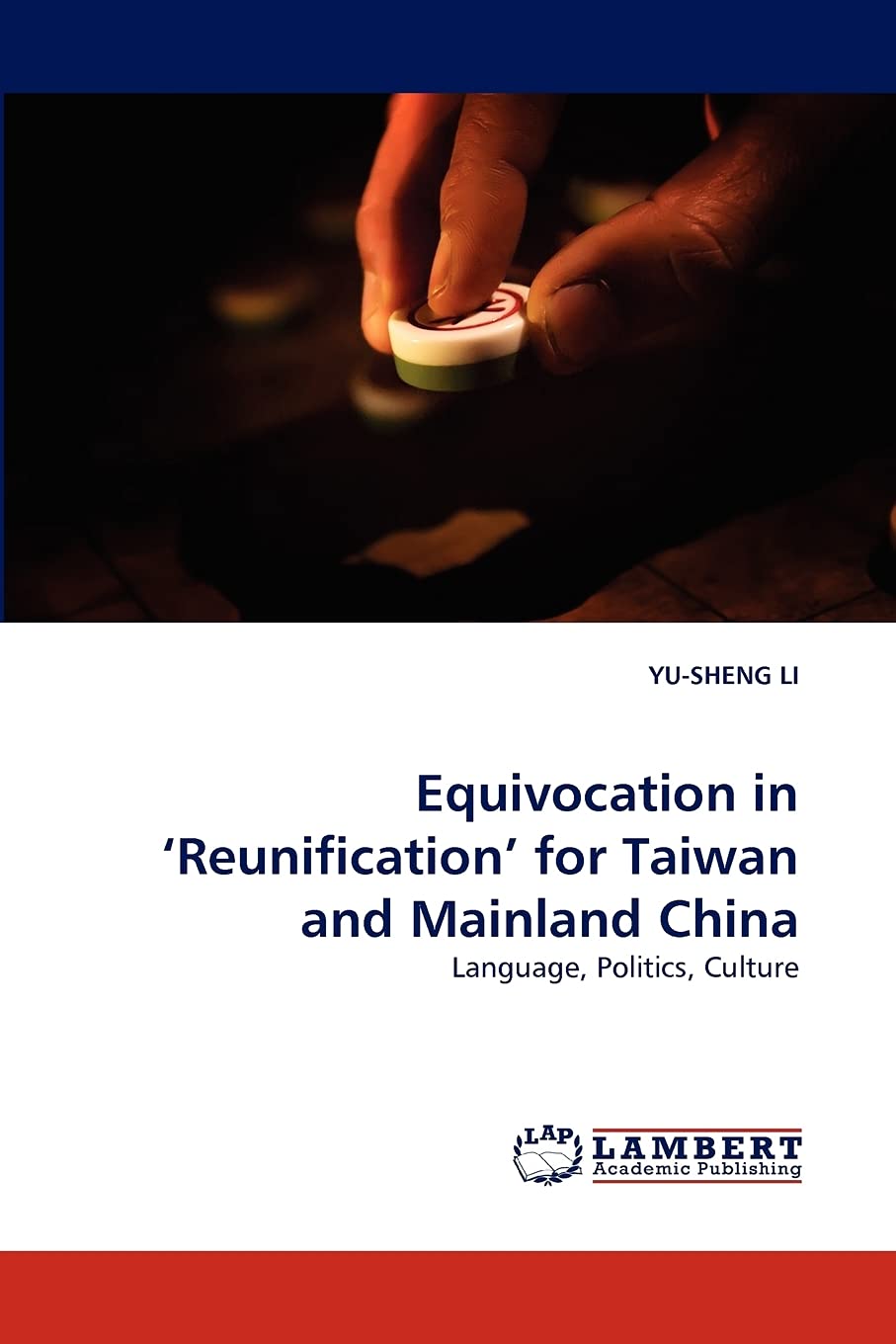
In human communication, sending an unclear message is often regarded as failure or impoliteness. Nevertheless, it is not always the case that those who make explicit statements are the most successful communicators. Equivocal communication is widely employed by modern politicians, and it can also be possible to extend its scope further, to communication between nations. In this book, Bavelas et al.'s theory of equivocation is applied to analyze nine public texts (1979 ? 2000) concerning the discussion of national reunification between Taiwan and Mainland China as their political communication is not normally conducted clearly and directly. A comparison will also be made between western societies and eastern societies to explore their different attitudes towards equivocation. The analysis should be especially useful to professionals in Communications and Social Psychology fields, or anyone else who may be considering utilizing ambiguity strategies for political diplomacy.
⚠️ WARNING (California Proposition 65):
This product may contain chemicals known to the State of California to cause cancer,
birth defects, or other reproductive harm.
For MAP (Minimum Advertised Price) violations and Intellectual Property (IP) or Trademark concerns, please contact:
support@ergodebooks.com
⚠️ California Proposition 65 Warning: Some products sold on this website may expose you to chemicals known to the State of California to cause cancer, birth defects, or other reproductive harm. For more information, visit www.P65Warnings.ca.gov.